Get Full Government Meeting Transcripts, Videos, & Alerts Forever!
Get email alerts on the Building Safety topic
No spam. Unsubscribe anytime.
DBI reports 85% compliance on mandatory soft-story retrofit program; 754 buildings remain noncompliant
Summary
Deputy Director Joe Duffy told the commission that 4,492 San Francisco buildings are subject to the 2013 soft-story retrofit ordinance; DBI reports 85% compliance (4,140 completed), 528 permits issued but not finished, and 754 not in compliance. Staff outlined enforcement steps, outreach, and priorities.
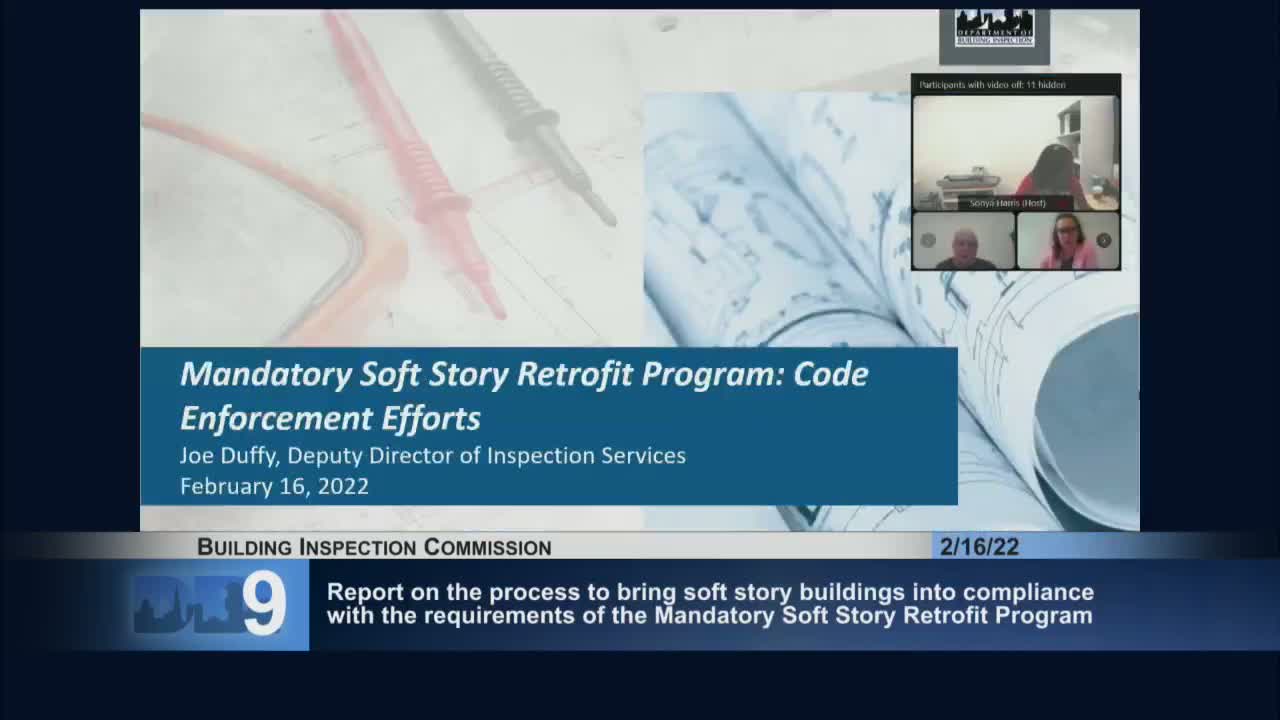
Deputy Director Joe Duffy briefed the Building Inspection Commission on Feb. 16 about the city’s mandatory soft-story retrofit program, which stems from a 2013 ordinance requiring structural upgrades to specified wood-frame multiunit buildings.
Duffy said 4,492 buildings meet the ordinance criteria and are subject to the program. DBI’s current compliance summary: 4,140 buildings have completed required seismic work and received certificates of final completion; 528 properties have permits issued but remain under construction; 754 buildings (about 15 percent) are not in compliance. DBI staff explained that enforcement typically begins with a validated complaint, proceeds to a notice of violation (NOV), can include a second NOV and a director’s hearing, and may result in liens, fines and orders of abatement if compliance is not achieved.
Commissioners pressed staff on outreach and support for owners and tenants. Duffy said DBI sends bilingual notices (NOVs in three languages), posts placards on noncompliant buildings, and will continue director’s hearings and referral to litigation or abatement when needed. Commissioners recommended stronger ties with community organizations to address language or financial barriers and asked staff to provide quarterly updates showing how the remaining 754 properties move through permitting, NOVs, and abatements.
Jeff Buckley clarified program tier definitions for commissioners: tier 1 covers buildings with educational assembly or residential care uses; tier 2 covers large buildings (50+ units); tier 3 is the catchall for other covered buildings; tier 4 includes buildings with ground-floor commercial uses or those mapped in liquefaction zones. Duffy said tier 3 accounts for a bulk of the outstanding compliance work and that director’s hearings are being scheduled for multiple soft-story properties.
A public commenter urged rapid progress and quarterly public reporting; commissioners asked staff to include soft-story metrics in future DBI updates so the commission and public can monitor remediation progress.