Get Full Government Meeting Transcripts, Videos, & Alerts Forever!
Get email alerts on the Land Acknowledgement topic
No spam. Unsubscribe anytime.
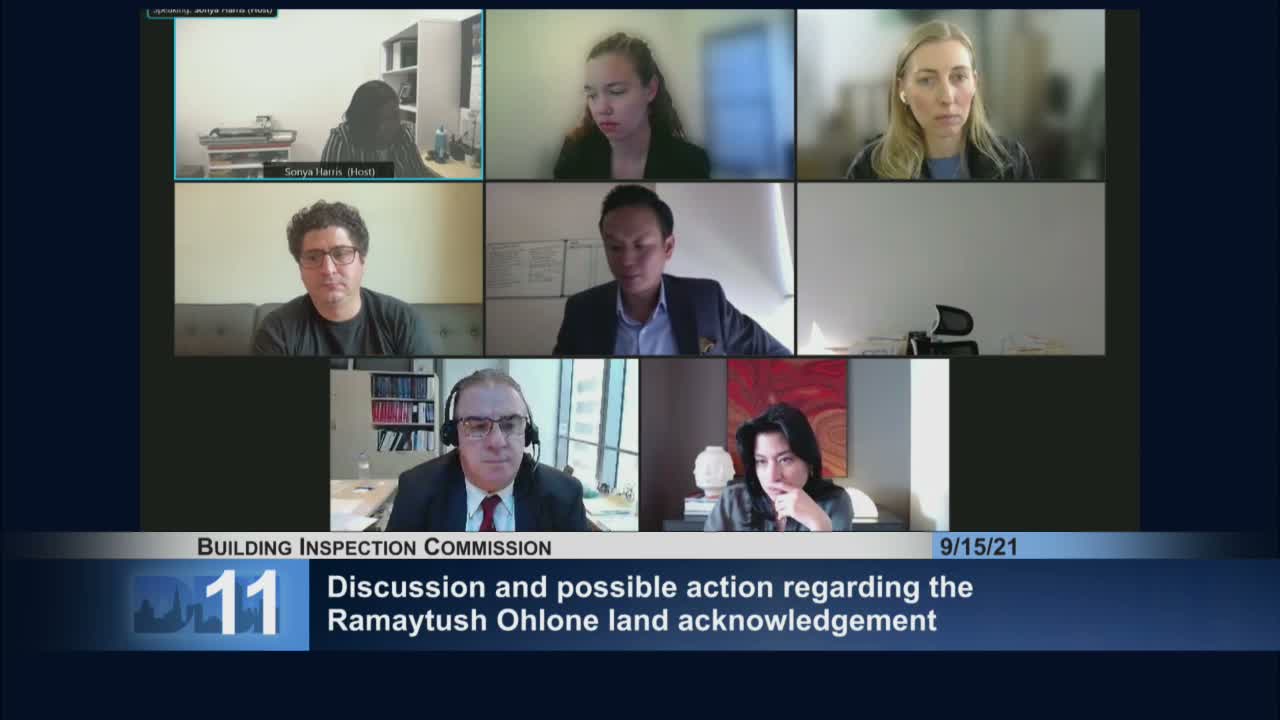
Commissioners begin drafting Ramaytush Ohlone land‑acknowledgement with local Indigenous input
Summary
Commissioners heard guidance from Dr. Jonathan Cordero of the Association of Ramaytush Ohlone on crafting a land‑acknowledgement resolution tied to DBI’s work and DEI commitments; commissioners agreed to collaborate and tailor language to permitting and excavation procedures.
Commissioners discussed a proposed Ramaytush Ohlone land‑acknowledgement resolution and invited input from Dr. Jonathan Cordero, executive director of the Association of Ramaytush Ohlone.
Dr. Cordero recommended a community‑centered drafting process: the commission should draft a statement, consult with Ramaytush Ohlone representatives and integrate the acknowledgement with concrete commitments (what he described as “land acknowledgment plus”) so the statement guides DBI’s work going forward. He emphasized tailoring the statement to the San Francisco Peninsula’s original peoples and recommended the Human Rights Commission’s statement and other local examples as models.
Commissioners discussed how acknowledgements could connect to DBI functions including excavation, permitting and inclusion of Indigenous voices in project review. Dr. Cordero suggested integrating the commission’s mission and DEI initiatives into the resolution and proposed follow‑up consultation.
Why it matters: Land acknowledgements are symbolic but can be paired with policy commitments and practical steps (for example, incorporating outreach to Indigenous communities into permitting processes) to give them operational effect.
Next steps: Commissioners Summer and Alexander Toot volunteered to draft initial language and continue consultation with the Association of Ramaytush Ohlone and staff resources.