Get Full Government Meeting Transcripts, Videos, & Alerts Forever!
Get email alerts on the Accessibility topic
No spam. Unsubscribe anytime.
Building Inspection Commission backs two‑year extension for Accessible Business Entrance compliance
Summary
The commission voted unanimously to recommend that the Board of Supervisors extend deadlines in the Accessible Business Entrance program to give property owners more time and DBI more capacity to process permits. Staff cited 11,398 noncompliant addresses and outlined multilingual outreach.
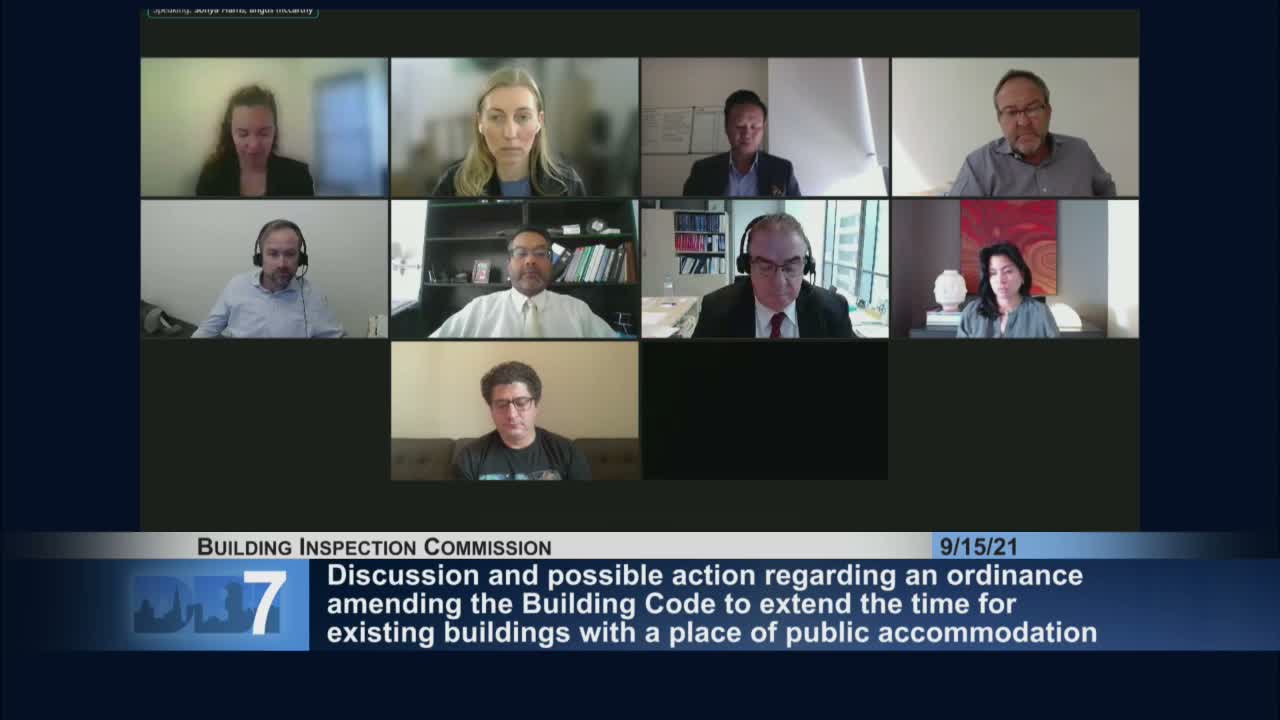
The San Francisco Building Inspection Commission voted unanimously on Sept. 15 to approve a recommendation that would extend compliance deadlines in the Accessible Business Entrance (ABE) program, a local ordinance intended to help property owners bring primary building entries and paths of travel into compliance with state and federal accessibility law.
DBI policy and public affairs director Jeff Buckley told the commission the program was created by a 2016 Board of Supervisors ordinance and “is designed to help our property owners comply with existing state and federal accessibility laws and ultimately to ensure that people with disabilities can access products and services offered by San Francisco businesses.” He said the department currently identifies 11,398 noncompliant addresses representing about 5,589 property owners and argued the program’s original deadlines did not allow sufficient time—particularly given COVID‑era disruptions.
Why it matters: The ABE program ties local permitting timelines and compliance checklists to civil‑rights and litigation risk under the Americans with Disabilities Act. Extending the deadlines shifts the enforcement horizon for thousands of addresses, gives small businesses more time to prepare permits and allows DBI to phase enforcement while boosting targeted outreach.
What the commission approved: Commissioners agreed to send a letter recommending the mayor’s proposed ordinance (Board of Supervisors file no. 210934) be amended to move the initial compliance‑checklist submittal earlier in the calendar to give DBI additional processing time and to extend the overall compliance timeline by two years. The Code Advisory Committee had recommended moving the checklist deadline from September to June 2022; the commission adopted that change before forwarding the recommendation to the Board.
Outreach and enforcement: Buckley described a three‑phase direct‑mail and email campaign aimed only at property owners identified as out of compliance, partner outreach with small‑business and disability‑rights groups, multilingual communications and planned website simplifications to make compliance steps clearer.
Next steps: With the commission’s unanimous recommendation, the proposed ordinance will move forward to the Board of Supervisors. DBI staff said they will continue stakeholder briefings, meet with the Mayor’s Office on Disability and refine their outreach materials and web tools.
Vote: The motion to approve the ordinance with the Code Advisory Committee timeline amendment carried unanimously in a roll‑call vote.