Get Full Government Meeting Transcripts, Videos, & Alerts Forever!
Get email alerts on the Tenant Protections topic
No spam. Unsubscribe anytime.
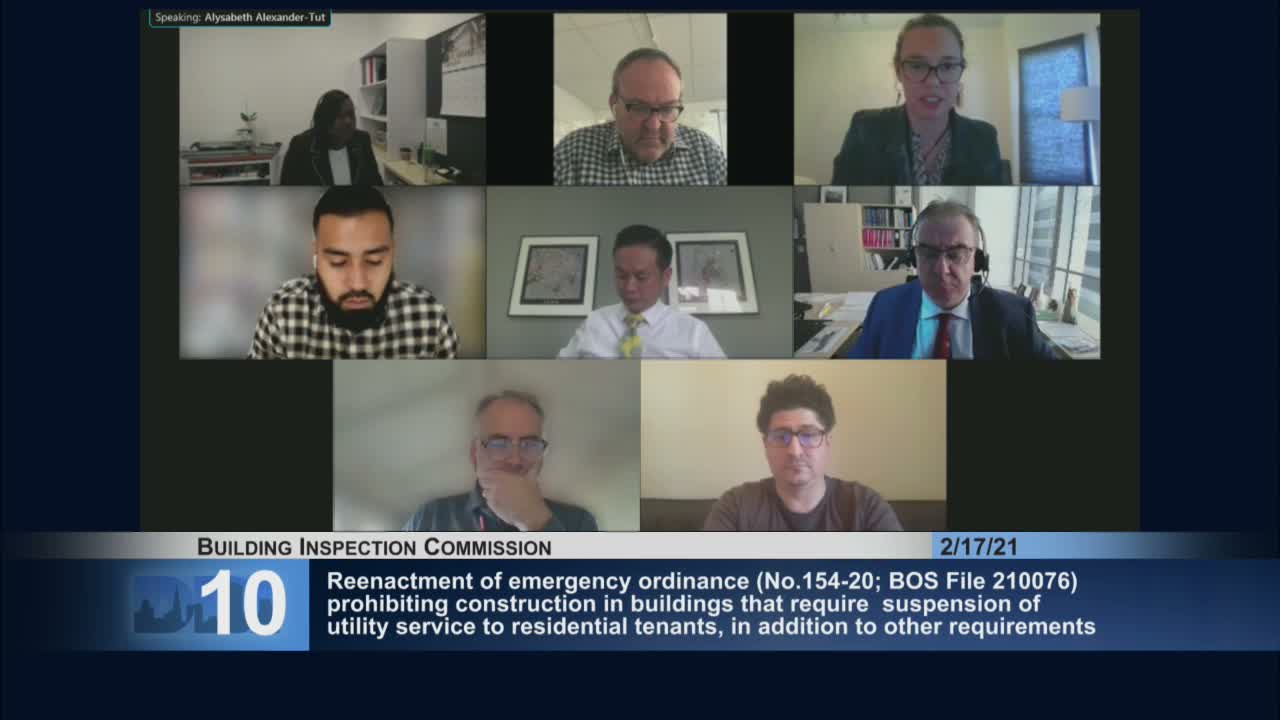
Commission votes to reenact emergency ordinance protecting tenants from construction-related utility interruptions
Summary
The Commission recommended reenactment of a 60‑day emergency ordinance requiring project sponsors to provide alternative water/electric service or advance notice when construction would disrupt tenants' utilities, citing pandemic-era shelter-in-place concerns.
The Building Inspection Commission voted unanimously to recommend reenactment of a 60‑day emergency ordinance that limits construction projects that would interrupt water or electricity to residential tenants without providing alternatives or written advance notice.
Staff presentation: Lee Hepner (staff) summarized the reenactment text (original file 200,763). The ordinance requires an alternative supply if interruptions exceed two hours in a single day and requires 72 hours’ notice for interruptions totaling more than two hours (and one week for outages lasting more than three days in a week). The reenactment excludes affordable housing projects by policy and is implemented as a complaint-driven enforcement sequence: initial tenant complaint yields a warning to the project sponsor, follow-up notice requirements, and, if violations continue, a notice of violation from DBI.
Why it matters: The measure aims to protect tenants who must shelter in place during the COVID-19 pandemic from repeated or prolonged loss of essential services. Staff reported that during the original 60‑day implementation period there were about 14 complaints under the ordinance.
Outcome: The Commission voted unanimously to recommend reenacting the emergency ordinance for another 60 days and to forward the recommendation to the Board of Supervisors’ committee for consideration.
Ending: The emergency reenactment will remain in place while staff and the Board consider whether a longer-term or permanent ordinance is necessary.