Get Full Government Meeting Transcripts, Videos, & Alerts Forever!
Get email alerts on the Racial Equity topic
No spam. Unsubscribe anytime.
DBI unveils racial equity action plan with three Year-1 priorities
Summary
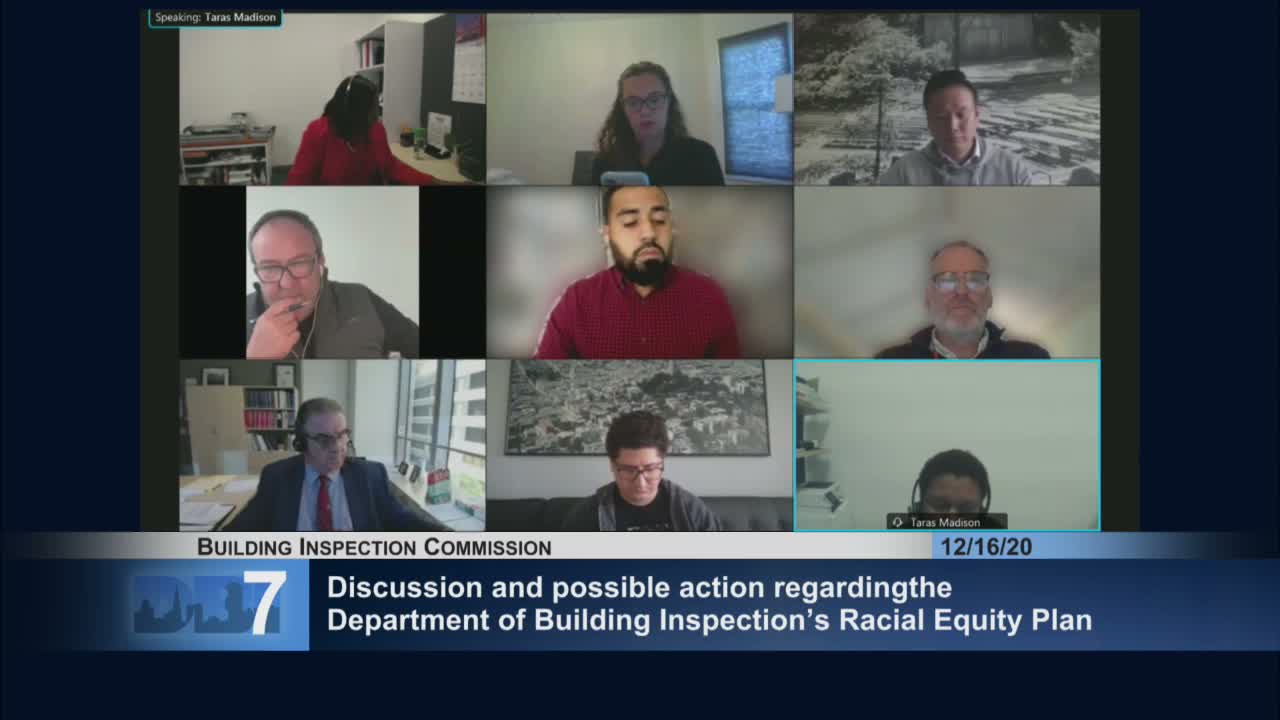
Deputy Director Taras Madison presented DBI's three-year racial equity action plan, noting workforce demographics, a staff survey, and Year-1 priorities: expand equity training/team, diversify recruitment outreach, and standardize onboarding for permit technicians.
Deputy Director Taras Madison presented the Department of Building Inspection's racial equity action plan, a three-year framework prepared under a city ordinance requiring departments to submit equity plans.
Madison said the plan uses a template from the Office of Racial Equity and combines demographic data from the Department of Human Resources with a department survey (about 48% staff participation). The demographic snapshot in the presentation showed white and Asian employees make up the largest shares of DBI's workforce (described in the presentation as approximately 77% combined), while permit technicians and housing-inspector classifications showed more racial and ethnic diversity.
The plan splits into two phases: Year 1 focuses on internal workforce issues and boards/commissions; external program changes will follow in later phases. Based on survey responses and data analysis, Madison set three Year-1 priorities: (1) expand the DBI racial-equity team and roll out racial-equity training modules to build an inclusive organizational culture; (2) diversify recruitment outreach to expand the applicant pool for underrepresented classifications; and (3) standardize onboarding and training for permit technicians to improve mobility and professional development.
Madison said DBI must submit the action plan to the Office of Racial Equity by Dec. 31 and will update priorities annually. Commissioners praised the plan's specificity and urged continued subcommittee attention and implementation oversight.
Commissioners said the targeted, classification-level approach (focusing on permit technicians and frontline staff) increases the plan's chance of producing measurable improvements in representation and retention.