Get Full Government Meeting Transcripts, Videos, & Alerts Forever!
Get email alerts on the Building Electrification topic
No spam. Unsubscribe anytime.
Building Commission backs San Francisco proposal to require all‑electric systems in new construction and urges ban on outdoor gas features
Summary
The Building Inspection Commission unanimously recommended the proposed ordinance to require all‑electric systems in most new construction, added a request to ban outdoor decorative gas lighting/heating, and asked DBI to finalize implementation rules after further review of an administrative bulletin.
The Building Inspection Commission on Aug. 12 recommended that the Board of Supervisors adopt an ordinance that would require new construction to use all‑electric systems for heating, cooling, water heating, cooking and clothes drying for initial permits filed after Jan. 1, 2021, with narrow exceptions for documented technical or physical infeasibility.
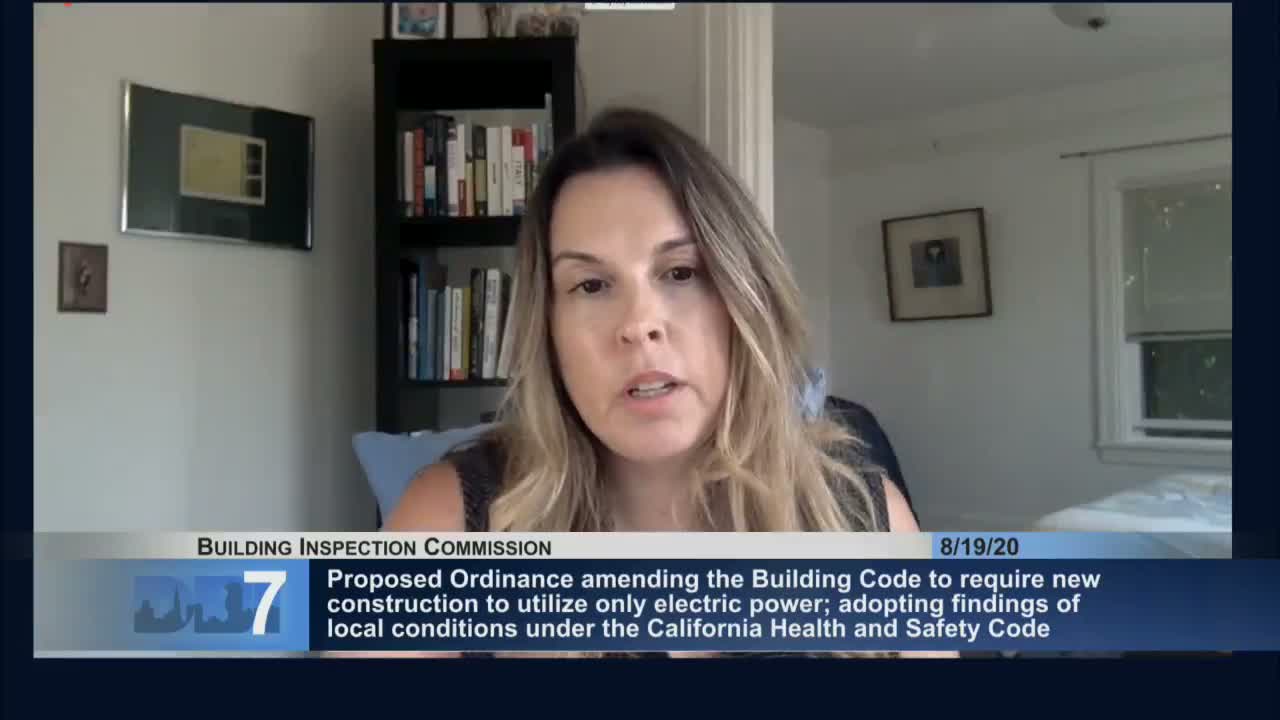
Cindy Pomerberg, climate program manager at the San Francisco Department of the Environment, told commissioners the rule is intended to protect public health, improve resilience and cut greenhouse‑gas emissions. She said the ordinance would be implemented under the city’s building code authority and that mixed‑fuel permits would be allowed only where an all‑electric design is “physically or technically infeasible.” Pomerberg said waivers would be decided through DBI’s plan review process and require third‑party verification and an electric‑ready condition for any mixed‑fuel systems.
The commission heard extensive public comment, largely in support. Speakers representing health, environment and neighborhood groups cited studies linking indoor gas combustion to higher asthma risks and urged that exceptions be tightly limited. Several trade and industry commenters raised technical questions about transformer capacity, Title 24 energy‑code compliance, EV charger load and noise from equipment, asking the city to clarify feasibility standards and transformer siting rules.
During the discussion, commissioners voted unanimously to add language asking the Board of Supervisors to expressly include outdoor decorative gas uses — such as decorative fireplaces and gas lighting — among the banned systems. Deputy City Attorney Rob Capla confirmed that the amendment would expand the definition of a “mixed‑fuel building” to include decorative outdoor gas uses.
Pomerberg and DBI staff also presented Administrative Bulletin AB112, which lays out implementation guidance, including a narrow waiver process, third‑party special inspections, and thresholds for transformer placement when a sidewalk or site cannot accommodate electrical equipment. After public commenters pressed for tighter electric‑ready standards and public notice of waivers, the commission voted to continue final action on AB112 to the September meeting to allow additional review of the bulletin’s language.
What happens next: The commission’s recommendation, plus the suggested amendment on outdoor gas uses, will be transmitted to the Board of Supervisors. DBI and the Department of the Environment will continue refining AB112 and related guidance, with the commission scheduled to revisit the administrative bulletin in September.