Get Full Government Meeting Transcripts, Videos, & Alerts Forever!
Get email alerts on the Hotel Conversion Ordinance topic
No spam. Unsubscribe anytime.
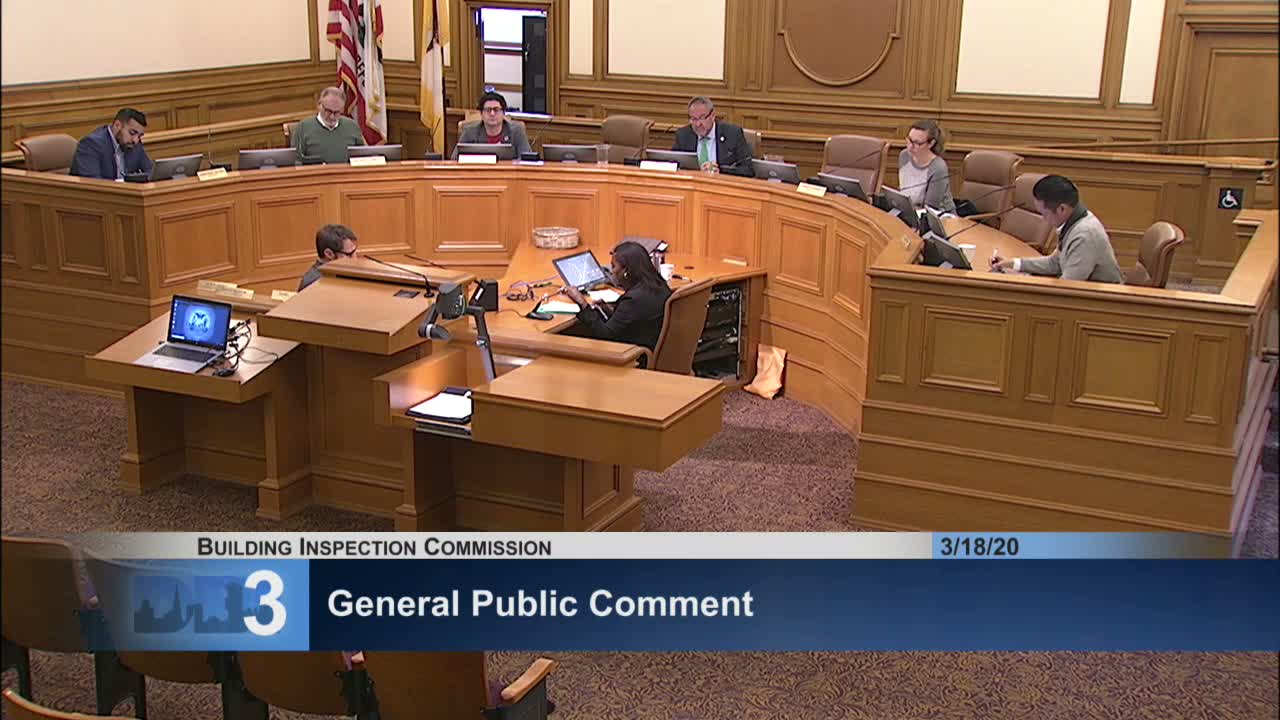
Building Inspection Commission approves hotel-conversion ordinance despite calls to postpone under shelter-in-place
Summary
The Building Inspection Commission unanimously approved an ordinance to amend the city's hotel-conversion rules (repealing Ordinances 38-17 and 102-19 and updating administrative-code provisions) after a public-comment letter asked that the hearing be postponed because of the COVID-19 shelter-in-place order.
The San Francisco Building Inspection Commission on March 18, 2020, voted unanimously to approve an ordinance amending the city's hotel-conversion rules, repealing Ordinances 38-17 and 102-19 and reenacting updated provisions in the administrative code that change definitions, permit procedures, fees and penalties.
Commissioners heard the item after the board limited the agenda to two items. The secretary read a public comment letter from the law firm Sachs Friedman & Patterson on behalf of the San Francisco SRO Hotel Coalition and several single-room-occupancy owners, asking that the hearing be postponed because the March 17 shelter-in-place order prevented "meaningful public participation" as required by the Ralph M. Brown Act. The letter said, "The hearing must be postponed," and argued the proposed amendments were not urgent and could be addressed after the order is lifted.
Jerry Dratler, a frequent public attendee, told the commission that broader oversight concerns — including recent reporting and a resignation at the Department of Building Inspection — underscored the need for careful review of the department's procedures. "An outside investigation needs to focus on the department's lack of internal controls and weak building code enforcement process," Dratler said.
Commissioners discussed the item and then moved to approve the ordinance. The motion was seconded and carried on a unanimous roll-call vote.
The commission did not postpone the hearing; the vote clears the ordinance to move forward to any further required steps in the city's legislative or administrative process. The commission's action was limited to the item on the agenda; the public-comment letter remains part of the record and its authors said they reserved "the right to submit additional arguments and materials in advance of the final hearing on this matter."