Get Full Government Meeting Transcripts, Videos, & Alerts Forever!
Get email alerts on the Seawall Resilience topic
No spam. Unsubscribe anytime.
Port and resilience staff report early seawall projects, $50 million BRIC award tentatively expected
Summary
Port and Waterfront Resilience Program staff briefed the committee on early seawall projects, pending grants (including a tentative $50 million FEMA BRIC selection), two bond sales to date and a remaining authorization of over $330 million; staff also summarized the Army Corps San Francisco waterfront flood study and high-level cost estimates.
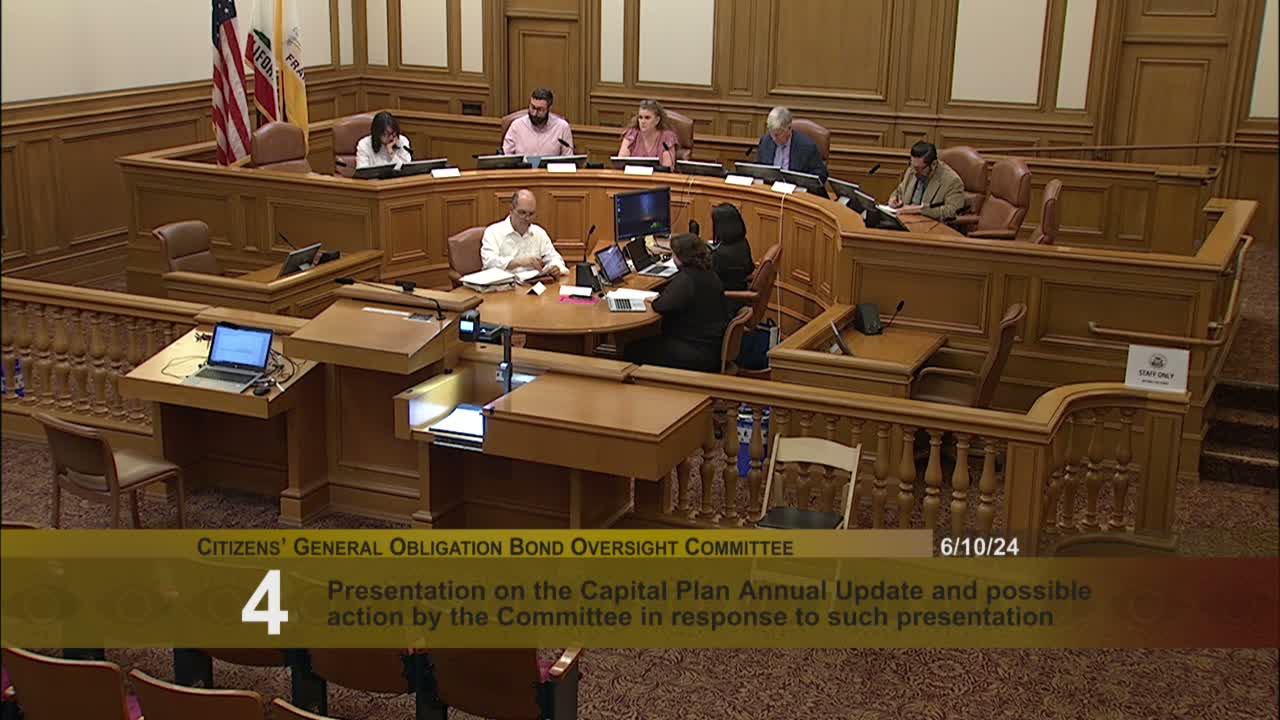
Carlos Colon, waterfront program administrator, and Waterfront Resilience Program staff updated the committee on the Embarcadero Seawall earthquake-safety program and related waterfront resilience work. Colon said two prior bond sales totaled $88,700,000 and the program currently has more than $330,000,000 in remaining authorization; staff are budgeting a third, larger bond sale for late 2024 or early 2025 to fund projects moving into procurement and construction.
Skyler Poe listed additional grant funding the program has secured or is pursuing: a $7,800,000 grant from the Coastal Conservancy for the Southern Embarcadero Resilience and Enhancement Project; a $1,300,000 Caltrans grant (secured by SFMTA in partnership with the waterfront program) for resilience transportation planning; and a tentative $50,000,000 FEMA BRIC selection for downtown coastal resilience. Poe said the BRIC award remains subject to federal review and a final notice of award is expected within several months.
Stephen Reel described early projects now in predesign and conceptual phases: Wharf J‑9 resilient shoreline and float work (Fishermans Wharf), Pier 15 seismic safety work near the Exploratorium, Pier 9, Ferry Building utility and structural investigations, a downtown coastal resilience project focused on near-term flood-risk reduction for BART and Muni infrastructure, Pier 24.5–28.5 strengthening near the Bay Bridge, and a Pier 35.5 fire-water system and fire-boat berth demonstration project (on hold pending PUC alignment decisions). Reel also described the programs living seawall pilot (in partnership with the Smithsonian), now in monitoring with early positive signs.
Brad Benson summarized the U.S. Army Corps of Engineers San Francisco waterfront flood study: staff expect the corps to complete the study in the 2026 timeframe so a project could be authorized by Congress thereafter. Benson emphasized the study's scale and uncertainty: a high-level Corps draft illustrated options to elevate shoreline segments, use engineered habitat, or rely on flood-proofing for specific buildings; staff noted a very high-level rough cost estimate cited in the presentation and a potential local match obligation if a federal project advances. Benson urged robust public participation as planning continues and said staff are examining early projects to identify opportunities to align local work with any future Army Corps strategy.
Committee members asked technical questions about underwater inspection methods (staff said teams use low-tide field work rather than divers) and distinctions between living seawall measures and green stormwater planters (staff said planters provide a first level of filtration but high groundwater often limits infiltration on the waterfront). There were no in-person public comments for the item.