Get Full Government Meeting Transcripts, Videos, & Alerts Forever!
Get email alerts on the Code Enforcement topic
No spam. Unsubscribe anytime.
San Francisco abatement board upholds order for Irving Street property, votes to assess costs
Summary
The Abatement Appeals Board on July 17, 2019, unanimously upheld an order of abatement for an Irving Street property after staff said unpermitted over‑excavation and an exposed foundation created an unsafe condition; the board directed staff to expedite emergency shoring review.
The San Francisco Abatement Appeals Board voted unanimously on July 17, 2019, to uphold an order of abatement for a property on Irving Street and to assess associated costs after department staff said inspectors found unpermitted over‑excavation and a removed retaining wall that left an adjacent foundation exposed.
Chief building inspector Maurice Hernandez told the board that a Notice of Violation was issued in August 2018 for over‑excavation and that the property required two permits — one for emergency shoring and one for remediation underpinning — but that the city had not received a structural engineer's assessment or the required completed permits. "We still have the unsafe condition," Hernandez said, recommending the board uphold the order of abatement and impose costs.
The appellant, who identified themself as the property owner, said they had hired a contractor to install temporary shoring after the wall collapsed and that they intend to replace it with a permanent, five‑foot retaining wall once engineered drawings are approved. The owner said they had offered the neighboring owner a release to permit interior photos needed for the underpinning permit but that the neighbor refused, a point the appellant described as a key impediment to finalizing permits. "We need the cooperation and we can't get it," the appellant said.
Commissioners debated splitting the response into two steps: fast‑track an emergency shoring review and permit based on stamped engineering calculations to secure the structure, and then require fully engineered underpinning drawings (which may require neighbor cooperation) for permanent repairs. Staff committed to meet with the appellant's engineer the next day to review calculations and to determine whether emergency measures already installed meet the department's criteria.
After discussion, Commissioner Walker moved to uphold the order of abatement and assess costs; the motion was seconded and carried on a unanimous roll call vote. The record shows all voting members present voted yes and one commissioner was excused. The board did not grant a stay or abeyance; it directed staff to prioritize review of emergency shoring measures to confirm structural stability and allow inspections.
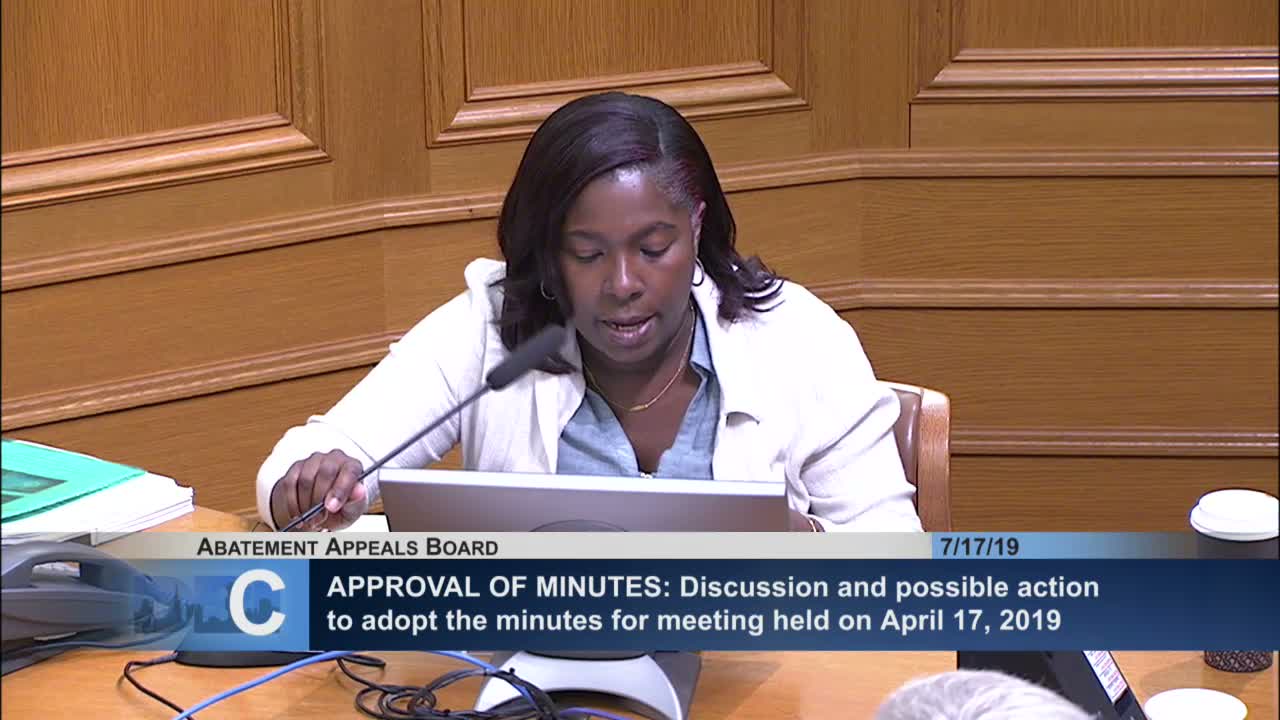
The board had earlier announced a 30‑day continuance for a separate Case No. 6861 and approved minutes for a prior meeting (the transcript packet lists the minutes date as "April 1739," which appears to be a typographical error in the record). The meeting was then adjourned.