Get Full Government Meeting Transcripts, Videos, & Alerts Forever!
Get email alerts on the Abatement Extensions topic
No spam. Unsubscribe anytime.
Abatement board holds 57 Taylor Street order in abeyance until Feb. 1 after owner shows active work plan
Summary
The Abatement Appeals Board upheld an order of abatement for 57 Taylor Street but held the order in abeyance until Feb. 1, 2019, directing that only legally required costs be imposed and noting the owner's good-faith progress on PG&E upgrades.
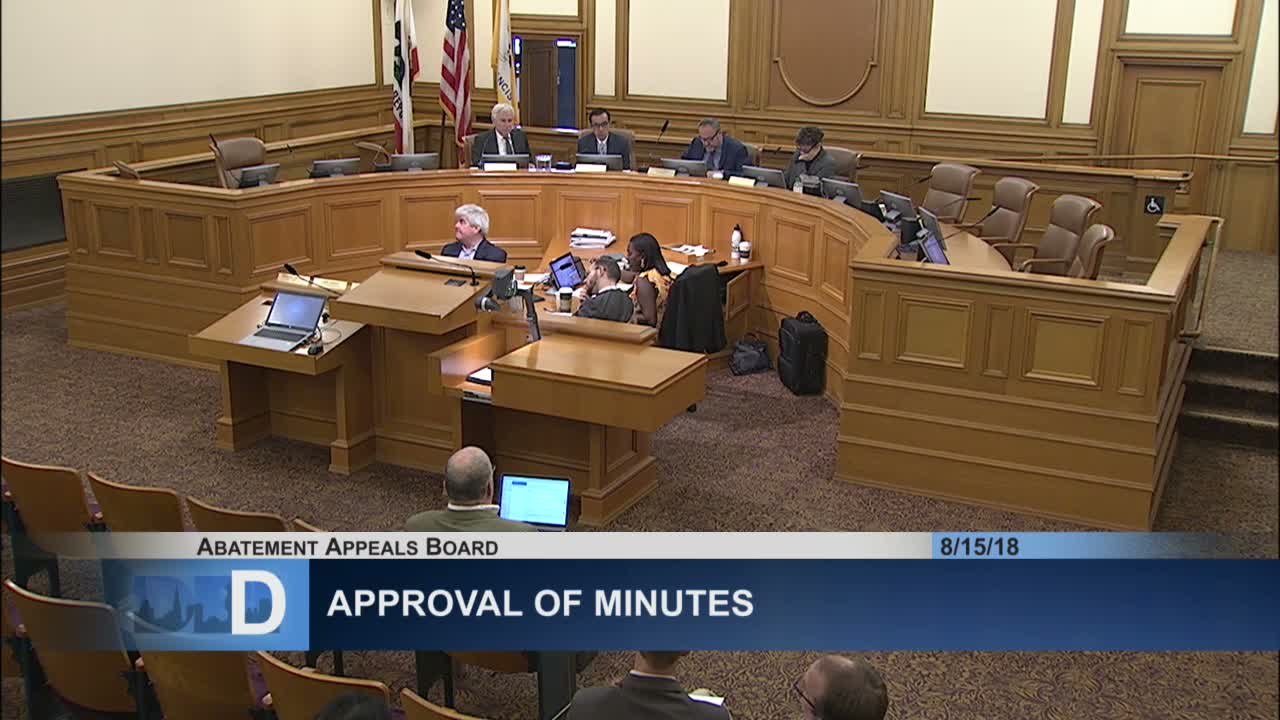
The Abatement Appeals Board on Thursday upheld an order of abatement for 57 Taylor Street but held enforcement in abeyance until Feb. 1, 2019, after hearing testimony that the property owner had recently secured PG&E-approved drawings and begun on-site work.
David Thomas, the owner's representative, told the board that the notice of violation (NOV) for inadequate electrical service was posted the day his group acquired the building and that nine units remain offline, producing an estimated $30,000 in monthly revenue loss. "We mobilized to work with PG&E and our contractors as soon as we purchased the building," Thomas said, noting the constraint that other permit work in the building was paused pending the electrical upgrade.
Syed Noesi, the project manager for the electrical upgrade, said PG&E drawings were only recently approved and that a contractor secured an electrical permit in June; he told commissioners work started and some equipment had been delivered. Noesi warned that PG&E and a city encroachment permit remain critical path items and that the October extension requested in the appeal paperwork could be tight.
City Attorney Brad Rusty advised the board that the code allows the panel to give up to 18 months to complete work when there is no life-safety hazard. After discussion about realistic timelines and monitoring, the board voted to uphold the order of abatement, hold it in abeyance until Feb. 1, 2019, and impose only the assessment of costs required by city code when the project is completed. The motion stated the relief was granted in part because the board found evidence of the owner's good-faith efforts to resolve the violation.
Commissioners recorded a unanimous roll-call vote in favor of the motion. The decision also directed staff to report back on progress and clarified that certain statutory monitoring and investigative fees could not be entirely waived.
The board's action lets the owner continue the electrical upgrade under the watch of the department while preserving the city's right to assess legally required costs when the violation is resolved.