Get Full Government Meeting Transcripts, Videos, & Alerts Forever!
Get email alerts on the Oversight And Reporting topic
No spam. Unsubscribe anytime.
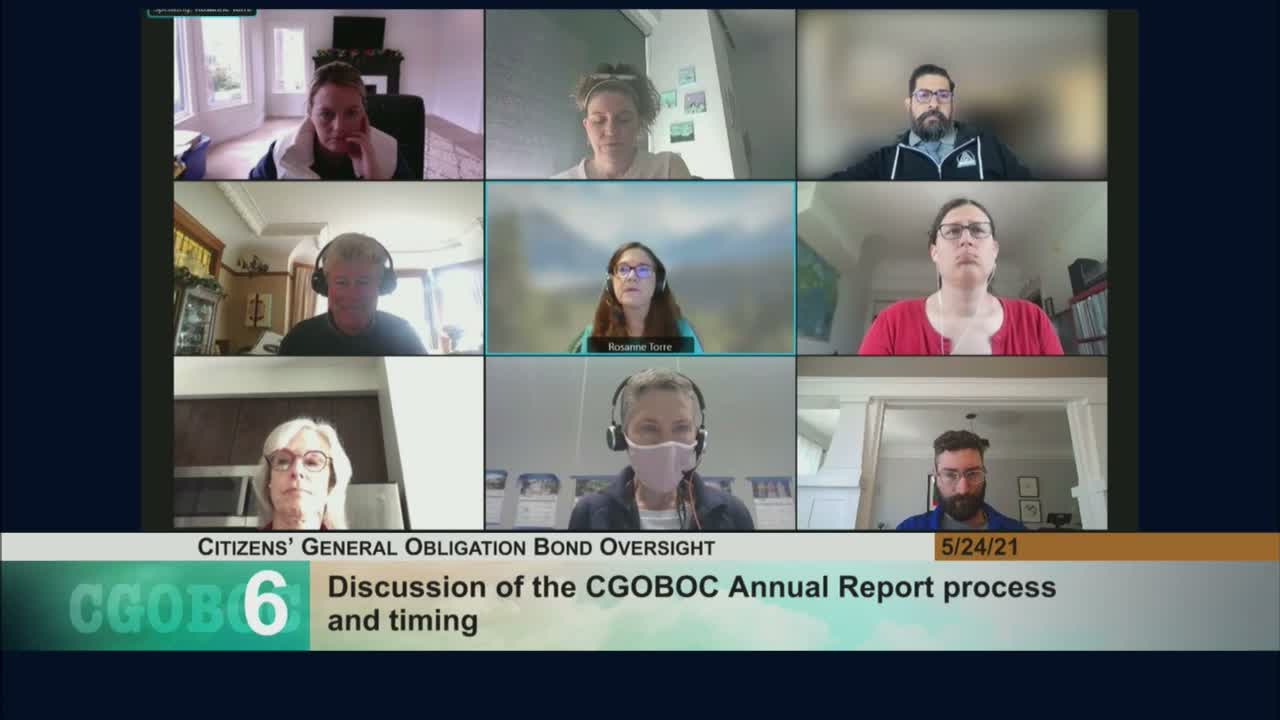
Oversight committee moves annual report target to October; whistleblower raises concerns about omissions in recent report
Summary
Committee members agreed to push the annual oversight report timeline to October to allow FY20–21 data and pending audits to be included. A public commenter, Dr. Derek Kerr, urged the committee to investigate apparent omissions and a sharp increase in uninvestigated whistleblower complaints in the Quarter 2 report.
Members of the Citizens General Obligation Bond Oversight Committee agreed to adjust the schedule for their annual report to allow inclusion of fiscal year 2020–21 data and any audit/public‑integrity reports issued after the fiscal year close. Peg Stevenson of the Controller’s Office proposed a streamlined report with an executive summary, liaison paragraphs and high‑level charts; several members recommended moving review and approval from August to October to ensure complete fiscal‑year figures are available.
Peg said the Controller’s Office and audit liaisons (including Mark Dela Rosa and staff) will refresh the proposed timeline and circulate a revised schedule to the chairs and liaisons. Members emphasized quality of data and the inclusion of late‑issued audit products before finalizing the annual report.
During public comment, Dr. Derek Kerr, identifying himself as a whistleblower, told the committee he found two anomalies in the Quarter 2 whistleblower program report: (1) the report no longer tallied the number of whistleblower retaliation claims sustained (a figure that had appeared in reports since 2012) and (2) the share of complaints that were not investigated rose sharply to 42 of 185 complaints (about 23%), compared with about 8% previously. Kerr asked the committee liaisons to seek an explanation for why outcomes of retaliation claims were omitted and why the proportion of uninvestigated complaints tripled. The committee acknowledged the public comment and staff said they would follow up as part of their oversight work.
Committee staff also summarized upcoming audit and public integrity deliverables, including two short public integrity products expected in the next months (a 12‑month status update and an ethics reporting deliverable) and planned geobond expenditure audits.