Get Full Government Meeting Transcripts, Videos, & Alerts Forever!
Get email alerts on the Flood Disclosure topic
No spam. Unsubscribe anytime.
Commission backs requirement that sellers disclose SFPUC 100‑year storm flood‑risk map designation
Summary
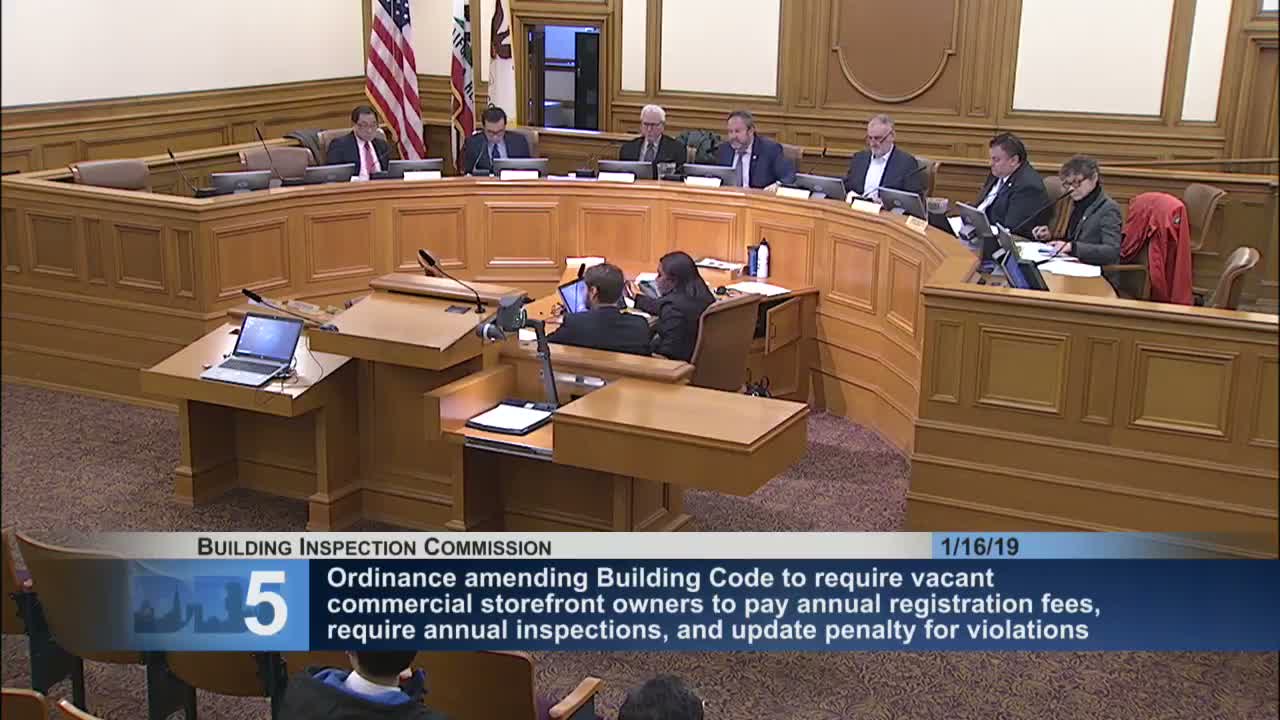
The commission unanimously recommended a disclosure ordinance requiring sellers and landlords to disclose when a property lies within the SFPUC 100‑year storm flood‑risk map. SFPUC staff described the model, parcel review process and outreach; commissioners asked about insurance and lender impacts.
The Building Inspection Commission on Jan. 16 recommended approval of a proposed ordinance requiring disclosure when a property is located inside the San Francisco Public Utilities Commission’s 100‑year storm flood‑risk zone. Sarah Minnick, a wastewater enterprise staffer at SFPUC, told commissioners the map is intended to help owners and renters make informed decisions and that the map and parcel lookup tools are available online at sfwater.org/floodmaps.
Minnick explained SFPUC used a hydraulic and hydrologic model that includes the 100‑year design storm, elevations, building footprints and existing infrastructure; the commission heard that ‘deep’ flooding was defined as greater than 6 inches and that contiguous flooding was defined as an area larger than half a city block. The SFPUC also created a parcel review process to consider appeals when ground elevation or on‑site barriers indicate the model is not correct for a specific address; staff said no parcel review fee will be charged during the ordinance’s pilot year.
Insurance and scope: Commissioners asked whether the disclosure would affect flood insurance or lending. Minnick said the SF map differs from FEMA coastal/riverine maps because it addresses precipitation‑driven flooding; San Francisco participates in the National Flood Insurance Program, and SFPUC staff said many properties identified by the map would remain eligible for NFIP insurance. As an illustrative figure, Minnick said an average single‑family annual flood insurance cost could be approximately $137, while commercial premiums vary with structure and content.
Why it matters: The disclosure is part of a broader city strategy to increase flood resilience and to give buyers, renters and lenders clearer information when they make decisions about property, renovations or storage of valuable items. The ordinance would add a required disclosure sheet and a question to DBI’s 3R report asking whether a building is in the flood‑risk zone delineated on the SFPUC map.
Vote and next steps: After questions from commissioners on outreach to real‑estate professionals, title companies and lenders, the commission approved the recommendation by roll call. SFPUC and DBI staff said they will continue outreach and coordinate implementation steps should the Board of Supervisors consider the ordinance.
The commission’s action forwards the matter for further legislative review and interagency implementation planning.