Get Full Government Meeting Transcripts, Videos, & Alerts Forever!
Get email alerts on the Tall Buildings topic
No spam. Unsubscribe anytime.
ATC study urges targeted triggers, BORP expansion and new geotechnical guidance for San Francisco’s tall buildings
Summary
A 14–15 month Applied Technology Council study recommends revising building‑code triggers, strengthening post‑earthquake inspection training for tall buildings, codifying geotechnical foundation guidance, and expanding the Building Occupancy Resumption Program (BORP) to shorten downtown recovery after a major quake.
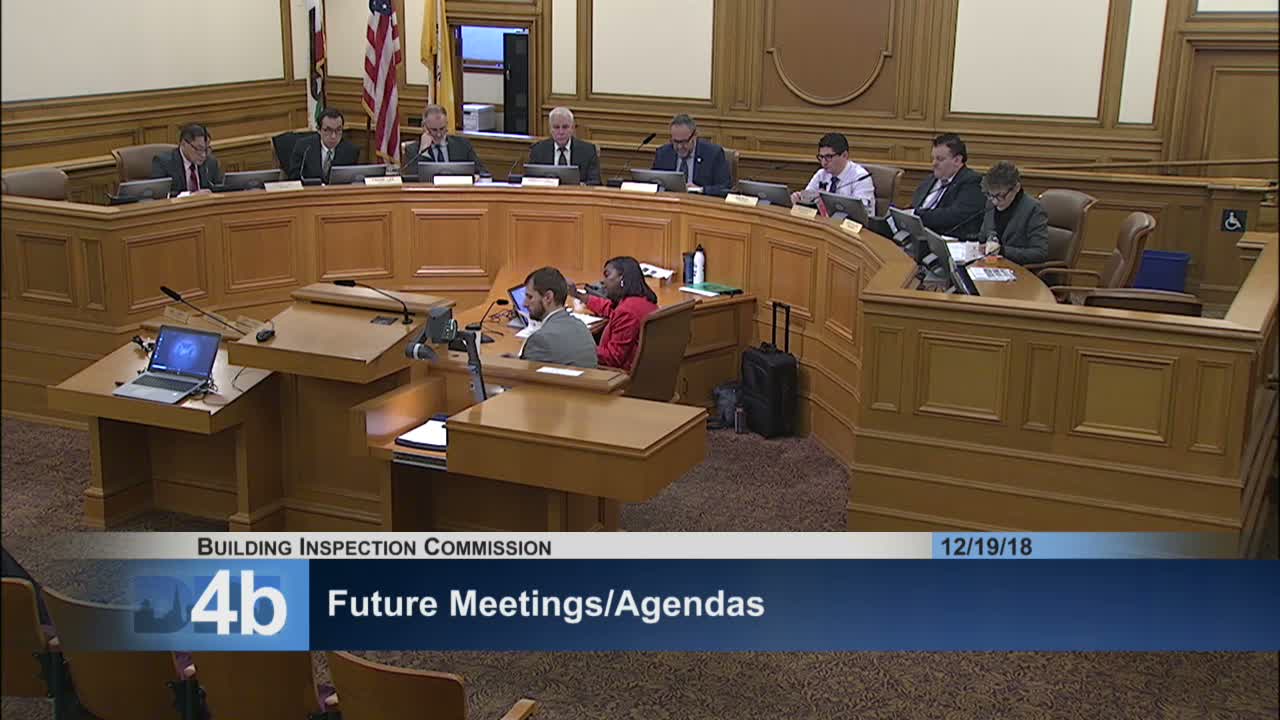
The Building Inspection Commission on Dec. 19 heard a presentation of a tall‑building safety strategy report prepared by the Applied Technology Council (ATC) that urges San Francisco to change how it inspects, evaluates and prepares its tallest, most complex buildings for earthquakes.
The report, presented to the commission by Brian Strong, the city’s chief resilience officer, and ATC experts, recommends amending triggers in the local building code so that building changes prompt an “evaluation scope” rather than automatic retrofits; developing an administrative bulletin for geotechnical foundation design; expanding and maintaining a city building database; and training a cadre of inspectors and volunteers specifically for tall buildings to speed post‑quake damage assessments.
Why it matters: taller downtown buildings now include many residential units and critical facilities whose prolonged closure after a quake would disrupt jobs and services. ATC advisers told the commission that programs such as BORP (Building Occupancy Resumption Program) and a tailored volunteer or peer‑review approach can reduce recovery time and avoid overly cautious yellow‑ or red‑tagging that can keep safe buildings offline.
Key findings and recommendations
ATC highlighted several concrete recommendations aimed at avoiding both missed damage and unnecessary disruption: enforce repair provisions to identify possible undiscovered damage to steel moment‑frame connections (a risk highlighted after the 1994 Northridge quake), revise alteration and acquisition triggers so they prompt staged evaluations rather than broad retrofits, and codify limits for differential settlement and other geotechnical criteria now treated inconsistently across firms.
John Hooper, presenting structural recommendations, said work in Los Angeles showed hidden beam‑to‑column connection cracks can be hard to find and recommended a trigger and sampling approach (inspect a randomized set of joints and expand only if damage is found) rather than inspecting every joint. He said FEMA 352 and other guidance would be used to develop those approaches.
Geotechnical guidance and training
Shabaddani, ATC’s geotechnical contributor, recommended an administrative bulletin focused on foundation design for tall buildings (to complement AB 83 structural guidance), creation of a geotechnical report checklist and enhanced DBI staff training. “What this administration bulletin is going to do for us is to strengthen DBI procedures for assessing the completeness of the foundation and excavation design for tall buildings,” the presentation said.
Rapid post‑quake evaluation and BORP
ATC urged stronger coordination among DBI, the Department of Emergency Management and Public Works for post‑earthquake inspections and suggested a specialized training/certification for volunteers handling tall buildings. David Bonowitz, a structural engineer on the ATC team, said BORP reduces the risk that mutual‑aid volunteers unfamiliar with a complex building will take overly cautious actions that keep buildings closed. He summarized BORP’s benefits: it relieves pressure on SAP (the state Safety Assessment Program), helps owners plan recovery and can save “two to three months” in reopening time when properly implemented.
Implementation timeline and stakeholder outreach
DBI deputy director Dan Lowry said the department will prioritize recommendations into short‑term (6 months), mid‑term (up to 18 months) and long‑term (over 18 months) tasks and will convene task forces including engineers, BOMA and homeowners associations. Commissioners emphasized engaging owners, homeowners associations and tenants, since retrofit costs and incentives will largely affect owners and residents.
Public comments and records recommendation
Members of the public urged DBI to preserve original design files and peer‑review exchanges. Mark White, an attorney, recommended that DBI retain not only final stamped materials but also the calculations and correspondence produced during peer review to aid future investigations and repairs. Speakers also suggested outreach to insurance underwriters about business‑interruption incentives tied to BORP participation.
Next steps
ATC and DBI said they will refine report language and post the final report online (expected early January). Commissioners asked DBI and ATC to convene peer review and simulations of BORP and SAP coordination to test surge capacity and volunteer certification needs.
Quotes
“Part of the reason that we ended up doing this study… is how neighborhoods are gonna be able to respond to earthquakes,” Brian Strong said, describing the project’s focus on downtown recovery. John Hooper said the sampling approach used after Northridge helps find hidden connection damage: “You look at a handful of joints … and if you find damage in those, you go further.” David Bonowitz said BORP “is a win‑win… it relieves DBI of some pressure because the burden is taken by the individual building owners themselves.”
The commission did not take a formal vote on the ATC report itself; the department and ATC will return with implementation steps and a final online report.