Get Full Government Meeting Transcripts, Videos, & Alerts Forever!
Get email alerts on the Affordable Housing Bond Audit topic
No spam. Unsubscribe anytime.
City Services Auditor reports small unauthorized spending in 2015 affordable housing bond audit
Summary
A CSA audit of the 2015 affordable housing bond tested roughly 75% of expenditures and found about 0.58% ($269,504) in unauthorized charges, mostly classified as overhead or pre-cutoff-date expenses; auditors recommended staff training and reimbursement guidelines.
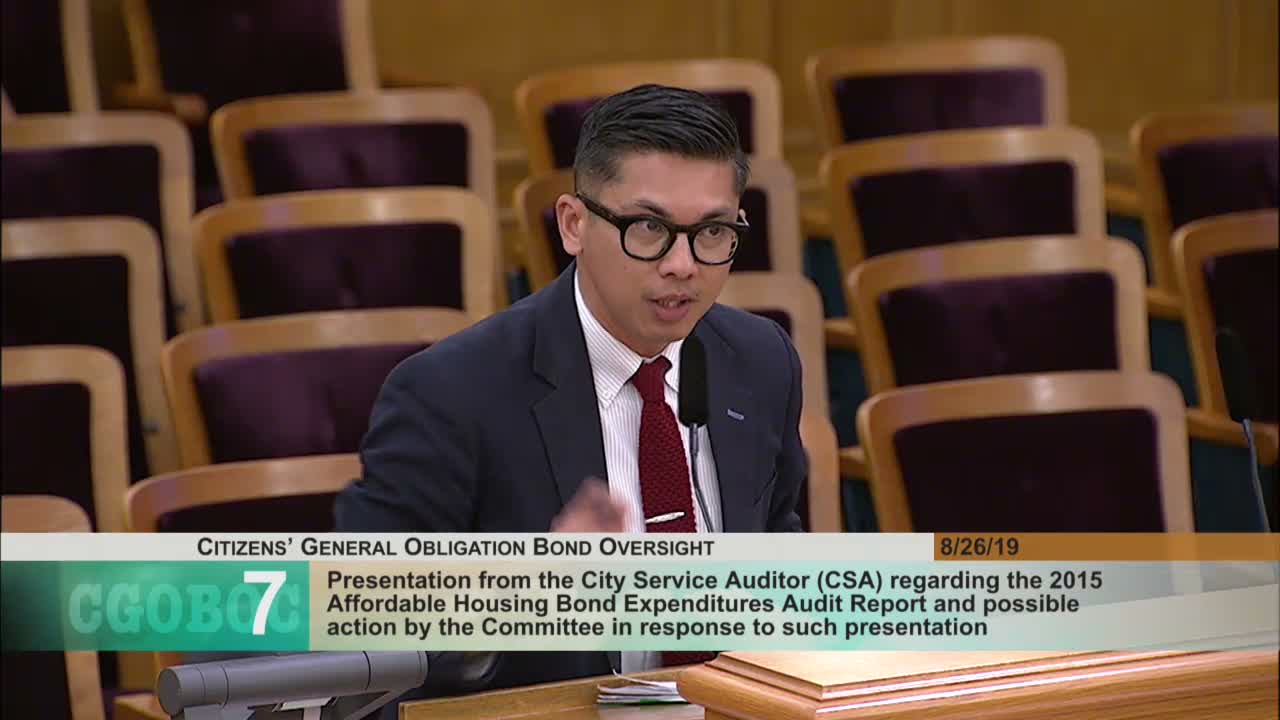
Mark De La Rosa, Acting Director of Audits in the Controller's Office, and consultant Simon Wadsworth presented the results of the City Services Auditor's audit of the 2015 affordable housing bond. The audit examined expenditures through June 30 and tested roughly three-quarters of the value of reported spending.
Wadsworth said the auditors tested approximately 75% of expenditures and found 99% of sampled expenditures were approved and in accordance with the bond measure. The audit identified $269,504 (about 0.58% of tested expenditures) as unauthorized: the largest portion was categorized as overhead (examples cited included third-party financial consultant fees, relocation expenses and operating reserves), and a second finding ($75,615) covered expenditures that occurred prior to the bond's allowable cut-off date.
Auditors recommended that the Mayor's Office of Housing and Community Development (MHCD) establish training for program staff on approval procedures for projects with multiple funding sources and create pre-bond reimbursement guidelines. According to the presentation, MHCD has agreed to implement the recommendations by an implementation date provided in the audit materials.
Committee members asked about sample-selection methodology; auditors said the 75% sample varied by project and was determined by reviewing the full expenditure download and selecting items with potential red flags for closer testing. Public commenters urged the audit program to include change-order reporting and clearer breakdowns of hard versus soft costs to make bond spending more transparent to residents.
The committee thanked the audit team and indicated it will continue to monitor implementation of the recommendations.