Get Full Government Meeting Transcripts, Videos, & Alerts Forever!
Get email alerts on the Capital Planning topic
No spam. Unsubscribe anytime.
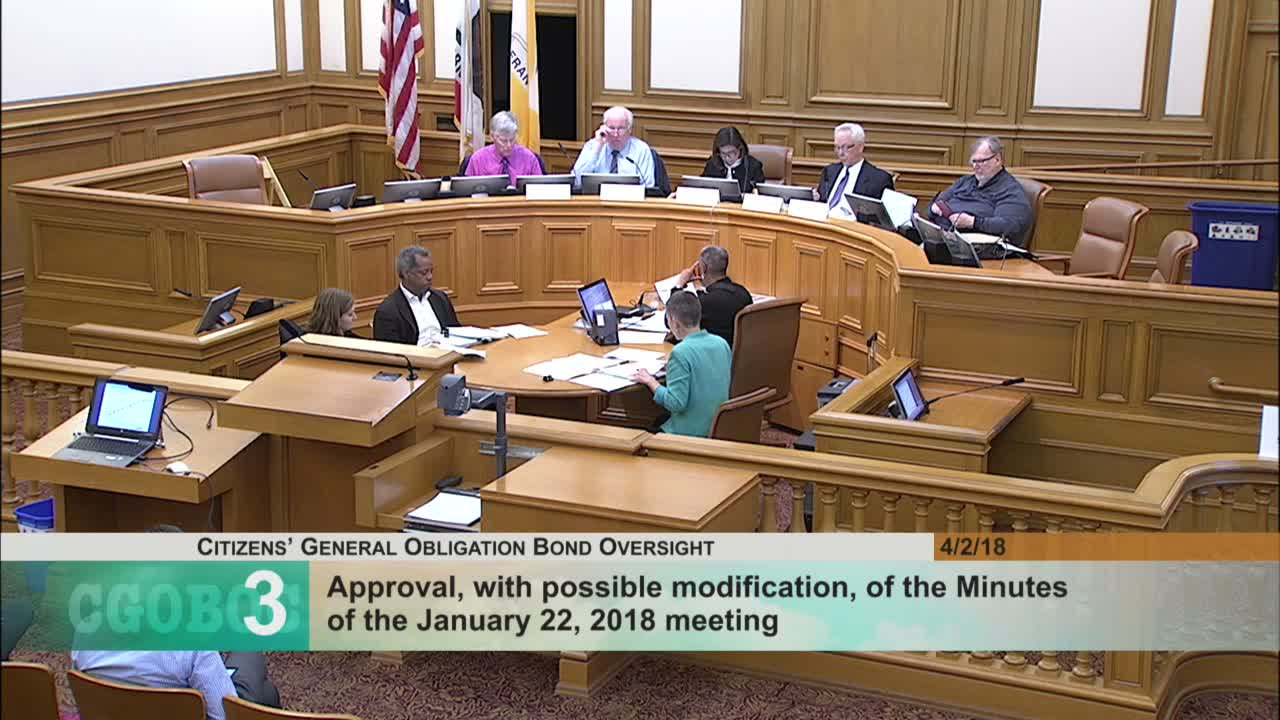
City planner previews capital plan and seawall bond; committee asks for more specificity
Summary
The city’s director of capital planning presented an updated capital plan and previewed a proposed Seawall bond, warning the seawall program will be multiyear and costly; committee members asked for clearer project-level specificity and considered how set-asides and COPs affect long-term funding.
Heather Green, director of the Office of Resilience and Capital Planning, told the GO Bond Oversight Committee that the city’s capital plan integrates resilience goals with long-term funding priorities and that programmatic constraints — including voter-approved set-asides and certificates of participation (COPs) limits — shape which projects can move forward.
"This plan encapsulates what we know about planned funding, deferred and emerging needs across the city's portfolio," Green said, summarizing the office’s approach to balancing maintenance, ADA work, street resurfacing and higher-priority enhancements.
Green previewed the proposed Embarcadero Seawall bond, describing the waterfront as a three-mile linear asset that will need multiyear work and significant planning. She provided a planning-stage cost benchmark, saying the seismic and flood-control improvements could cost about $575,000,000 per mile and that a single bond tranche will not fix the whole seawall.
Committee members asked whether programmatic bonds would lack project-level specificity and whether voters would know which segments would be improved. Green said bond reports will provide the greatest practicable detail and that the first tranche would fund planning and early construction for priority segments rather than the entire three-mile stretch. She also defended programmatic flexibility given market conditions — including limited bidders and high construction costs — while acknowledging the committee's interest in oversight and specificity.
Members also raised concerns about the growing number of set-asides that reduce discretionary pay-as-you-go capacity and asked how that trend could alter capital-plan outcomes. Green said set-asides most acutely affect the cash program and can squeeze funds available for renewals and less-visible needs.
The capital plan presentation included timeline targets for updating renewals data and indicated the next full draft will be circulated in advance of the spring capital-planning cycle.
Next steps: staff offered to supply the committee with the seawall bond report when finalized and to return with more project-level detail as the bond documentation is prepared for a November ballot measure.