Get Full Government Meeting Transcripts, Videos, & Alerts Forever!
Get email alerts on the Vacant Storefronts topic
No spam. Unsubscribe anytime.
DBI outlines vacant‑storefront registry and enforcement, commissioners debate higher fees and district canvassing
Summary
DBI reported it has identified roughly 383 suspected vacant storefronts (80 in the Richmond), with 21 registered buildings, 29 director hearings and 96 notices of violation; commissioners urged district‑level canvassing, data sharing with Planning, and a fee study to fund proactive enforcement.
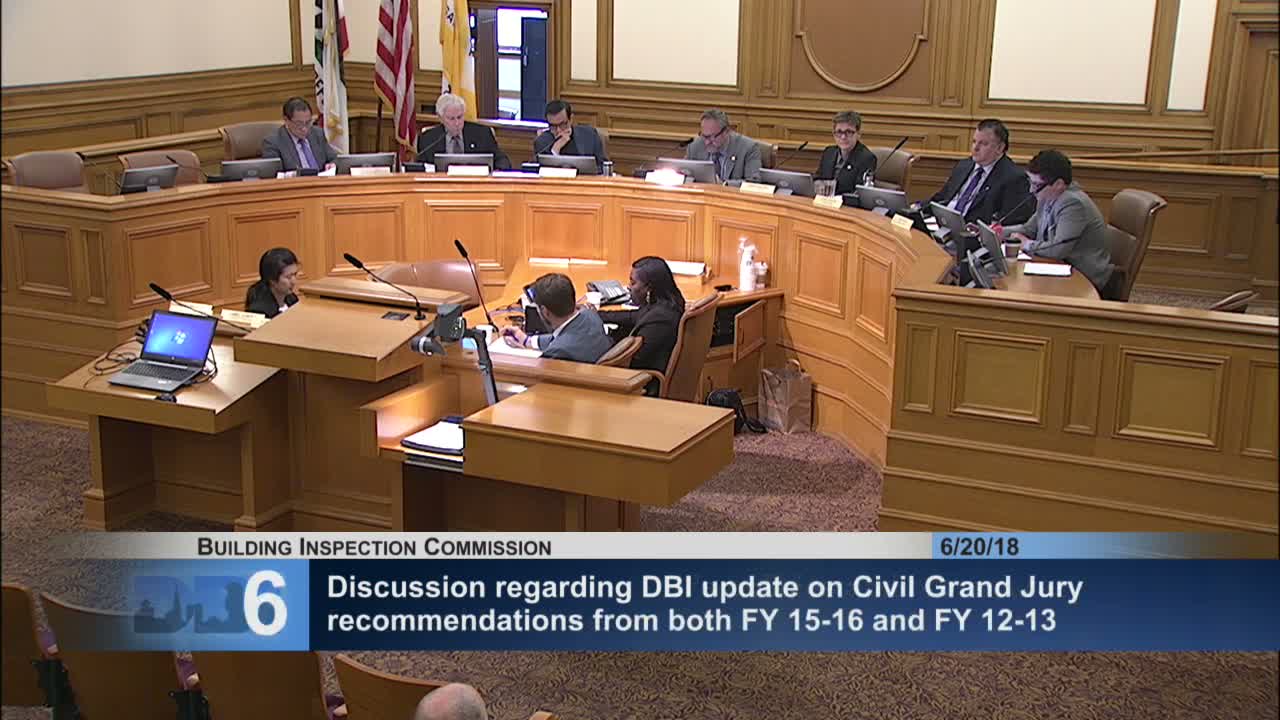
Deputy Director Ed Sweeney briefed the Building Inspection Commission on DBI’s vacant‑building and storefront program on June 20, describing the registration and enforcement process and presenting district‑level findings.
Sweeney summarized DBI’s definitions and process: a property is deemed vacant or abandoned if unoccupied, unsecured, boarded, unsafe, cited for blight under Chapter 80 of the San Francisco Administrative Code, or unoccupied more than 30 days. Commercial vacant‑storefront ordinance (noted on record as Ordinance 182/14) took effect in 2014 and residential vacant‑building rules trace to Ordinance 194/04.
On statistics, Sweeney reported DBI has identified "383" suspected vacant storefronts in its database, including approximately 80 properties in the Richmond District; 21 properties are registered, 29 cases have proceeded to director's hearings and 96 notices of violation have been issued, with roughly 302 complaints pending field verification. He described DBI’s typical enforcement path: complaint or systemic enforcement, field inspection, notice of violation, required permits or reinspections, director's hearings, abatement orders and cost assessments.
Commissioners and public commenters praised Supervisor Fewer’s community canvass in the Richmond, which produced a large set of new leads; members urged DBI to present district‑specific reports to supervisors and to coordinate with Planning to evaluate whether zoning or conditional‑use requirements are contributing to long vacancies.
Members also debated the current administrative fee for vacant properties. Sweeney said the fee is based on cost‑recovery and discussed a decline from earlier figures; one commissioner described the current charge as approximately $711, and others pressed whether higher fees tied to proactive monitoring and a higher service standard should be studied. Deputy City Attorney Rob Kapla cautioned that fees above cost‑recovery would require a formal study to establish the legal basis.
DBI said staff capacity limits how much proactive inspection can be sustained, but the department runs windshield surveys, assigns lists to district inspectors and is increasing resources for the program. Commissioners asked DBI to develop clearer metrics and district reports so supervisors can coordinate canvassing and enforcement priorities.