Get Full Government Meeting Transcripts, Videos, & Alerts Forever!
Get email alerts on the Dbi Operations topic
No spam. Unsubscribe anytime.
DBI reports tougher tall-building review, cost-recovery ordinance and a payment-adapter hiccup in solar tracking project
Summary
DBI staff updated the commission on tightened tall-building review rules (S18), a Board-passed cost-recovery ordinance due to take effect in April, a vendor contractual issue affecting a solar permit web payment adapter, and DBI financials showing year-over-year revenue softening.
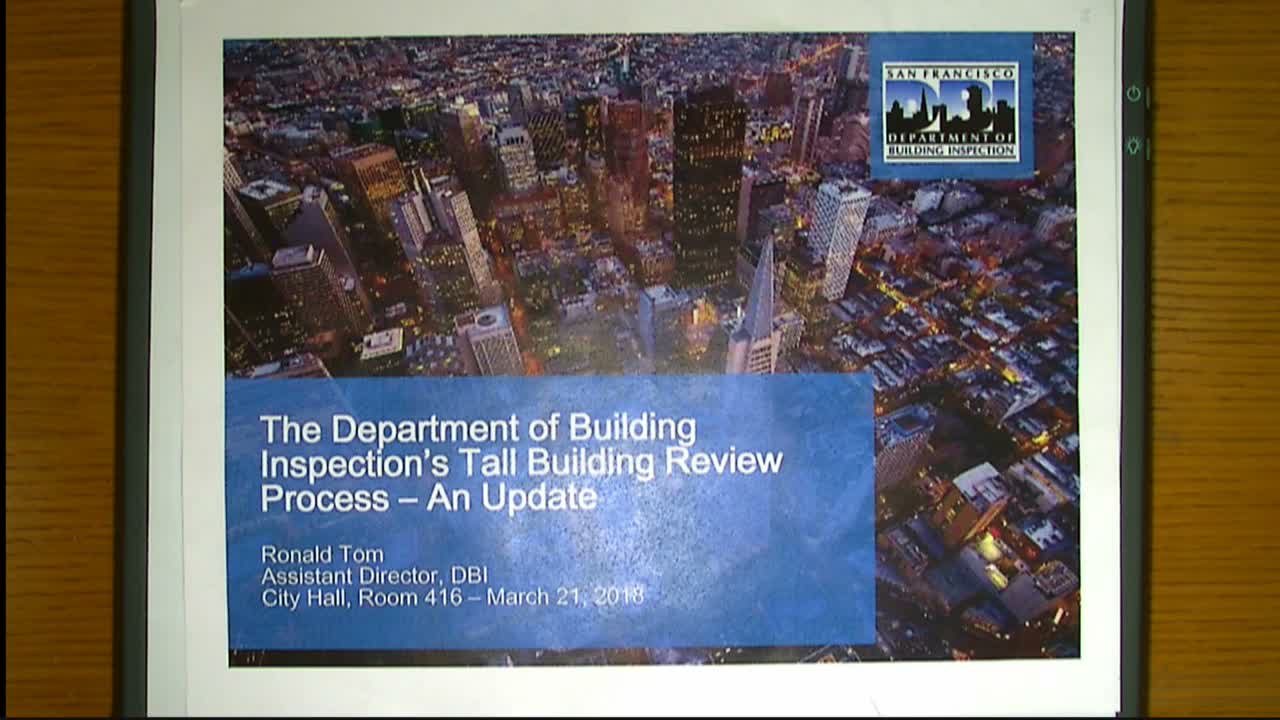
Assistant Director Ron Tom told the commission that DBI has strengthened its tall-building review process: Information Sheet S18 (interim guidelines) was reissued with requirements for two technical geotechnical reviewers on design-review teams for tall buildings in soft soils unless foundations extend to bedrock, and owners must monitor settlement for 10 years with annual reporting to DBI. DBI also completed a prequalified pool of structural and geotechnical reviewers and said the Board passed cost-recovery legislation in February that the Mayor signed on March 9; that ordinance authorizes DBI to recover third-party review costs from applicants and is set to take legal effect in April 2018.
Ron Tom said departments will supply contact details and recording requirements for long-term settlement monitoring and that DBI aims to strengthen implementation steps while providing options to streamline low-risk cases.
Sean Buellen (Department of Technology), reporting on the solar permanent project tracking system, said most interfaces are in development or testing but disclosed a recent vendor contract issue affecting the web payment adapter used for online payments. "There is a possibility that we're not licensed to use the product towards the end of the year," he said; DBI and technology staff are exploring alternatives and working with the vendor relationship owners to resolve the issue.
Deputy Director Tyrus Madison presented February financials: plan-check revenues were down compared with February 2017 (the transcript cites roughly $50 million in Feb 2017 versus about $47 million this year, a drop of over $3 million), though DBI projected it might be about $6 million over budget overall. The department reported code-enforcement and inspection activity metrics for February and said ADU and other task forces were being formed to streamline permit determinations.
Next steps: DBI will implement S18 requirements and finalize the reviewer pool and cost-recovery procedures; staff will bring proposed process improvements and any vendor mitigation plans back to the commission in subsequent monthly updates.