Get Full Government Meeting Transcripts, Videos, & Alerts Forever!
Get email alerts on the Adu Program topic
No spam. Unsubscribe anytime.
DBI and Planning outline ADU permitting gains, push for combined pre-application meetings
Summary
DBI and Planning reported process changes that cut planning release times for ADU permits and presented program metrics; planning and fire officials recommended mandatory joint pre-application meetings and department checklists to prevent applicants from pursuing infeasible projects.
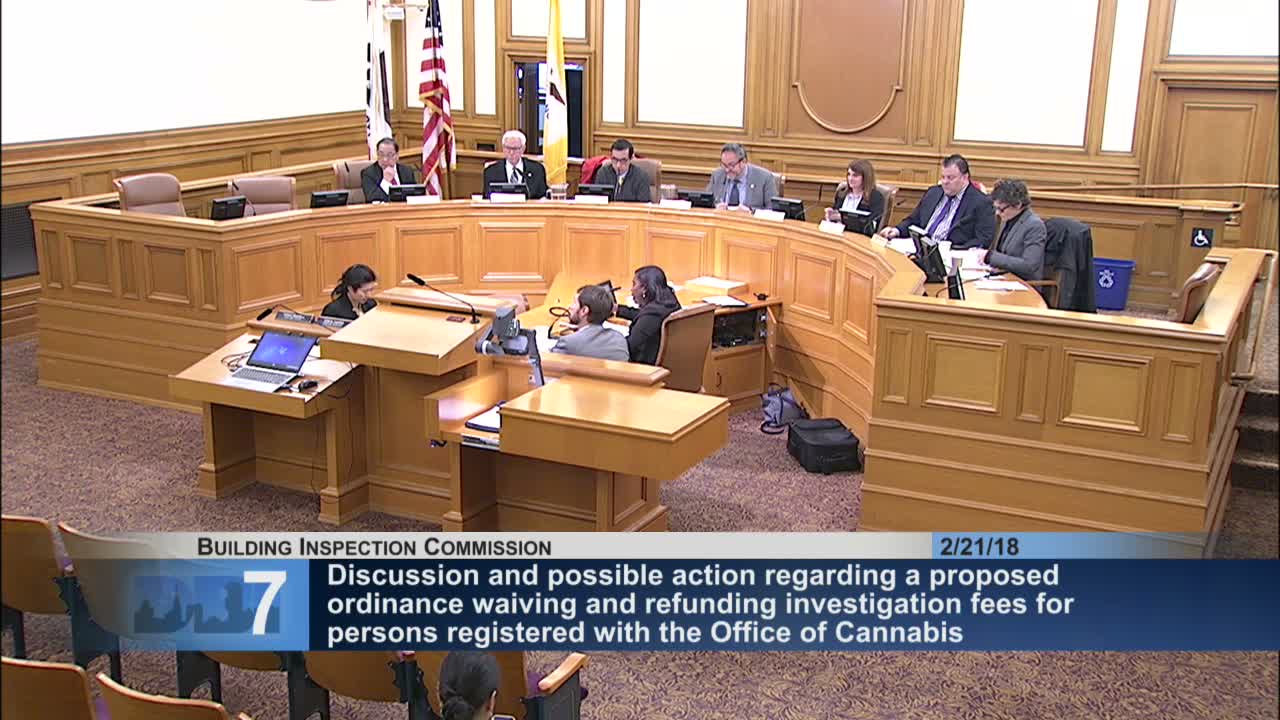
City officials told the Building Inspection Commission on Feb. 21 that San Francisco's accessory dwelling unit (ADU) and legalization effort has produced substantial application activity and that recent procedural changes are shortening review timelines, but staff urged earlier, multidisciplinary screening to avoid late-stage rejections for life-safety issues.
Dan Lowry, Deputy Director for Premises Services at DBI, gave a summary of DBI's ADU workflow and statistics: 666 screening forms received year to date; 596 permits submitted; 109 permits issued; 23 work-completed certifications; and a number of permits in review by planning, DBI building/mechanical, fire, and other city agencies. Lowry emphasized the use of pre-application meetings and an option for some over-the-counter services to expedite mechanical and building review.
Marcel Boudreaux, principal planner at the Planning Department, described two ADU tracks: the single-family local program enacted under ordinance 95-17 (one ADU allowed on single-family lots with specific exceptions) and the citywide program under ordinances 162-16/162-17 and related state law changes. Boudreaux said planning has shortened internal turnaround for Costa Hawkins regulatory agreements from an average of 166 days to roughly 68 days in initial trials and that average planning review time for certain ADU projects is about 87 days (with a 120-day statutory limit for some processes).
Fire Department staff and the fire marshal warned that fire and life-safety requirements (egress, rescue windows, sprinkler scope, travel-distance limits) are governed by state-adopted codes and cannot be waived. The fire marshal recommended early, combined pre-application meetings that include planning, building and fire to surface intractable issues (for example, gas-meter locations that block feasible egress) before applicants spend funds on design and planning-stage revisions.
Members of the commission and public commenters, including longtime practitioner Pat Boskovich, urged making joint pre-application meetings mandatory for ADU intake and recommended that agencies publish a clear, shared checklist so applicants and design professionals know the baseline requirements in advance. Staff signaled support for a combined pre-application model and agreed to convene a coordination meeting to develop checklists and administrative processes, including whether one combined fee or a coordinated intake can be implemented.
Next steps: DBI and Planning agreed to draft baseline intake checklists, discuss combined pre-application logistics and return with a proposal; commissioners asked for a plan to increase applicant participation in pre-application intake and to identify projects that are unlikely to meet code early in the process.
Quotes: "We do track them weekly... total screening forms received so far year to date is 666. Total permits submitted are 596. Permits issued is 109," DBI Deputy Dan Lowry said.
"The fire department cannot waive fire code requirements... We cannot be less restrictive than state law," the fire marshal said.
Ending: Staff will report back with proposed intake checklists and a plan for coordinated pre-application meetings so applicants can determine feasibility earlier and save time and expense.