Get Full Government Meeting Transcripts, Videos, & Alerts Forever!
Get email alerts on the Building Inspection Budget topic
No spam. Unsubscribe anytime.
DBI presents FY2018–20 budget; Accela hosting and legal work orders draw questions
Summary
Deputy Director Tyrus Madison outlined the Department of Building Inspection’s proposed FY2018–20 budget, highlighting fee-driven revenues, new outreach and technology costs tied to the Accela rollout and planned hires; commissioners pressed for clearer contingency and legal-billing plans.
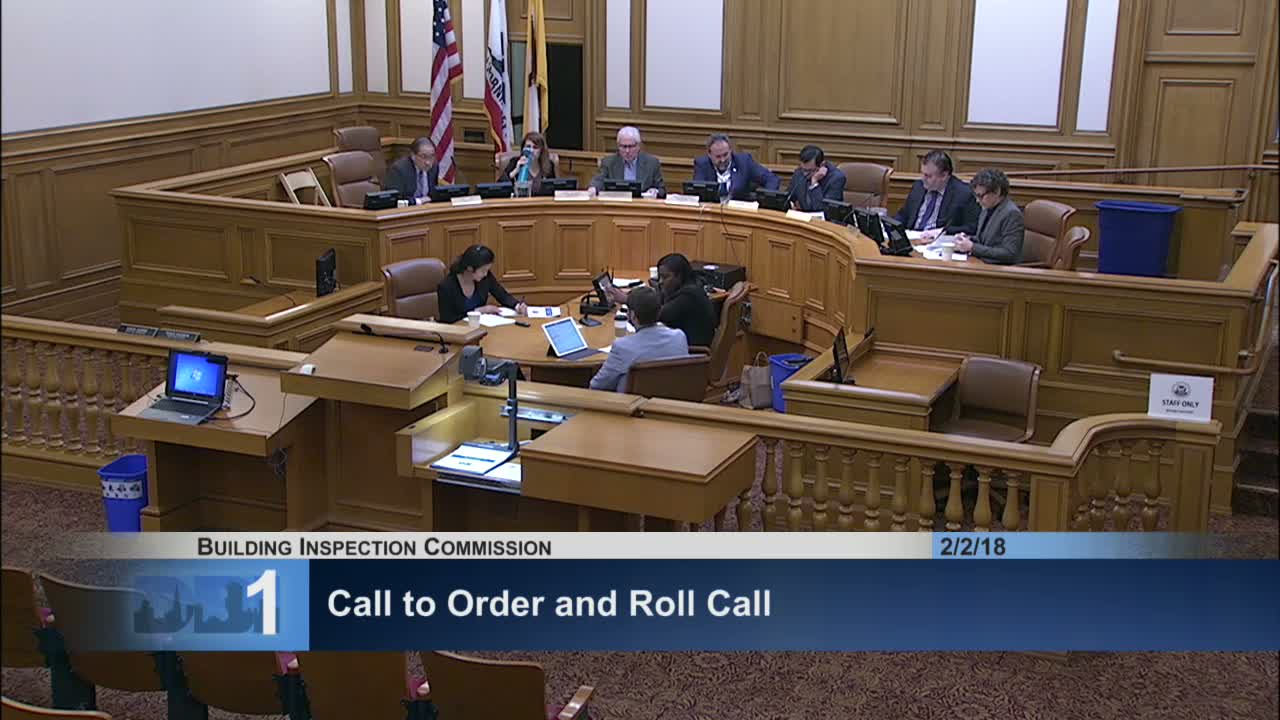
Deputy Director Tyrus Madison presented the Department of Building Inspection’s proposed biennial budget for fiscal years 2018–19 and 2019–20 at a special Building Inspection Commission meeting on Feb. 2, 2018. Madison said the department’s revenue mix remains strong but that recent unprecedented growth is expected to level off, and he emphasized priorities tied to the mayor’s housing directive, accessibility initiatives and ongoing mandatory soft‑story outreach.
Madison told commissioners that roughly 60 percent of DBI’s revenue comes from two sources—plan‑check fees and building permits—and said plan‑check revenue is budgeted at about $4.5 million while building‑permit revenue is projected near $13.7 million, an increase of roughly $700,000 from prior assumptions. He also noted that collections for 1–2 family rental unit fees have trended lower than prior budget estimates (about $1.2 million realized versus $1.5 million budgeted previously), and the department reduced its projection to match actual collections.
The budget proposal includes higher personnel costs driven by cost‑of‑living adjustments, retirement and health benefits; increased outreach spending for multilingual advertising around the accessible business entrance program and earthquake‑safety outreach; and investments in technology. Madison described a successful pilot of an electronic signature and queuing system and proposed department‑wide rollout with additional monitors and computers that the department expects to be able to move into the new facility.
Commissioners spent substantial time on two cost drivers. First, the Accela implementation (referred to several times in the hearing) will change the hosting model to a private cloud, producing a marked FY20 hosting cost increase. Madison said the city has a $4.2 million work order to the Department of Technology for the Accela contract’s current phase, including about $400,000 in contingency, and that annual private‑cloud hosting costs will rise to roughly $900,000–$1.1 million once fully in FY20. He told the commission the Accela go‑live target is September 2018 and that much of the work‑order contracting and contract management is handled by the Department of Technology, not DBI.
Second, commissioners pressed DBI on legal work orders and how city attorney fees are charged. Commissioners asked whether DBI is billed for city attorney work and whether DBI has sufficient reserve authority to cover large cases. Madison confirmed DBI is billed for city attorney work orders and other interdepartmental services and that, in prior years, the department had to transfer funds at year‑end to cover a large case. He said some work‑order amounts are set citywide and may be updated as other departments finalize charges during the mayor’s budget balancing process.
Several commissioners argued that recent practice appears to allow the city attorney to proceed in enforcement matters without advance notice to DBI or the commission’s litigation committee, and they urged better advance coordination and possible budgeting for anticipated litigation activity. Deputy Director Madison said he has reached out to departments to track overspending and that DBI will follow up when work‑order estimates change.
On staffing, Madison said DBI is actively filling vacancies with a series of hires planned in February, and the department has candidate lists for building inspectors, electrical and plumbing staff to support inspection and enforcement workloads tied to housing and code priorities.
Madison also said DBI retains reserves that could be used for moving and furnishing costs associated with a planned 2020 relocation to a new building, but that specific moving and furnishing costs are not yet known and therefore were not included in this budget. The commission corrected the date for the next special meeting to Feb. 14 at 9 a.m. in Room 408; there were no public comments and the commission adjourned at 1:47 p.m.
The commission’s questions focused on contingency planning for Accela, clarity about which department manages specific contracts and work orders, and how legal billing will be handled and budgeted going forward. Madison said DBI will continue to monitor revenue trends, follow up with departments on outstanding work‑order estimates, and return with updated budget figures as the mayor’s office completes its balancing process.