Get Full Government Meeting Transcripts, Videos, & Alerts Forever!
Get email alerts on the Cannabis Regulation topic
No spam. Unsubscribe anytime.
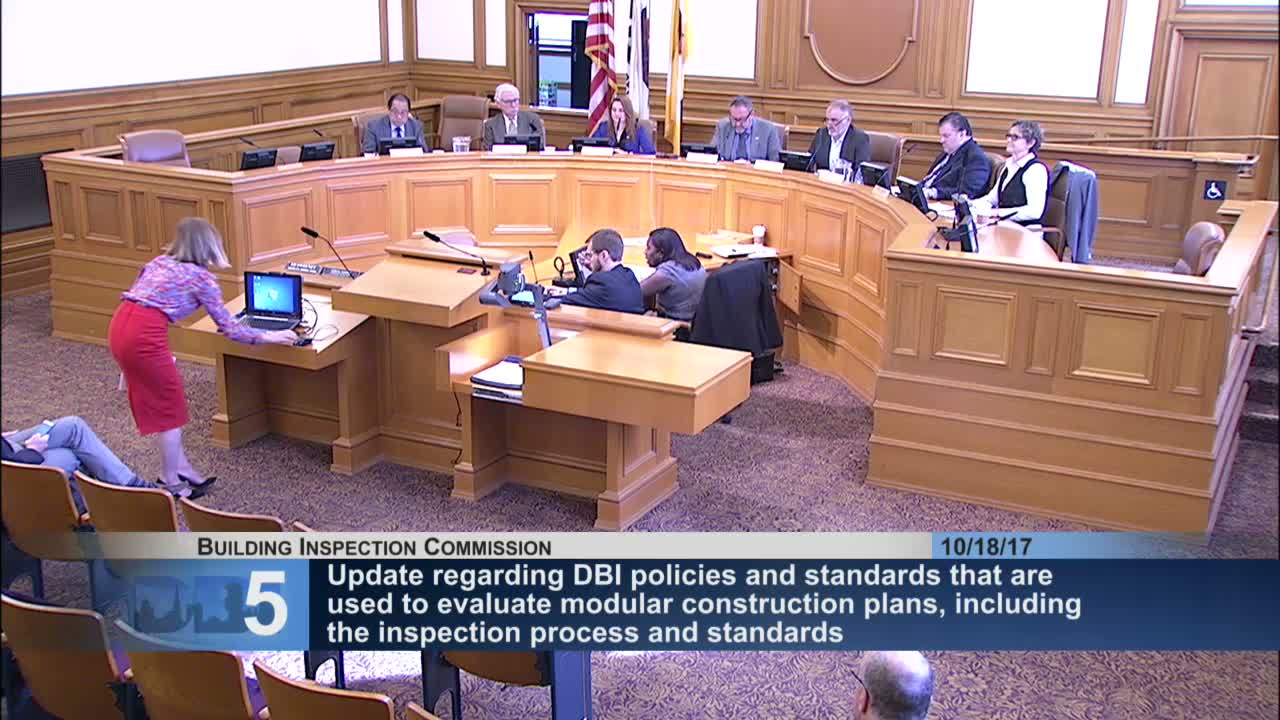
San Francisco officials briefed on proposed 2018 commercial cannabis ordinance, commission voices support
Summary
The Office of Cannabis and Planning presented a draft ordinance to regulate commercial cannabis activity in 2018, including an equity program, a registration path for existing operators and zoning controls; the Building Inspection Commission voted to register its support and asked for continued interdepartmental coordination.
Nicole Elliott, director of the Office of Cannabis, told the Building Inspection Commission on Oct. 18 that the mayor's proposed ordinance would implement local permitting and operating standards to align with the state's Medical and Adult Use Cannabis Regulation and Safety Act. Elliott said the draft legislation prioritizes public health and safety, minimizing youth access and promoting equity, and establishes a registration process to bring existing operators into the regulated market.
"Under the act, cannabis businesses are required to have local authorization for their activity, as well as a state license to conduct that activity in 2018," Elliott said, explaining the need to create a local permit structure and an equity program offering priority processing and technical assistance to eligible applicants.
Aaron Starr, manager of legislative affairs for the Planning Department, laid out land-use controls included in the draft: cultivation, manufacturing and testing are treated as PDR (production-distribution-repair) uses; a new retail-cannabis use would carry a 600-foot buffer from schools (the state standard) and a 300-foot anti-clustering rule between retailers; neighborhood notification and conditional-use review would apply in specific districts. "The buffer around sensitive uses will be 600 feet," Starr said.
Commissioners and members of the public asked detailed questions about permit types, microbusiness rules, consumption permits, ownership transfers and enforcement authority. Elliott said consumption would be permitted only on licensed retail or microbusiness premises and that the Department of Public Health would develop rules for consumption subpermits. On enforcement, she said the Office of Cannabis would be able to issue notices of violation and suspend or revoke permits, working with other departments.
Commissioner Walker moved that the Building Inspection Commission formally record support for the legislation and offer to collaborate on implementation; the motion received a second and passed by voice vote. Commissioners asked staff to continue interagency work on fee schedules, equity reports and finer permit details ahead of the Board of Supervisors' review.
The Office of Cannabis and Planning plan to deliver equity and access reports and a proposed fee schedule to the Board and the mayor by Nov. 1, in advance of state temporary licensing next January. The commission requested follow-up briefings as the ordinance is edited and implemented.