Get Full Government Meeting Transcripts, Videos, & Alerts Forever!
Get email alerts on the Cfd Formation topic
No spam. Unsubscribe anytime.
OCII forms Community Facilities District, authorizes bonded indebtedness and calls special election for Candlestick/Shipyard improvement area
Summary
The commission unanimously adopted resolutions to form a Community Facilities District (CFD) for Hunters Point Shipyard Phase 2 / Candlestick Point, set rate/method provisions, approve a debt ceiling discussion and call an election; mail ballots returned in favor and the commission introduced an ordinance to levy special taxes.
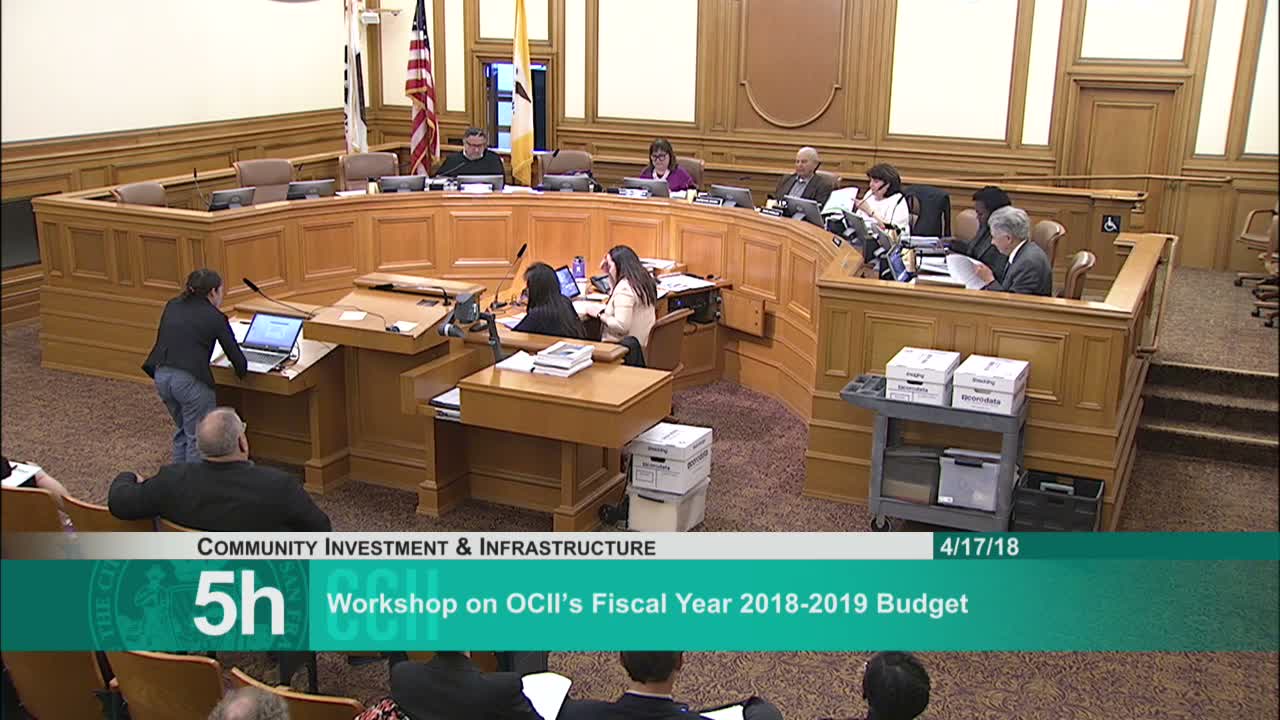
The Commission on Community Investment and Infrastructure on April 17 advanced steps to form a Community Facilities District (CFD) to finance public infrastructure and services in portions of Candlestick Point and Hunters Point Shipyard Phase 2.
Staff described the proposed CFD (Improvement Area No. 1) as a geographically limited zone where the successor agency can levy a facilities special tax (term up to 75 years) to pay for public facilities or reimburse developer-built facilities, and a services special tax (levied in perpetuity) to fund maintenance and potential mitigation measures such as sea‑level‑rise adaptations. The presentation identified governance and administration arrangements (the OCII Commission would govern the CFD and Goodwin Consulting would administer tax calculations and collections) and explained the proposed rate and method of apportionment; staff said the CFD would begin by levying taxes on projects with building permits to meet revenue obligations.
Numerical limits discussed: staff referenced a CFD debt limit of $6,000,000,000 for the district as a whole and described an appropriations or bond limit for improvement area No. 1 in the staff materials (the presentation included several figures when describing the rate/method and limits). Staff said bonds would not be issued until specific bond transactions return to the commission for approval.
Public hearing and ballots: The commission opened a public hearing and, with no protests filed, proceeded to consider resolutions to form the CFD, determine the necessity to incur bonded indebtedness, and call a special election. The secretary reported four mail ballots totaling eight votes, all in favor of the measure; the commission then adopted the resolution declaring the election results.
Votes and ordinance introduction: Commissioners moved and adopted the required resolutions (items 5i–5n) by unanimous voice/roll call votes; the commission introduced (and waived the full reading of) an ordinance ordering the levy of special taxes and approved a resolution authorizing issuance of bonds subject to subsequent approvals and specific bond transaction review.
What happens next: Staff said the CFD formation and bond authorizations remain subject to actions required by law and to the commission’s future approval of any particular bond issuance. The matter will return for ordinance adoption at the commission’s May 1 meeting per standard procedure.