San Francisco aging commission accepts state MOCA nutrition funding and approves area-plan budget
Loading...
Summary
The DAS Commission authorized acceptance of $1.2 million in state Modernizing Older Californians Act funds and approved the FY23–24 California Department of Aging area plan baseline (about $8 million) and a separate MOCA nutrition contract totaling $3,078,036 over four years; staff said details on allocations will return to the commission for approval.
The San Francisco Disability and Aging Services Commission voted on a slate of funding items that will expand aging services and nutrition programs citywide.
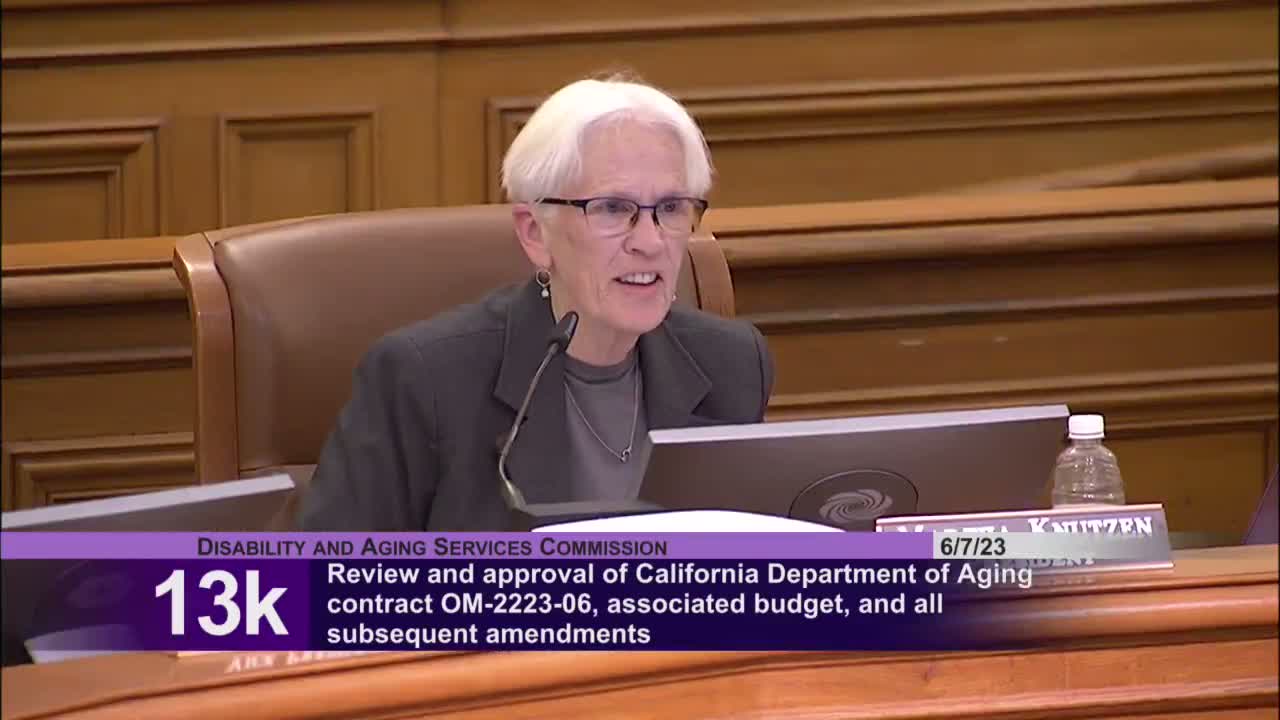
Executive Director Kelly Dearman told the commission the department will sign a contract to access $1.2 million from the California Department of Aging’s Modernizing Older Californians Act (MOCA) to support aging-in-place programs and that the department also received a MOCA nutrition award of $3,078,036 spread across fiscal years 2024–27. "The May revision includes $20,000,000 in general fund for 2023 and another 20,000,000 in 24–25 to advance older adult behavioral health," Dearman said during the executive director’s report, noting ongoing budget negotiations at the state and federal levels and the risks to non-defense discretionary funding.
Genevieve Herrera, DAS senior budget analyst, presented the FY23–24 area plan allocations submitted to the California Department of Aging — a baseline award of about $8,000,000, which staff said is roughly a 5% increase over the prior year. Herrera said federal awards remain dependent on the federal budget process and that any changes to allocations would be reported back to the commission.
Tiffany Kearney, the DAS lead nutritionist, said the $3,078,036 MOCA nutrition award will be used primarily for meal delivery and partner support over the next two years, with the department planning procurement and grant allocations to distribute those dollars to nutrition partners in future commission actions. She said the contract allows limited infrastructure uses in year one but that most funding will go to services: "For the first two years, it'll predominantly be meals," she said.
Commissioners asked clarifying questions about spending windows and whether the state imposes limits on when funds must be spent; staff said some MOCA funds have multi-year spend windows and that DAS will return with detailed procurement documents and allocations within the next 60 to 90 days. The commission approved the CDA area plan contract and the MOCA nutrition contract by roll-call votes.
What happens next: DAS will present detailed spending plans and any required procurements to the commission before distributing most MOCA and CDA funds to community partners. The commission will also monitor federal and state budget developments that could affect final awards.