Get Full Government Meeting Transcripts, Videos, & Alerts Forever!
Get email alerts on the Fire Alarm Code topic
No spam. Unsubscribe anytime.
DBI backs code change to exempt certain tourist hotels from alarm-upgrade trigger
Summary
The Building Inspection Commission voted unanimously to support a Board of Supervisors ordinance to amend fire/building codes so that sales/transfers after Sept. 1, 2017, are treated with a clarified trigger for alarm upgrades; staff explained an exemption for tourist hotels to avoid permitting backlogs similar to prior soft-story rules.
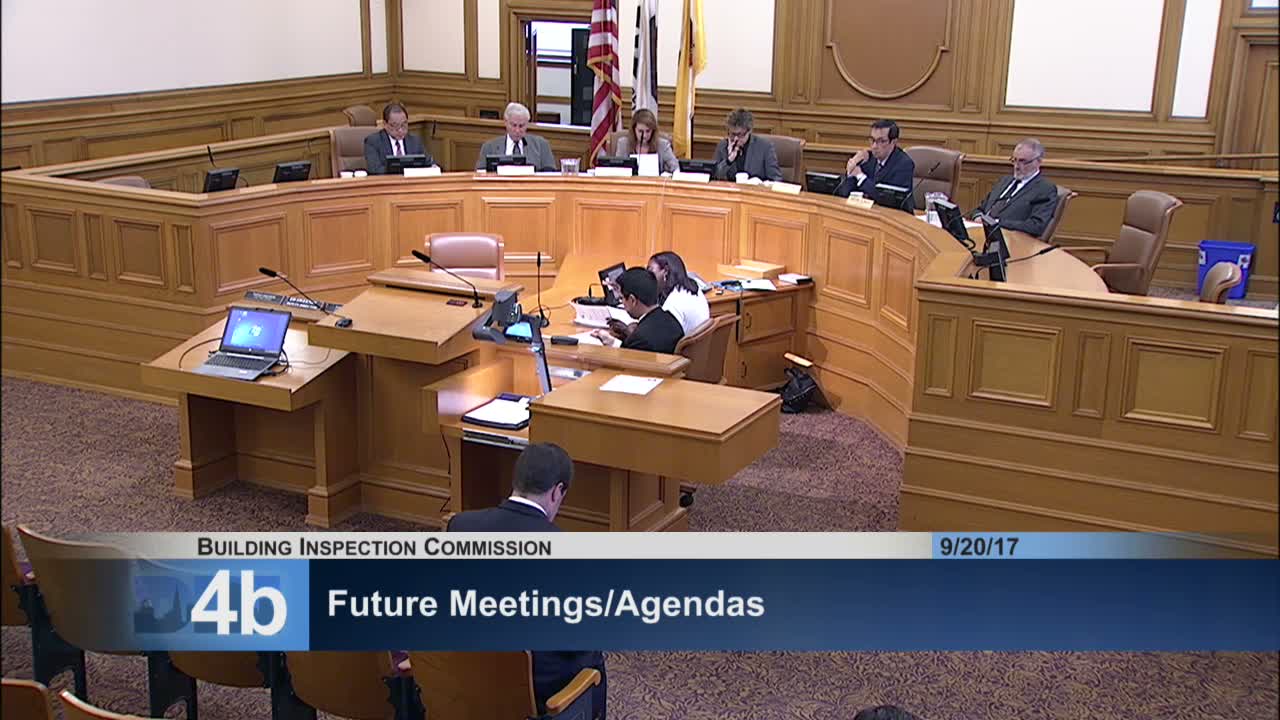
The Building Inspection Commission unanimously voted to support staff recommendations on a Board of Supervisors ordinance that would amend the building and fire codes to address fire alarm upgrade triggers tied to property sales and transfers.
Bill Strachan of Legislative and Public Affairs told the commission the ordinance (identified in meeting materials as Board of Supervisors File No. 170,800) was drafted to avoid an unintended backlog: "these hotels have the fire safety systems in place and therefore this additional trigger, of the $50,000 would, similar to the soft story situation, easily cause for everything to get held up until they upgraded the fire alarm system," he said. Staff explained the ordinance includes language to exempt the kind of tourist hotels (referred to in the legislation as "transient") that already have fire-safety systems in place while keeping other deadlines intact.
James Samba Metsu, senior housing inspector, explained that San Francisco uses the terms "tourist hotel" and "residential hotel" in local codes and that the bill's use of the term "transient" is driven by state law in this context. Commissioners asked clarifying questions about whether residential hotels (SROs) were included; staff said the exemption does not cover residential hotels.
Commissioner Gilman moved to support and approve the commission's action; the motion carried unanimously on a roll-call vote with all present commissioners voting yes.
Why it matters: staff said the exemption aims to prevent permitting delays for property owners performing work tied to soft-story retrofits or other upgrades, preserving recent implementation timelines while retaining required protections for sleeping areas and other at-risk spaces.
Next steps: staff indicated they would provide language clarifications as needed and that the ordinance will proceed through the Board of Supervisors and potentially a Land Use hearing.