
San Francisco releases 2025 hazards and climate resilience draft to retain FEMA grant eligibility
Get AI-powered insights, summaries, and transcripts
Subscribe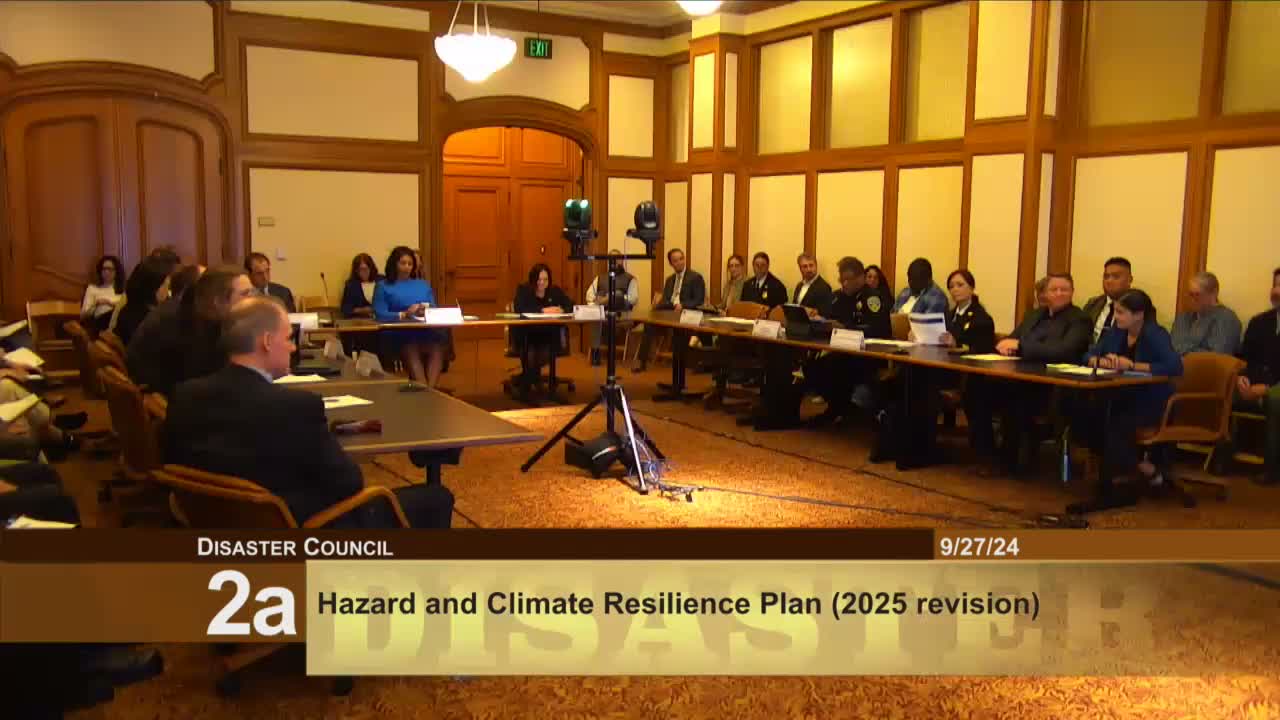
Summary
City resilience staff outlined the draft 2025 Hazards and Climate Resilience Plan, citing 13 hazards, 17 objectives and 74 actions; the update must be approved by local officials and reviewed by Cal OES and FEMA to maintain eligibility for federal mitigation grants.
Melissa Habie, resilience program manager in the Office of Resilience and Capital Planning, presented the 2025 draft of San Francisco’s Hazards and Climate Resilience Plan and framed it as the city’s action plan to reduce risk and increase resilience to natural hazards and climate impacts. “The hazards and climate resilience plan…is San Francisco's action plan to reduce risk and increase resilience to natural hazards and climate change impacts before they happen,” Habie said.
The draft profiles 13 hazards and consolidates the city’s work into 17 objectives and 74 actions. Habie said the plan also serves as the city’s FEMA‑approved local hazard mitigation plan, which must be updated every five years for the city to remain eligible for FEMA pre‑disaster mitigation grants. As an example of federal funding supported by the plan, she cited a recent $15,000,000 award for a downtown coastal resilience project.
Habie described a yearlong process of interdepartmental planning and community engagement. City staff said they convened an interdepartmental planning team quarterly, incorporated climate-science updates published since 2020 and ran 15 community engagement events, including tabling at the Bayview Climate Summit and outreach to senior centers, Chinatown disaster‑preparedness groups and community‑based organizations on Treasure Island.
Changes in the draft emphasize energy and transportation resilience, waterfront actions (including the Southern Waterfront, Ocean Beach and Treasure Island) and clearer signposting so residents can find hazard information. The city reduced the plan’s long list of tasks from 96 actions in 2020 to 74 in the 2025 draft in order to prioritize and make progress measurable.
Next steps: public comment on the draft closes in September; the city will submit the plan to the California Governor’s Office of Emergency Services and FEMA for review (FEMA review can take up to six months), after which the city anticipates forwarding a final draft to the Board of Supervisors’ Land Use and Transportation Committee with an adoption goal of July 2025. Habie said those steps are necessary to avoid lapsing FEMA mitigation‑grant eligibility when the 2020 plan expires.
The council offered no vote on the draft at the meeting; staff said they will make additional edits after public comment and agency review before returning the plan for local legislative approval.