San Francisco officials move to restore and upgrade city's outdoor warning sirens after cybersecurity shutdown
Loading...
Summary
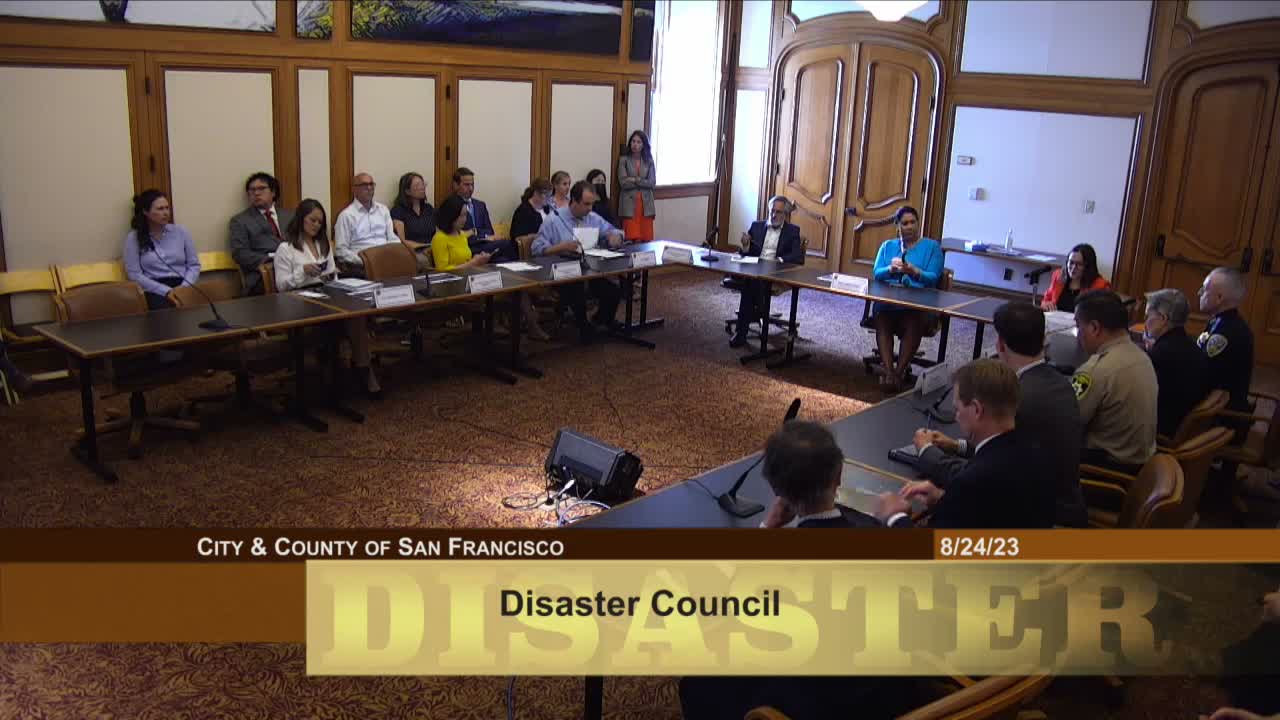
Mayor London Breed and emergency staff told the Disaster Council the city will begin replacing aging siren technology that was taken offline in December 2019 for cybersecurity reasons; staff said about 119 sirens will be assessed and a phased procurement is expected to begin within months.
San Francisco officials on Monday outlined plans to reactivate and modernize the city's outdoor warning siren network, which was taken offline in December 2019 after officials identified a cybersecurity vulnerability. Mayor London Breed told the Disaster Council the goal is to restore a reliable, redundant public-alert capability that will work even when power, internet or cellular service are down.
The mayor said the move was prompted in part by recent disasters elsewhere, including fires in Maui, which renewed her commitment to ensure the city has multiple ways to warn residents. "It really renewed my commitment to look into this particular system and the need to bring this system back up to par for the people of San Francisco," Breed said.
Mary Ellen Carroll, who led the council's technical presentation, described San Francisco's layered alerting approach and said the city will focus the initial work on the outdoor warning system'a network of sirens that provide audible alerts and voice messages. Carroll said the siren network comprises "approximately 119 sirens throughout the city," some of which were damaged in recent storms, and that the system was taken offline "in December 2019" to mitigate an "immediate and serious cybersecurity risk." She said the city has an existing procurement vehicle in place, and staff expect the project to be "well on its way" within six months while full completion will depend on site-by-site assessments and integration work.
Carroll also reviewed the city's other alerting tools, including AlertSF (text and telephone alerts), wireless emergency alerts, radio broadcasts and outreach via disaster service workers and community volunteer networks. She noted AlertSF has "over 195,000 subscribers for text, which represents 54% of the households in San Francisco," and that reverse-911 telephone alerts can reach more than 383,000 residential and business landlines.
Board President Aaron Peskin said there appears to be broad support for finding funds to restore the outdoor warning system and offered legislative help if needed. "I am pleased that there seems to be unanimity in all quarters to find funds to get the outdoor public warning system back up and running," Peskin said.
Supervisors and staff also emphasized outreach and public education, saying residents must understand that sirens are not only for tsunamis and may indicate a range of emergencies. One supervisor urged more detailed evacuation-route mapping for the West Side and updates to signage there; officials said they would coordinate mapping efforts with fire and police.
On procurement, an attendee asked whether the city would continue with the existing contractor and raised concerns about cost escalation and delayed timelines. Carroll said the procurement splits into two parts: vendor-supplied technology and city integration work. "The delay is not a contractor issue. It was more a funding issue on our part," she said, adding that cost escalation is driven by time and that staff intend to bring in experienced personnel, including retired specialists, to help with installation and assessment. Carroll identified the current product as a Motorola offering and said the assessment may identify other technology or vendor options.
Officials said language access, multiple messaging channels, and neighborhood-based volunteer training (including the Neighborhood Emergency Response Team) will be critical parts of the restoration plan. The meeting opened the item for public comment but no one spoke; Mayor Breed then closed public comment and adjourned the session.
What's next: staff will complete site assessments, refine cost and schedule estimates and return with more detailed timelines and proposals for procurement and outreach.