Get Full Government Meeting Transcripts, Videos, & Alerts Forever!
Get email alerts on the Abatement Hillstreet topic
No spam. Unsubscribe anytime.
Abatement Appeals Board upholds order for Hill Street property but pauses enforcement for nine months
Summary
The board upheld an order of abatement for a Hill Street property for unpermitted alterations but voted to hold enforcement for nine months to allow planning and historic-preservation review to proceed.
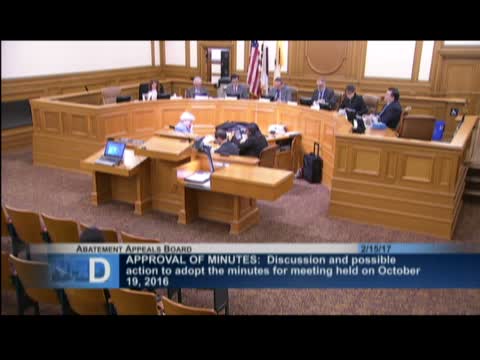
The San Francisco Abatement Appeals Board on Feb. 15 upheld an order of abatement against the owner of a commercial property on Hill Street but voted to hold enforcement in abeyance for nine months to allow planning and historic-preservation reviews to run their course.
Joe Duffy of the Department of Building Inspection told the board the department received complaint 2016-93601 on Jan. 21, 2016 and later issued a notice of violation. "A complaint has been filed with this department regarding construction performed beyond the scope of the permit issued," Duffy said, reading the notice. DBI described unpermitted work that includes installation of a new door and sidelight at the front porch and a raised rear roof line. Duffy said the building dates to about 1880 and that the permit application is currently with the Planning Department pending a certificate of appropriateness.
Henry Carnelo, who identified himself as vice president of the appellant, said the storefront door was installed for security and asked the board for additional time while the planning and Historic Preservation Commission reviews proceed. "We're really asking a a 6 months at least continuance for this so we can move on and get this approved," Carnelo said, adding that the HPC review could take another three to four months.
After discussion about whether the alteration is visible from the sidewalk and whether the owner should have sought clearance before altering the facade, a commissioner moved to uphold the order of abatement and place enforcement in abeyance for nine months, with assessment of DBI costs to proceed. The motion was seconded. The board conducted a roll-call vote; the motion carried unanimously.
The board’s action leaves the order of abatement in place but pauses active enforcement for nine months to allow the owner to pursue permits and historic-review approvals. DBI said corrective actions in the notice included filing a building permit within 30 days, obtaining a permit within 60 days and completing all work within 90 days; the department also noted the property may require a certificate of appropriateness from the planning preservation review. DBI stated the administrative costs associated with the case were "around $10.75," a figure provided in the department's presentation that was not further clarified at the meeting.
The board did not reverse the abatement; next steps are for the owner to pursue the pending planning and HPC approvals while DBI retains the authority to resume enforcement if required.