Get Full Government Meeting Transcripts, Videos, & Alerts Forever!
Get email alerts on the Grants And Services topic
No spam. Unsubscribe anytime.
San Francisco aging commission approves broad package of grants for meals, housing and elder services
Summary
The Department of Aging and Adult Services commission unanimously approved a package of new and renewed grants on July 1, 2021, funding nutrition programs, housing subsidies, home- and community-based supports, and elder-protection efforts, including large allocations for congregate and home-delivered meals.
The San Francisco Department of Aging and Adult Services (DOS) Commission on July 1 approved a broad set of contracts and grant renewals that will fund nutrition programs, housing subsidies and services for older adults and adults with disabilities across the city.
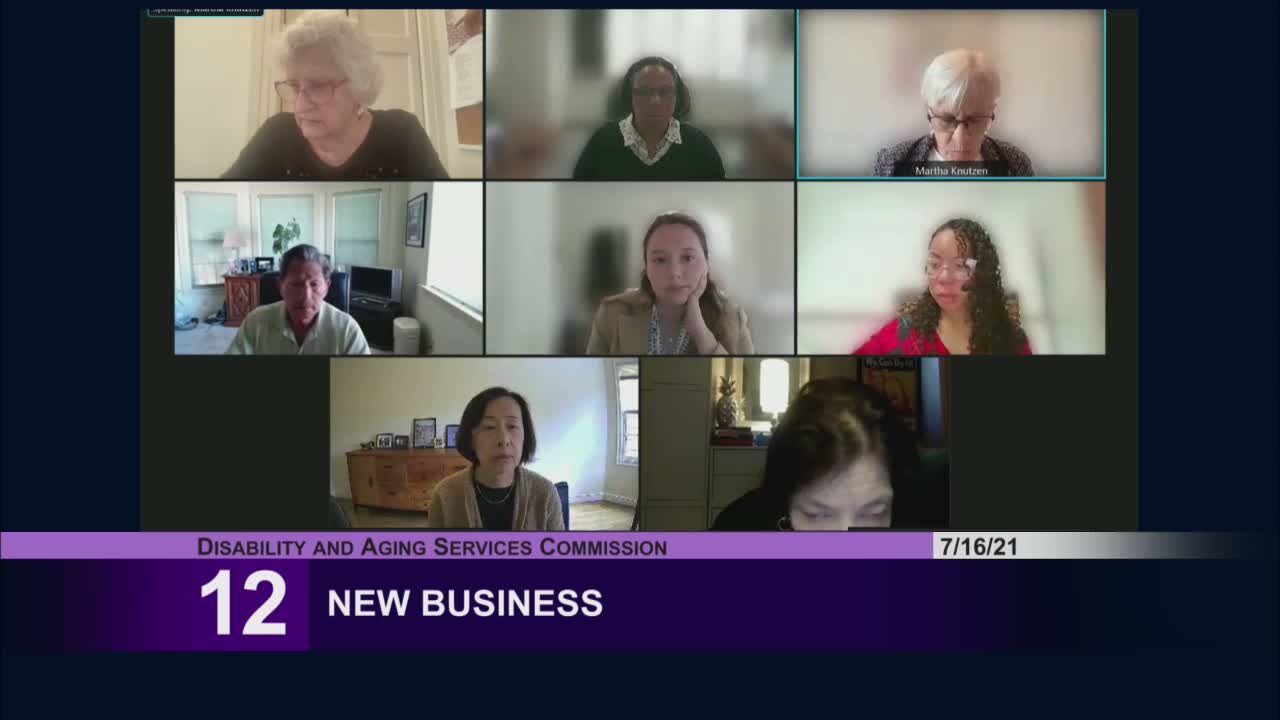
In a packed remote meeting, commissioners unanimously authorized dozens of awards and modifications that together sustain community meal programs, expand tenant‑based rental assistance and underwrite programs for social support, emergency placement and elder‑abuse prevention. "Nutrition and meal support is an essential service," DOS program analyst Tiffany Kearney told commissioners, describing pandemic-era pivots to delivery and plans for a gradual return to communal dining.
Why it matters: The approvals fund front‑line services used daily by older San Franciscans and adults with disabilities — from restaurant‑based CHAMPS meals to the Friendship Line suicide‑prevention services — and include several large line items aimed at preventing homelessness and food insecurity as the city emerges from the COVID‑19 crisis.
Major approvals and program highlights
- Congregate and home‑delivered meals: The commission approved a cluster of large nutrition grants, including a congregate‑meal package (item R) and home‑delivered meal contracts (item T) that together cover tens of millions in FY2021–22 funding. Kearney said the congregate network serves 42 locations across the city's 11 districts and the home‑delivered contracts include citywide providers such as Meals on Wheels and Project Open Hand.
- CHAMPS restaurant meals: The commission renewed a CHAMPS grant with Self Help for the Elderly to provide restaurant‑based meals in Districts 4, 7 and 11, with an FY21–22 grant amount of about $415,000 to reimburse meals at roughly $9.80 each (Kearney).
- Housing subsidies and eviction prevention: A $3 million modification to long‑term housing subsidy agreements (item G) will expand tenant‑based rental assistance to help prevent eviction. Hannah Taferri said subsidies are set so that roughly 30–50% of household income would go toward rent, stabilizing housing for people on fixed incomes.
- Home‑and community‑based supports: The commission approved multiple provider grants for adult day programs, Alzheimer's daycare resource centers, short‑term home care, and peer‑mentoring programs that serve people with varying disabilities. Presenters repeatedly emphasized language access and culturally relevant services.
- Crisis and protective services: Grants to Institute on Aging to operate the Friendship Line and elder‑abuse forensic center, plus emergency bed placement contracts and a Home Safe intensive case‑management program, were approved to meet state mandates for crisis response and to reduce imminent risk of homelessness.
What presenters said
Ophelia Trevino, presenting new grants for the Independent Living Resource Center and The Arc San Francisco, described two program components — education/advocacy and peer mentoring — and told commissioners the ILRC had been monitored in FY20–21 with no findings. "The program has 2 components," Trevino said, outlining how education and peer mentoring work together to support independence.
Tiffany Kearney described the nutrition network’s pandemic response and reopening plans: "Our nutrition partners are now planning a transition back to communal dining," she said, and noted that agencies offered virtual programming and meal delivery when dining rooms closed.
Procedure and votes
Most items were presented with brief Q&A and then called for a roll‑call vote; commissioners repeatedly recorded unanimous approvals. For items with more questions, staff provided follow‑up offers (recruitment sources, monitoring details or site charts) and then the commission approved the contracts.
Next steps and timeline
Staff will finalize agreements and implement program monitoring in the coming fiscal year. Several presenters said monitoring for FY20–21 had already taken place and found grantees in compliance; DOS will continue monthly check‑ins and use its CA GetCare system to track enrollments and units of service.
The commission adjourned after noting there will be no meeting in August and that Vice President Janet Spears will chair the September meeting in President Martha Knudson’s absence.