Get Full Government Meeting Transcripts, Videos, & Alerts Forever!
Get email alerts on the Teleconferencing Resolution topic
No spam. Unsubscribe anytime.
San Francisco DOS Commission votes to continue remote meetings under AB 361
Summary
The Disability and Aging Services Commission unanimously voted to adopt findings under AB 361 allowing continued teleconference meetings during the COVID‑19 emergency, after hearing public comment urging better outreach to seniors and people with disabilities.
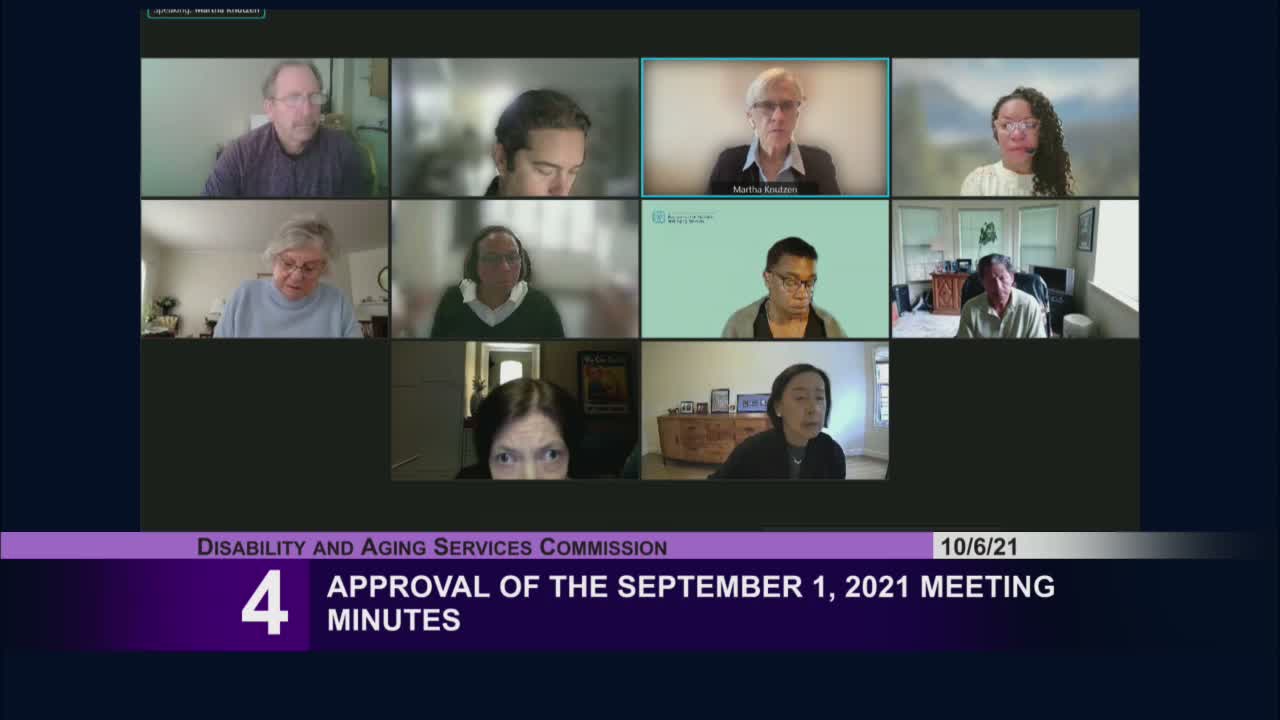
The Disability and Aging Services (DOS) Commission voted unanimously Oct. 6 to adopt findings under AB 361 that allow the body to continue holding meetings by teleconference during the state of emergency.
President Martha Knudson introduced the resolution to make the findings required by the Brown Act amendment, saying the Commission must confirm that in‑person meetings would pose health risks and that remote meeting procedures would protect public participation. Vice President Janet Spears moved the resolution and Commissioner Sasha Bittner seconded the motion. The secretary recorded a unanimous roll‑call vote in favor.
The decision came after public comment from Francisco DeCosta, director of environmental justice advocacy, who criticized DOS outreach to seniors and people with disabilities and urged more concrete action and transparency. "Stop making general statements," DeCosta said, pressing the Commission for data and specific service outcomes.
The resolution cites AB 361 and related Brown Act provisions that permit continued teleconferencing during a declared state of emergency provided bodies make required findings at least once every 30 days. Commissioners who spoke in the discussion said remote meetings have improved accessibility for older adults and people with disabilities and that the Commission should be cautious because of ongoing pandemic risks.
There was no request for further action beyond adopting the findings; the measure simply records the Commission's determination that teleconferencing remains necessary to minimize health risks and to preserve public participation.
The Commission will revisit the required findings at least monthly while the state of emergency continues.