Get Full Government Meeting Transcripts, Videos, & Alerts Forever!
Get email alerts on the Shelter Operations topic
No spam. Unsubscribe anytime.
San Francisco opens overflow shelter, details response after Kincade Fire evacuations
Summary
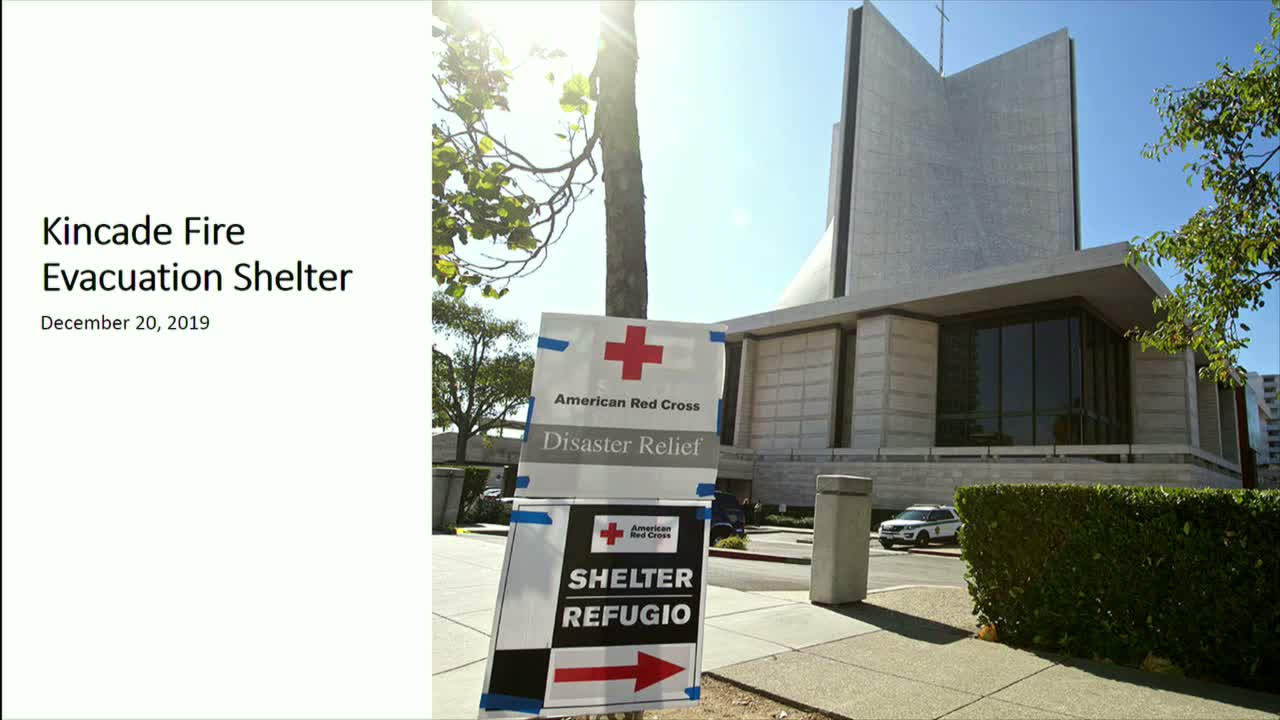
San Francisco activated an overflow evacuation shelter at Saint Mary's Cathedral to house roughly 500 Marin and Sonoma County evacuees during the October Kincade Fire; Human Services Agency staff described operations, partner roles and key lessons on donations tracking and reunification.
San Francisco opened an overflow evacuation shelter at Saint Mary's Cathedral after a Cal OES request to assist residents fleeing the Kincade Fire, city officials said. The Emergency Operations Center (EOC) in San Francisco activated on Oct. 27 and Human Services Agency staff stood up shelter operations the next morning.
Doris Barone, Disaster Preparedness and Response Manager for the Human Services Agency, said the city—s goal was "to provide an accessible shelter environment, where survivors can stay united with their pets, receive basic medical care, and feel safe and secure." The shelter was set up to accommodate families and included medical care provided by the Department of Public Health, coordination with the American Red Cross and volunteer organizations active in disaster (VOAD), and services such as Wi-Fi boosting and a children—s area provided by Comcast.
Barone said the EOC—s timeline included an initial plan for a 200-person shelter that could expand to about 500 people; the EOC opened Oct. 27 and HSA activated the shelter at 8 a.m. the following day. The shelter operated through Nov. 1, when staff demobilized.
City staff highlighted specific operational considerations: parking and vehicle safety for evacuees who arrived with belongings in cars; maintaining a secure perimeter so nonessential people could not enter the shelter; on-site pet housing and veterinary services from Animal Care and Control; and translation support from Corazon Healdsburg for primarily Spanish-speaking residents from affected communities.
Barone said donors stepped forward but the city must tighten documentation and tracking of donated resources. "We need to make sure we know who [donations] belong to, who's gonna pick them up," she said, calling donations management "one of the things we need to tighten up." The Human Services Agency also worked with Sonoma County EOC to obtain gas cards and arrange rides so evacuees could return to their home jurisdictions.
Officials thanked Saint Mary's Cathedral, the Red Cross and faith-based and community partners for rapid coordination. The shelter operations team emphasized that while the incident was managed well, planning must continue for larger or more protracted events.
The EOC, HSA and partner agencies said they will document lessons learned on resource tracking, reunification plans and messaging for access and functional needs communities as they refine future shelter operations.