Get Full Government Meeting Transcripts, Videos, & Alerts Forever!
Get email alerts on the Life Safety And Rooftop Use topic
No spam. Unsubscribe anytime.
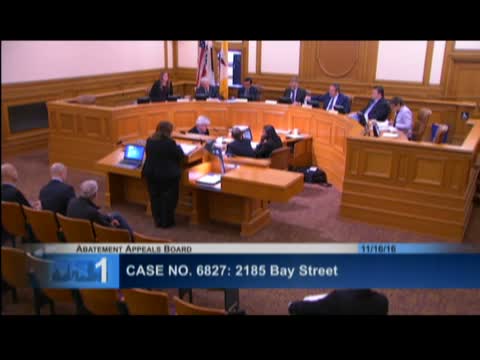
Abatement Board upholds city order to remove rooftop planters at Bay Street apartment
Summary
The Abatement Appeals Board unanimously upheld an order of abatement for rooftop planters at a 24-unit Bay Street building, citing life-safety, load and egress concerns; commissioners encouraged the tenant and owner to pursue a formal permit path or interim mitigations.
The San Francisco Abatement Appeals Board on Nov. 16 unanimously upheld a director’s order requiring removal or mitigation of rooftop planters at a 24-unit building on Bay Street, citing structural-load, guardrail and fire- and egress-safety concerns.
Rosemarie Bosque, Chief Housing Inspector, told the board that photographs and a structural engineer’s letter show the number and size of receptacles and planters on the roof exceed what the roof was intended to support and that there are no guardrails. Bosque said the use creates safety risks, including potential hazards during firefighting or evacuation given fire-escape access from the roof.
Tenant Steve Dukes, represented by attorney Brian Soriano, said the planters have been in place for roughly 13 years, that he uses them for personal food-growing and that a separately retained structural engineer (Mark Melamed of Steelhead Engineers) concluded the arrangement could meet the live-load standard for an unoccupied landscape area if planters are spaced properly. Soriano also submitted an email he said came from a city planner stating the planting “does not require a permit” under planning code provisions.
Property-owner counsel Jonathan Siegel argued the owner’s structural engineer reached contrary conclusions and said the owner had observed lids from planters on the sidewalk, which raised public-safety concerns. Siegel said the owner is uncomfortable with the current condition and urged the board to focus on building-code and life-safety compliance rather than tenant-landlord history.
Commissioners discussed interim steps — for example, reducing container size and number, relocating planters away from fire escapes, and pursuing a formal permit for a green roof — but emphasized the building’s 24 residents’ safety. Several commissioners noted San Francisco programs encourage green roofs where structurally feasible but said that on this building the present configuration lacks required safeguards (guardrails, permitted attachment, confirmed structural capacity).
After deliberation the board moved to uphold the director’s order of abatement; the roll-call vote was unanimous. The decision requires the owner/tenant to seek the appropriate permit pathway or remove the unpermitted rooftop planting configuration. Commissioners encouraged the parties to work cooperatively with City Planning and DBI to determine whether a compliant green-roof solution can be permitted and expedited.
The board emphasized that while rooftop greening can be valuable, it must meet building-code and life-safety requirements when it affects egress or firefighters’ access.