Get Full Government Meeting Transcripts, Videos, & Alerts Forever!
Get email alerts on the Cfc Process topic
No spam. Unsubscribe anytime.
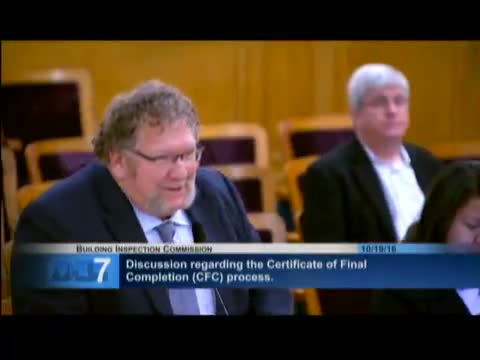
Commission hears detailed overview of Certificate of Final Completion process and temporary occupancy rules
Summary
DBI deputy Dan Marie explained the Certificate of Final Completion (CFC) and occupancy process, unit‑count verification methods, Temporary Certificates of Occupancy (TCOs) and inspector sign‑off procedures; commissioners pressed for clarity on legal status, revocation limits and how the department verifies historic unit counts.
Deputy Director Dan Marie presented a detailed overview of the Certificate of Final Completion and Occupancy (CFC) to the commission. He defined the CFC as the legal document that establishes a building’s permitted use and occupancy and described the circumstances that require a CFC (new buildings, additions, change of occupancy, legalization of existing illegal uses, abatement completion, and specified seismic upgrades). Marie described DBI’s updated unit‑verification process when permit records conflict: staff collect historical documents (Sanborn maps, water‑department records), pull permit histories, and assign senior building inspectors to perform field verification when the status is uncertain.
Commissioners asked whether a CFC is the legal determiner of zoning or occupancy; staff said the CFC is a legal document that reflects the construction and permit history and that unit‑count discrepancies are investigated and corrected through a unit verification packet and, if necessary, by pulling a permit or issuing revised documentation. Ed Sweeney noted historical record limits (PTS system back to 1980; CFCs date to 1945) and said DBI performs about seven unit verifications per week; staff said the 3R report (required for refinance/transfer) is a strong backstop to catch illegal additions.
Marie also described Temporary Certificates of Occupancy (TCOs): they may be issued for partial occupancy when life‑safety systems and special inspections are complete (common in large projects and sometimes for commercial tenants), typically for short periods (staff mentioned about 90 days, with extensions by request). On inspector disagreements over 'cover up' signoffs, staff said a secondary inspector will review the work and unresolved issues are escalated to a supervisor. The presentation concluded with commissioners thanking staff for clarifying procedures.