Get Full Government Meeting Transcripts, Videos, & Alerts Forever!
Get email alerts on the Hoarding Cases topic
No spam. Unsubscribe anytime.
City agencies outline coordinated response as hoarding cases and public‑safety risks rise
Summary
DBI, DPH, Adult Protective Services, the Public Guardian and the City Attorney described a multi‑agency approach June 15 to roughly 50–60 active hoarding cases, emphasizing outreach, psychiatric social‑work support, targeted deep‑clean funding and legal tools (abatement warrants and conservatorship) while noting resource limits and legal constraints.
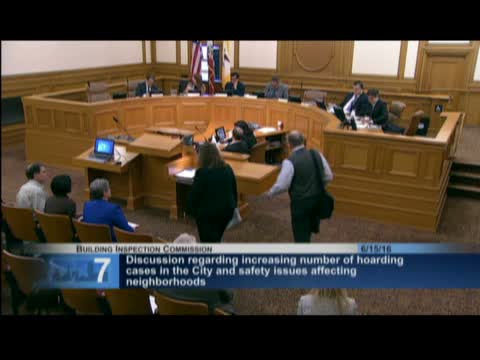
San Francisco — Representatives from the Department of Building Inspection, Department of Public Health, Adult Protective Services, the Public Guardian and the City Attorney told the Building Inspection Commission on June 15 that hoarding and cluttering cases present complex public‑health and public‑safety problems requiring multi‑agency teams and targeted funding.
Rosemary Bosque of DBI said the department handles roughly "50 to 60" hoarding cases at a time that often overlap with blight and fire hazards and that inspectors face challenges including blocked egress, mold, infestations and structural issues. DBI has piloted collaborations with Adult Protective Services (APS) and community nonprofits and identified a dedicated inspector for severe hoarding cases.
Karen Cohen of the Department of Public Health described an environmental‑health pilot that placed a psychiatric social worker with environmental health services to work directly with inspectors and clients. Psychiatric social worker Yoonjung Kim presented outcome data from March 2015–May 2016: she said she received 101 referrals, that 79 of those clients lived in SROs, and that "out of 101, 76 cases got abated," with 17 still pending and 8 units declared public nuisances.
APS representatives described a prior pilot that provided intensive case management to prevent eviction and said the mayor’s proposed budget included a new high‑risk self‑neglect/eviction‑prevention unit. APS staff said cleanings are performed only with client agreement and that deep clean costs average about $2,000 for a severe one‑bedroom case; funding is limited and the department seeks additional resources.
Mary Ann Warren of the Public Guardian explained the limits of conservatorship and guardianship tools — she said the Public Guardian has no separate funding and must often use a client’s assets to pay for interventions, which can slow or limit responses. Tom Lakritz from the City Attorney’s Office described abatement warrants and litigation as available but costly tools that can lead to liens or, in worst cases, displacement when owners lack funds.
Multiple commissioners urged continued interagency coordination and asked staff to identify funding mechanisms — including the commission’s code‑enforcement loan fund — to support preventative services and avoid costly abatement litigation.
Why it matters: Hoarding cases impose fire and health risks to occupants and neighbors, strain multiple city systems, and often involve older adults with mental‑health needs. Agencies said a team approach with social‑work support, targeted cleanup funding and legal options can stabilize many cases but that funding and long‑term supports are scarce.
What’s next: DBI plans to continue work with APS, DPH and community partners and to present more concrete funding proposals and program details to the commission.