Get Full Government Meeting Transcripts, Videos, & Alerts Forever!
Get email alerts on the Soft Story Retrofit topic
No spam. Unsubscribe anytime.
City reports high compliance on soft-story retrofit program, cites housing-preservation benefits
Summary
Officials said the mandatory soft-story retrofit program addressed about 3,400 buildings, protecting roughly 112,000 residents and resulting in an estimated $383 million investment by building owners; the office framed the effort as both seismic safety and affordable housing preservation.
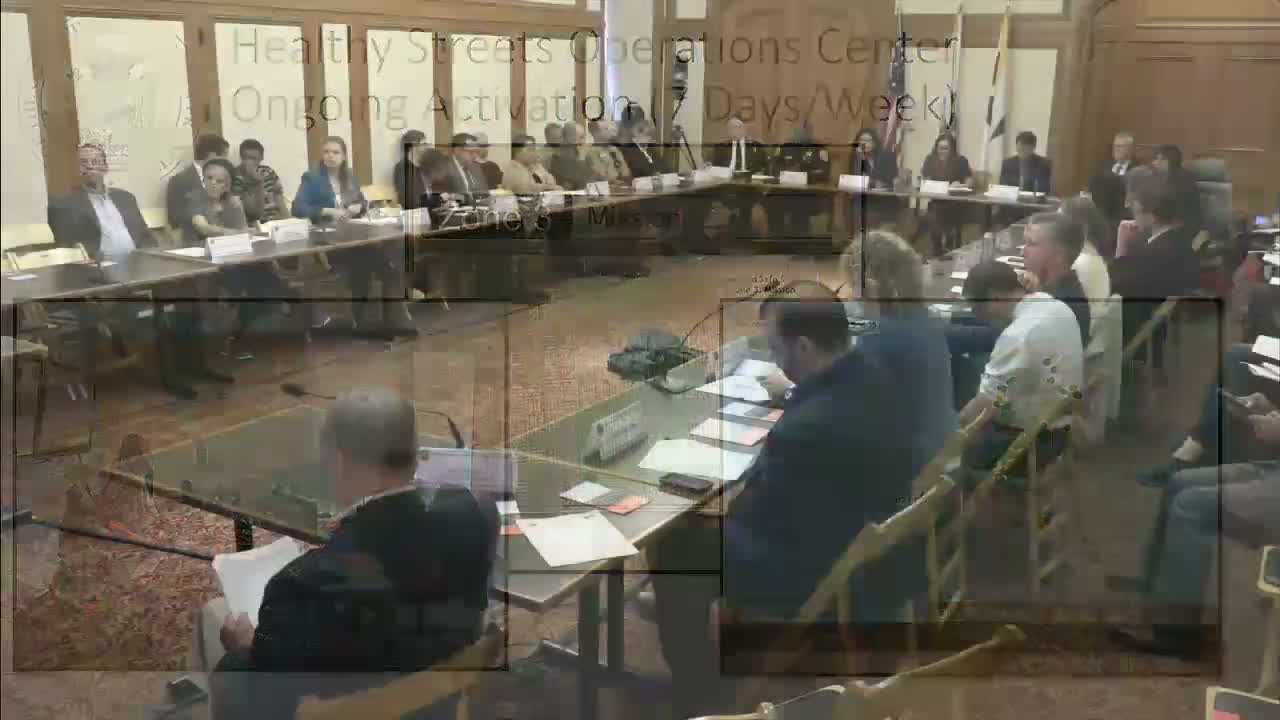
Brian Strong of the Office of Capital Planning and Resilience briefed the Mayor's Disaster Council on the recently completed soft-story mandatory retrofit program. Strong said the program began in 2013, used tiered permit deadlines with two-year work windows, and produced high compliance: roughly 3,400 buildings addressed, about 98% compliance up to tier 3 and approximately 80% compliance for the most recent tier.
"This is really protecting 112,000 residents in San Francisco," Strong said, adding that the completed retrofits can make those homes "up to 30 times safer." He said building owners will have invested approximately $383,000,000 by program end and that many applications (60-70%) also included accessory dwelling unit (ADU) additions, which the city said will expand rent-controlled housing stock.
Strong framed the work as part of the Community Action Plan for Seismic Safety (2010) and said the retrofit program addresses privately owned, rent-controlled 5-plus unit buildings that are vital to affordable housing preservation. He also noted forthcoming studies on tall buildings and a planned facade ordinance to address earthquake vulnerabilities.
During the roundtable, a deputy chief raised operational concerns unrelated to the retrofit numbers: better CAD/GIS mapping for elder-care facilities and temporary premises, safety risks from new heavy-timber (Type IV) construction during and after fires, and a request that PG&E consider shutting certain transmission lines when an imminent earthquake warning is detected to avoid cascading failures. Council members recorded the concerns for follow-up; no regulatory action on construction types or PG&E operations was taken at the meeting.