Get Full Government Meeting Transcripts, Videos, & Alerts Forever!
Get email alerts on the Operations And Response topic
No spam. Unsubscribe anytime.
City reports progress on 911 response times; EOC activations, Lifelines and community readiness discussed
Summary
Deputy director Rob Smuts reported steady improvement in 911 answer rates after an executive directive and hiring push; EOC staff described increased activations and information coordination and Lifelines Council members outlined work on restoration timelines and private‑utility coordination.
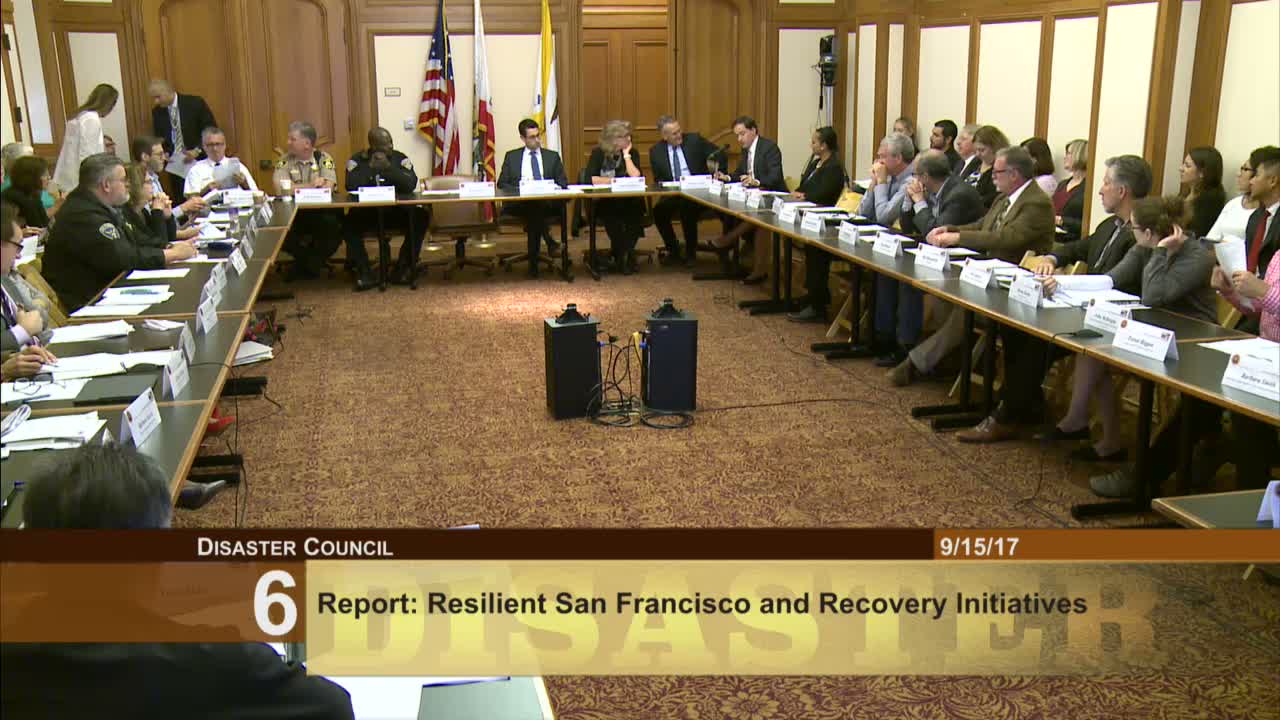
San Francisco officials told the Disaster Council they have made measurable gains in 911 call handling and are increasing EOC activations and interagency coordination to manage both planned and unplanned events.
Rob Smuts, deputy director overseeing emergency communications, said Mayor Lee issued an executive directive to form a 911 response improvement team after April staffing shortfalls. Smuts reported April performance at 66% of calls answered within 10 seconds, improving to 73% in May, 75% in June and July and roughly 78–80% in recent weeks. He said the city aims to meet its service standard of 90% of calls answered within 10 seconds by the end of the calendar year through a hiring initiative (noting it takes about a year to train dispatchers), transfers to 311 for non‑dispatchable calls, temporary staffing and police department light‑duty assignments.
Bijan (identified in the transcript by first name) described the EOC activation role: pulling information from department representatives, producing situation briefs for leaders, and running conference calls to keep elected officials informed. Mike Dayton said EOC activations have occurred nearly twice as often this year as last and asked agencies to surface scenarios they want exercised. Naomi Kelly, the city administrator, described Lifelines Council work to coordinate restoration timelines with public and private utilities, citing lessons from the April 21 outage and noting plans to hire a consultant to develop restoration timeframes.
Council members and partners described community readiness initiatives supporting EOC work. Heather Green detailed Neighborfest events that waive permitting fees and distribute disaster supplies to build neighborhood resilience, and presented soft‑story retrofit compliance figures and upcoming capital planning items. No formal council votes were taken; staff listed follow‑up tasks for training, recruitment and mutual‑aid coordination.