Get Full Government Meeting Transcripts, Videos, & Alerts Forever!
Get email alerts on the Emergency Planning topic
No spam. Unsubscribe anytime.
San Francisco officials outline earthquake, debris and mass‑care plans and timelines
Summary
City emergency managers presented updates to a 2017 earthquake plan, a disaster debris management plan (to be submitted to FEMA/Cal OES by December), and revisions to ESF‑6 mass care that add shelter transition and interim housing steps; presenters also reviewed a 2019 hazard mitigation planning timeline.
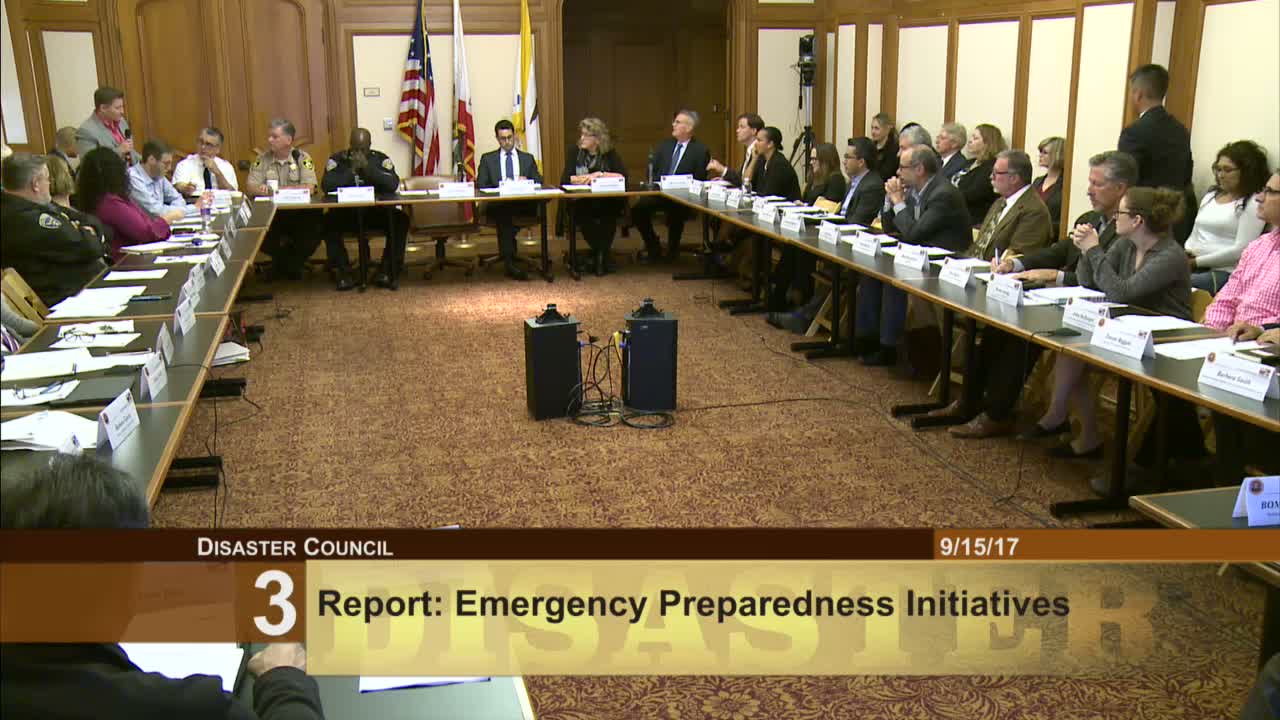
San Francisco emergency managers on Tuesday told the Disaster Council they have sharpened planning and recovery timelines across earthquake, debris, sheltering and hazard mitigation efforts.
Lisa Stark Lipper of the Department of Emergency Management said the 2017 earthquake plan update will define key responsibilities and resource needs at EOC and DOC levels and will include a "critical action guide" covering actions for the first 6, 12, 24 and up to 120 hours after an event. She said the update is scheduled for completion around October–November and will include roles and a resource table that captures damage and injury reports, response status and safety threats.
The department is also finishing a disaster debris management plan it has worked on since August, Lipper said, and intends to submit that plan to FEMA and the California Governor’s Office of Emergency Services (Cal OES) by December to make the city eligible for a one‑time increase in federal public assistance for debris removal. Lipper cited national debris‑removal costs for context, saying Houston’s efforts have been estimated up to $200 million.
On mass care, Lipper said Emergency Support Function 6 (ESF‑6) will be updated to add a shelter transition task force, disaster case management, interim housing options and expanded survivor financial assistance. The updates grew from exercises such as the recent Yellow Command and Urban Shield activities, she said, and will be vetted in mini‑workshops with ESF partner groups.
Planning staff also previewed a 2019 hazard mitigation plan, saying it will assess natural and human‑caused risks, recommend mitigation strategies and establish work groups—asset lists, GIS/mapping, mitigation actions and grant funding—intended to begin in January with a target approval by February.
The council also heard related resilience and capital planning context: Heather Green, deputy resilience officer and director of capital planning, said the Resilient SF strategy underpins these planning efforts and that the city has published an updated capital plan. She reported that a soft‑story retrofit permitting deadline for tier‑3 owners fell on the meeting day: there are 3,510 buildings in that tier, about 4,900 across four tiers, and presenters reported 78% compliance as of the latest Wednesday, with 262 permit applications received the prior week.
Council members asked staff to continue coordinating with private‑sector and labor partners to ensure plans account for technical rescue capacity, staging needs and supply points. The meeting concluded with no formal vote on the plans; staff listed action items for continued workshops, exercises and subcommittee work.