Get Full Government Meeting Transcripts, Videos, & Alerts Forever!
Get email alerts on the Code Enforcement topic
No spam. Unsubscribe anytime.
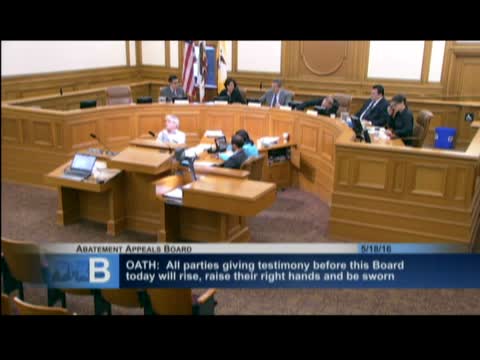
Abatement Appeals Board upholds Third Street order but pauses enforcement pending demolition or permit filings
Summary
The San Francisco Abatement Appeals Board upheld an order of abatement for a fire‑damaged Third Street property but put enforcement in abeyance for up to 90 days, requiring the owner to file an emergency demolition permit within 30 days or a standard permit within 90 days. The motion passed unanimously.
The San Francisco Abatement Appeals Board on an administrative hearing date not specified upheld an order of abatement for a fire‑damaged property on Third Street owned by Alfred McAfee but delayed enforcement to allow the owner a path toward demolition or repair.
Joe Duffy of the Department of Building Inspection (DBI) told the board the case began after a fire reported by the Fire Department on June 9, 2014, that DBI issued consecutive notices of violation and ultimately an order of abatement on Nov. 12, 2014. DBI staff said the department’s file shows prior enforcement dating to 2008, a 2013 permit with no recorded inspections, and no evidence of completed repairs.
Robert (Bob) Nelke, the owner’s representative, said engineers recommended demolition after two fires and additional structural and termite damage left the second floor gutted. Nelke outlined a redevelopment plan under review by the Office of Community Investment and Infrastructure (OCII) for a six‑story building with seven residential units above commercial space and estimated the project at roughly $3 million to $3.25 million. "It's way beyond 50% salvageable," Nelke said of the existing building.
Board members expressed frustration that the matter had lingered without decisive action. Commissioner Walker moved to uphold DBI's order of abatement but hold enforcement in abeyance with a two‑pronged timetable: the appellant must file for an emergency demolition permit within 30 days, and if an emergency permit is not sought or granted, the appellant must file a standard permit within 90 days. The City Attorney noted that when a property presents life‑safety hazards and the board extends time, the order must require work to begin within 30 days and be completed within 90 days for those hazards.
DBI displayed photographs from the file and recommended that the appellant consider the emergency demolition route if life‑safety hazards exist; DBI staff and the Deputy Director described typical department review steps and cautioned that full entitlement and plan review can take several months. The board acknowledged those processing timelines while imposing the filing deadlines as conditions of the abeyance to ensure progress.
The board called roll for the motion; President Melgar, Vice President Clinch, Commissioners Constance, Lee, McCarthy and Walker each voted yes, and the motion carried unanimously.
Next steps: under the board’s order the owner must file for an emergency demolition permit within 30 days or, failing that, file a standard permit application within 90 days; if those steps are not taken, the order will be finalized and recorded and enforcement will proceed. DBI and the applicant indicated OCII review and DBI plan review remain part of the entitlement pathway.