Get Full Government Meeting Transcripts, Videos, & Alerts Forever!
Get email alerts on the Nutrition Services topic
No spam. Unsubscribe anytime.
Self Help for the Elderly describes dramatic meal‑delivery surge; commission approves $1.33M modification
Summary
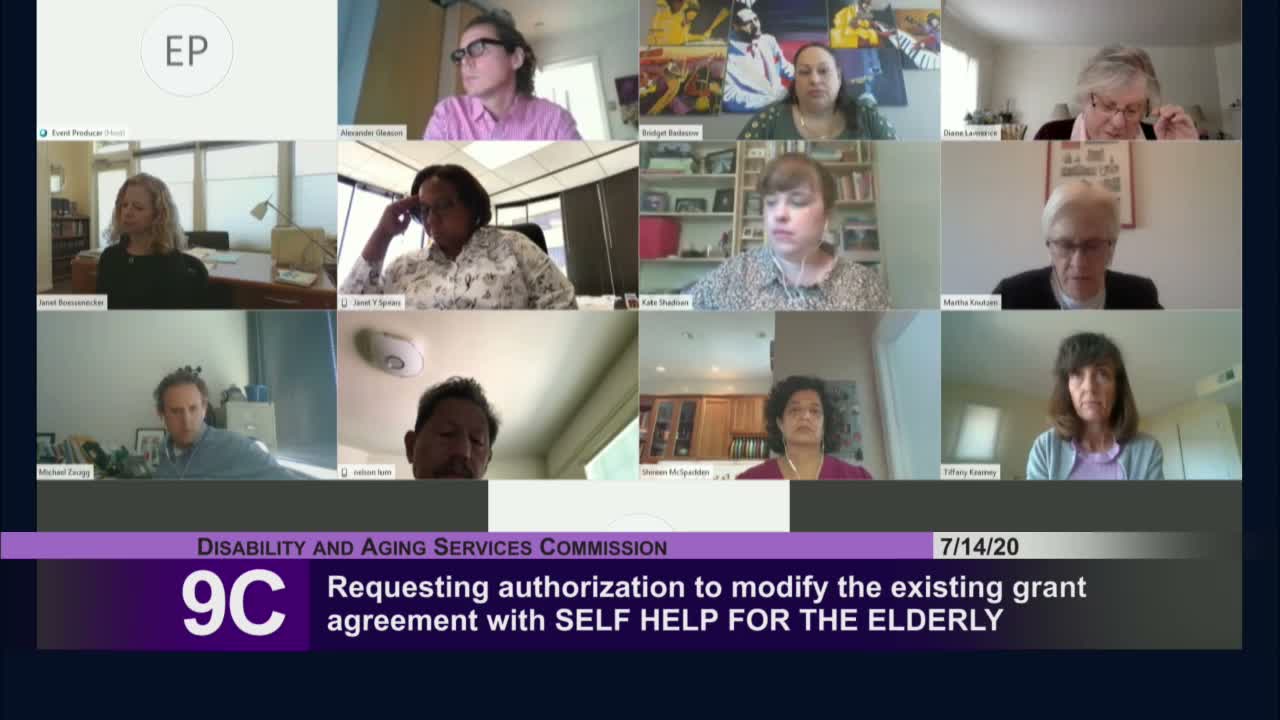
Self Help for the Elderly told the DAS Commission it shifted to large-scale meal delivery during the COVID‑19 emergency and requested an additional $1,333,669 (plus 10% contingency) to cover increased costs; the commission approved the modification unanimously after public comment from the organization's CEO.
Self Help for the Elderly reported a dramatic increase in demand for home‑delivered meals during the COVID‑19 emergency and the Department of Disability and Aging Services Commission approved a $1,333,669 modification to the organization’s congregate nutrition grant to cover those costs.
Tiffany Kearney, grants analyst and lead nutritionist for DAS, said congregate nutrition providers shifted to “Meals to Go” and meal delivery once the city’s shelter‑in‑place order took effect. Kearney told commissioners that Self Help staff and volunteers delivered an average of 100,000 meals per month and served around 3,500 clients per week from April through June; she also said Self Help provided about 453,000 congregate senior meals in fiscal year 2019–20 and that the additional funding requested would help cover roughly $176,000 of those costs.
Annie Chung, CEO of Self Help for the Elderly, spoke during public comment and described the operational response: volunteer drivers (more than 350), partnerships with neighborhood groups and the SFPD, and deliveries across the city. Chung said the agency delivered as many as "close to about 4,000, 5,000 meals every day during the peak," and urged commissioners to support the budget modification so the provider could continue operations without leaving a budget gap.
Commissioners asked how budget increases would be funded and whether the city could sustain the service level. Executive Director Sherry McSpadden said early federal stimulus and shifts in locally held Dignity Fund dollars helped offset costs, but that the situation remains fluid and staff will continue to seek funding and prioritize services.
The commission approved the modification by unanimous roll call. Staff said the modification request is $1,333,669 plus a 10% contingency, for a revised modification amount not to exceed $1,945,121.