Get Full Government Meeting Transcripts, Videos, & Alerts Forever!
Get email alerts on the Sro Conversion topic
No spam. Unsubscribe anytime.
DBI outlines Chapter 41 conversion process as tenants and advocates warn of SRO losses
Summary
DBI staff explained how Chapter 41 governs conversions of certified residential guestrooms and the permit‑to‑convert workflow; advocates and residents told the commission rapid market changes, weak tracking, and outdated in‑lieu fee calculations are accelerating loss of affordable SRO housing.
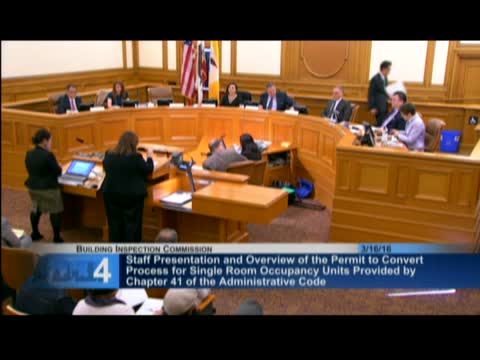
Rosemarie Bosque, chief housing inspector for the Department of Building Inspection, gave a step‑by‑step briefing to the Building Inspection Commission on Wednesday on the city’s permit‑to‑convert process under Chapter 41 of the San Francisco Administrative Code, which protects certified residential guestrooms created before Sept. 23, 1979.
Bosque said DBI’s role is to check permit applications for completeness, transmit them to the Planning Department and other city agencies as required by the chosen replacement method, and condition final approval on meeting planning and building requirements. She explained that owners can comply by paying in‑lieu fees, siting replacement units in an eligible building, or constructing new replacement units, and that some methods require two‑stage approvals and conditional‑use hearings at Planning before DBI can issue final sign‑offs.
The presentation underscored two enforcement tools: DBI’s right to audit and inspect records (daily logs, rent receipts and weekly reports) and a clause that can trigger mandatory denial of a permit to convert when unlawful conversion actions occurred within 12 months of application. Bosque also said converted dwelling units remain covered by the ordinance and that buildings receiving replacement units may need upgrades such as sprinklers and certificates of final completion and occupancy before final protection is granted.
Public commenters and tenant advocates pressed the commission on how Chapter 41 works in today’s market. Resident Isabel Paredes described a six‑year fight over an as‑built addition that she said has worsened family members’ asthma and anxiety. Representatives from the Mission SRO Collaborative and the Housing Rights Committee said SRO rents have risen to $1,400–$2,000 for a small room and documented instances of hotels advertising on Airbnb and booking.com. They urged better enforcement and tracking of landlords’ records and stronger tenant protections, including representation in any DBI working groups.
Commissioners and staff also discussed how in‑lieu fees are calculated. Bosque described past appraisals, saying one recent case produced a per‑unit valuation on the order of $150,000; she noted that DBI places in‑lieu revenue in a special account controlled by the Mayor’s Office of Housing and that the Department of Real Estate performs independent appraisals paid for by applicants. Commissioners expressed concern that the statutory formula has not kept pace with construction costs and suggested a working group and hypothetical ‘mock‑up’ appraisals to better understand whether the fee mechanism is adequate.
Several commission members said the department should encourage applicants to file complete permit packages with DBI in parallel with Planning to reduce delays and to require relocation plans up front so DBI can assess impacts on low‑income, elderly and disabled occupants. Bosque recommended that the commission solicit public input on complex cases before the director takes final action.
The commission did not take regulatory action at the meeting, but members asked staff to place a focused discussion on Chapter 41 and potential fee or process changes on a future agenda.