Get Full Government Meeting Transcripts, Videos, & Alerts Forever!
Get email alerts on the Budget topic
No spam. Unsubscribe anytime.
San Francisco aging and disability agency braces for steep budget shortfall; citywide gap climbs to $1.7 billion
Summary
Human Services Agency budget director Dan Kaplan told the Disability and Aging Services Commission the city'wide revenue shortfall has widened to about $1.7 billion and outlined $6.2 million in reduction targets for DAS next year, possible suspension of an IHSS wage increase and contingency steps to preserve core services for older adults and people with disabilities.
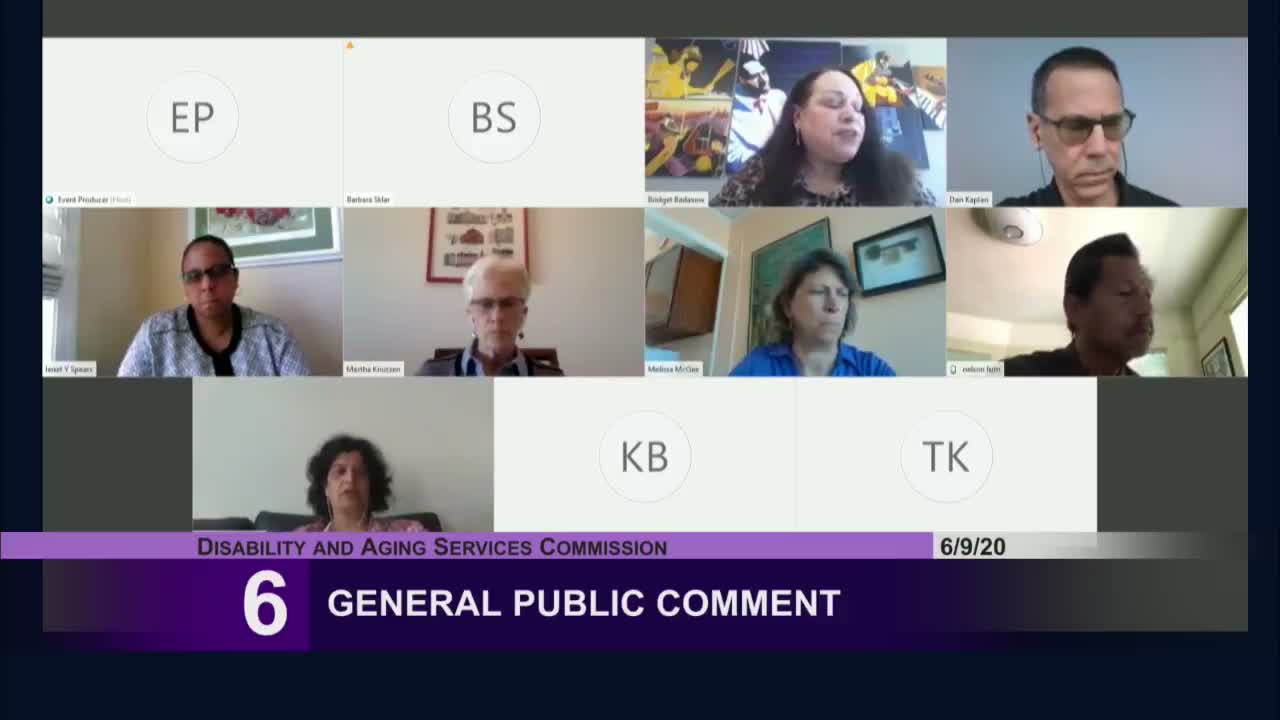
Dan Kaplan, budget director for the San Francisco Human Services Agency, told the Disability and Aging Services Commission on June 9 that the city's revenue outlook plunged during the COVID-19 downturn and that the Mayor's office and controller now project a roughly $1.7 billion cumulative shortfall.
The shortfall, Kaplan said, reflects rapidly changing assumptions: a December projection of roughly $419 million had swelled to $1.1 billion–$1.7 billion by March and May as tax and fee revenue collapsed. "We went from a December shortfall projection of $419,000,000 to a March projection of $1,100,000,000 to $1,700,000,000 shortfall," Kaplan said, explaining the figures guide agency rebalancing.
Why it matters: DAS and HSA provide services to thousands of older adults and people with disabilities. Kaplan told commissioners the mayor's rebalancing assumptions include delaying wage increases scheduled for July 1 and making no presumption of additional federal or state COVID-19 relief. That combination forces agencies to identify savings while trying to maintain essential services.
Kaplan outlined specific agency implications: the Mayor's office assigned DAS reduction targets of about $6.2 million in the next fiscal year, with an additional contingency of roughly $3.2 million and deeper reductions in the year after. The agency also must consider hiring freezes, delaying nonessential capital projects and repurposing some multi-year fund balances to cover immediate needs.
Realignment and program impacts: Kaplan described declines in state-derived "realignment" revenue that fund social services. He said 2011 realignment growth expectations evaporated and the Division faces roughly an $8 million decline in its 2011 realignment base, a drop he estimated at about 15% of that revenue stream. "We had been in February anticipating a little bit more than $4,000,000 of growth in 2011 realignment. That growth has evaporated," he said.
On wages and program protections, Kaplan noted local and collective-bargaining provisions that tied an IHSS pay increase to economic conditions. Because of the size of the shortfall, the pay trigger could suspend the planned $1-per-hour increase that was due July 1; Kaplan said the agency is working with the Mayor's office on timing and implementation. Emily Gibbs, HSA budget director, told the commission that, where hours are mandated by statute or program rules, the agency does not expect to reduce authorized IHSS hours for consumers, though contract levels could be adjusted later if state cuts change the funding picture.
What agencies are doing: Kaplan said DAS and HSA are planning for remote operations, consolidating office space, pausing substitutions (reclassifications), and shifting some staff and balances to backfill immediate needs. The agency is also preparing for a period of increased overtime work in benefits and CalFresh redetermination work once statewide moratoria end.
Next steps: Kaplan said agencies will submit interim reduction plans to the Mayor's office and work with the Mayor to finalize a signed budget by Oct. 1. In the near term, commissioners asked for details on where cuts would fall; Kaplan and staff said they will return with more specific proposals as planning proceeds.
The presentation and discussion were informational; the commission took no formal vote on budget policy at this meeting.