Get Full Government Meeting Transcripts, Videos, & Alerts Forever!
Get email alerts on the Covid Response topic
No spam. Unsubscribe anytime.
DAS director details pandemic pivot: testing access for IHSS workers, expanded meal deliveries and nearly 21,000 wellness calls
Summary
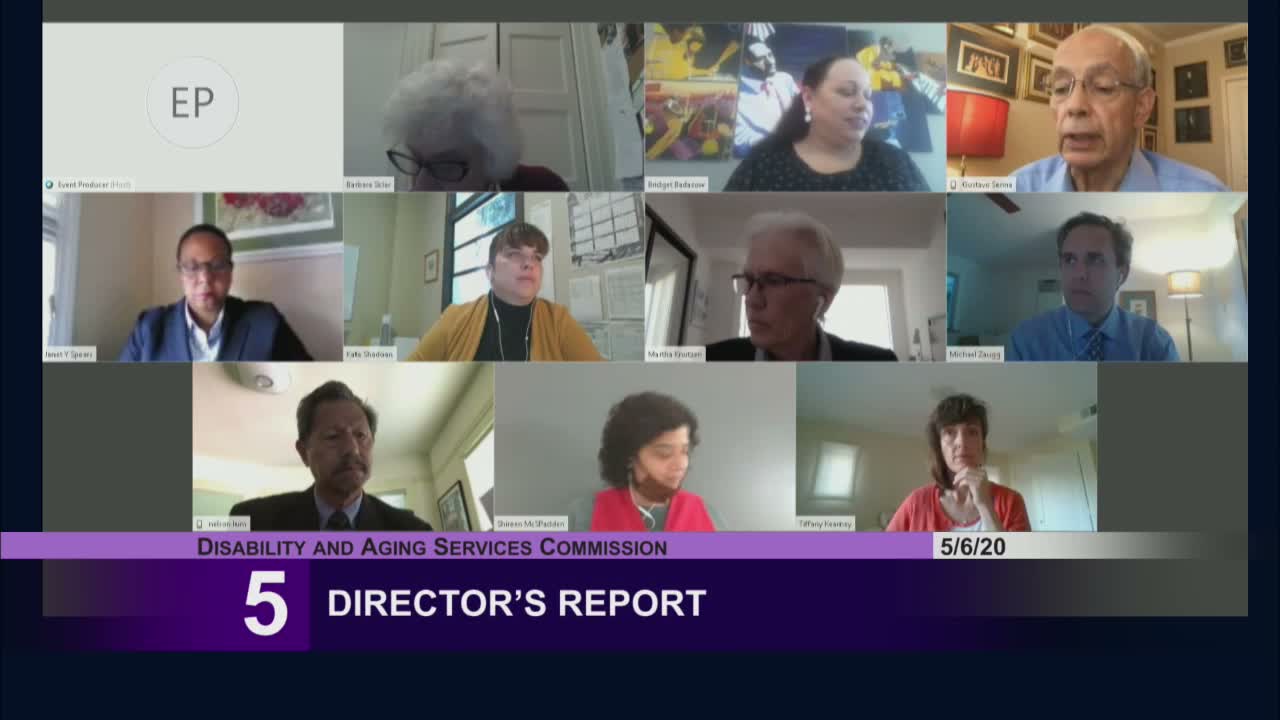
Shereen McFadden told the San Francisco Department of Disability and Aging Services Commission on May 6 that DAS shifted staff and services to respond to COVID‑19, secured testing and PPE access for IHSS workers, and coordinated nearly 21,000 wellness calls and expanded meal delivery capacity to meet rising need.
Shereen McFadden, executive director of the San Francisco Department of Disability and Aging Services, told the commission on May 6 that the department rapidly shifted operations to meet pandemic needs, moving staff out of offices, arranging testing and hotel accommodations for In‑Home Supportive Services (IHSS) workers and expanding meal and outreach services for older adults and people with disabilities.
"IHSS workers are indeed frontline essential workers," McFadden said, and the department worked with labor partners and city testing efforts to ensure access to testing, hotel accommodations and personal protective equipment. She said the department also authorized 80 hours of sick pay for independent providers to support workers who must stay home for COVID‑related reasons.
McFadden described a large increase in remote outreach and meal efforts. Congregate meal sites were converted to takeout or delivery; DAS reported that meals provided to older adults dropped 24% in March but projected a $99,600 (163%) increase in provision from March to April. She added that home‑delivered meals rose 11% from March to April and that providers face staffing and kitchen continuity challenges.
On volunteer engagement and client checks, McFadden said DOS partnered with Shanti Project on a COVID‑19 Emergency Response Volunteer (CERV) program to link volunteers with people who need food, medication or social contact. "As of the time as of May 4, they've currently linked ... people to services," McFadden said, and she reported that DOS programs and community partners completed almost 21,000 wellness calls with 217 follow‑up outreach efforts for unmet needs; 70% of respondents cited food as their primary concern.
The department has also distributed protective masks and provided infection‑control trainings: McFadden said DAS "has distributed over 500 [masks] so far" and that its quality management and nursing teams delivered 24 trainings for staff and community partners, while coordinating N95 fit testing with City occupational health.
Commissioners asked whether expected state budget cuts could be mitigated by federal stimulus. McFadden said additional federal or state funding could help and that the department is advocating for Older Americans Act augmentations. On testing IHSS clients, she told commissioners, "That's a very good question ... I'm not sure I have the answer to yet," noting San Francisco's testing capacity was rapidly evolving and the department would follow up as details solidify.
McFadden also described a state restaurant‑meals program intended to support culturally appropriate meals and local restaurants; she said more than 60 restaurants had applied to an RFQ to participate in a city program to expand meal capacity.
The report concluded with commissioners thanking staff for emergency operations work and a pledge to continue monitoring elder abuse reports, service demand and funding developments. The commission did not take additional direction beyond receiving the report.