Get Full Government Meeting Transcripts, Videos, & Alerts Forever!
Get email alerts on the H1n1 Response topic
No spam. Unsubscribe anytime.
San Francisco health officials review H1N1 response after vaccinating tens of thousands
Summary
Health officials and emergency managers reviewed H1N1 mass vaccination efforts: two surge clinics vaccinated about 27,000 people and citywide vaccinations reached roughly 400,000; after-action findings highlighted training, volunteer credentialing and logistical needs for future mass clinics.
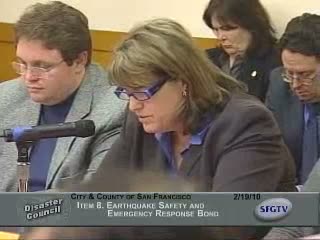
San Francisco health officials gave an after-action briefing on H1N1 response at the Disaster Council meeting, reviewing two surge mass-vaccination efforts and lessons learned for future public-health emergencies.
Dr. Susan Fourniak, director of communicable disease control and prevention at the Department of Public Health, said the city ran two major clinic efforts this fall: a rapid three-day, nine-site campaign in October that vaccinated nearly 18,000 people, and a single-site mass clinic at Bill Graham Auditorium in December that, combined with the earlier effort and other activities, contributed to roughly 27,000 vaccinations from those surge efforts. Department staff reported about 400,000 total vaccinations in San Francisco during the H1N1 response.
Fourniak described operational challenges at the earliest clinics, including limited notice for site setup, inadequate bathroom facilities for long waits, and gaps in training and on-site communications; the December clinic ran more smoothly after three weeks of focused planning. "We pulled that vaccination clinic together very quickly… in about 48 hours," she said of the initial effort, noting that later planning and volunteer recruitment improved throughput and line management.
Officials credited support from city partners — the Department of Emergency Management, the sheriff’s department, police, fire, and volunteer organizations including the American Red Cross — and reported more than 400 volunteers at the December 22 clinic. City Human Resources and public-health planners flagged the need to streamline volunteer credentialing and clearance processes for clinicians and other staff during surge operations.
In public comment, Dr. Fourniak explained that confirmed case counts understate total infections because H1N1 is not reportable except for ICU admissions and deaths; she said hospital surveillance is the main hard data source and estimated that roughly 20–50 percent of people in closed settings could be infected and that a mid-range estimate for the city might be roughly 30 percent, while stressing uncertainty about future waves.
Officials said the H1N1 after-action reports are available online and that the city would follow up on training gaps and volunteer management to strengthen readiness for similar future events.