Get Full Government Meeting Transcripts, Videos, & Alerts Forever!
Get email alerts on the Customer Satisfaction topic
No spam. Unsubscribe anytime.
DBI survey: about two-thirds of customers satisfied; customers ask for clearer guidance and more online services
Summary
A consultant—s 2015 DBI customer survey found about 65% of respondents satisfied overall, higher satisfaction among professionals (71%) and lower among homeowners (56%). The report recommends clearer public guidance, better signage, expanded online services and targeted outreach to less-frequent customers.
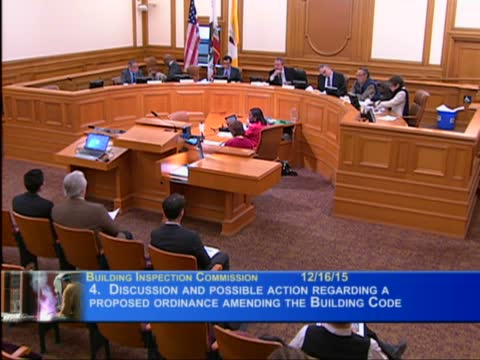
DBI—s customer-satisfaction survey, conducted January—July 2015 and presented Dec. 16 by John Canapury of Gowan Research, found roughly two-thirds of respondents reported being satisfied with DBI services and that perceptions have generally improved over the past year.
The study sampled about 1,000 customers via phone and intercept surveys and supplemented the quantitative work with three focus groups and an online stakeholder survey. Canapury said 65% of respondents reported being satisfied overall; breakdowns showed contractors and other professionals reported higher satisfaction (about 71%), while homeowners and less-frequent customers reported lower satisfaction (about 56%). When asked whether DBI—s services improved over the previous 12 months, about 30% said they improved and 8% said they declined.
Focus groups and open-ended responses identified the leading reasons for positive impressions (shorter wait times, more helpful staff and perceived operational improvements) and the key drivers of dissatisfaction (long turnaround times and inconsistent code interpretation). Participants recommended clearer signage and web materials explaining the permit process, expanded online and electronic plan-submission options, real-time or estimated wait-time indicators, and better outreach to those who interact with DBI infrequently.
The consultant flagged two DBI programs in particular: the mandatory Soft-Story retrofit program (where focus groups were largely favorable, though cost concerns were raised) and the In-Law Unit Legalization program (lower awareness but generally positive reaction once details were explained). Canapury noted that communicating the potential to add a unit under the soft-story program helped some respondents see the program as a cost-offset.
Commissioners asked about coverage of complaints and housing issues; Canapury said those topics appeared in focus groups and open-ended survey questions and that the full report contains more detailed breakdowns. DBI staff said the full report would be posted on the DBI website and circulated to commissioners and subscribers (DBI contact: lilymadges@sfgov.org).
The presentation elicited requests from commissioners to include more code-enforcement and tenant/complainant voices in future rounds and to consider more frequent surveying after the planned permitting-system rollout.