Get Full Government Meeting Transcripts, Videos, & Alerts Forever!
Get email alerts on the Hunters Point Transfer topic
No spam. Unsubscribe anytime.
OCII Approves Transfer of Three Hunters Point Parcels After Regulatory Concurrence
Summary
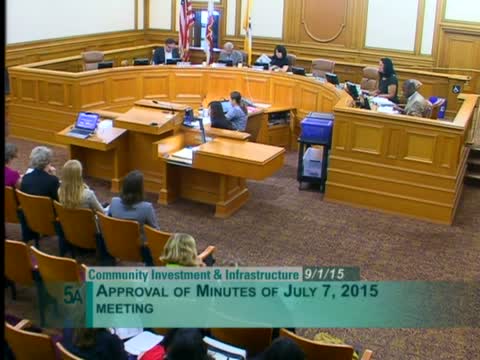
The Commission on Community Investment and Infrastructure voted Sept. 1 to accept three parcels at Hunters Point Shipyard (D2, UC1 and UC2) from the U.S. Navy and to authorize a fourth amendment to an interim lease assigning land‑management duties to the developer; regulators had issued FOSTs and concurrences for the parcels.
The Commission on Community Investment and Infrastructure voted Sept. 1 to accept three parcels at the Hunters Point Naval Shipyard from the U.S. Department of the Navy and to authorize a Fourth Amendment to an interim lease assigning land‑management responsibilities to the development partner.
The adopted resolution, approved by a 3–0 roll‑call vote with one commissioner absent, covers Parcel D2 and utility corridor parcels UC1 and UC2. The staff presentation said the Navy issued a Finding of Suitability to Transfer (FOST) for D2 in 2012 and for UC1 and UC2 in March 2015, and that federal and state regulatory agencies subsequently published concurrence letters for those FOSTs.
OCII Executive Director Bohee described the item as "the product of decades of work" and presented the transfer as the next step in long‑planned redevelopment of the shipyard. Tamsen Drew, Hunters Point/Candlestick senior project manager, told commissioners that the parcels total roughly 14 acres and outlined required federal and state decision documents—Record of Decision, final remedial design, remedial action completion report and the FOST—that govern transfer and post‑transfer controls. She also summarized deed‑incorporated restrictions (a covenant to restrict use of property) and a risk‑management plan that will limit certain activities, require annual inspections and bar uses such as growing edible crops in native soils.
Members of the public spoke both in favor of and with caution about the transfer. Doris Vincent said the documents "have addressed all of our concerns" and urged approval. Oscar James, a long‑time Bayview Hunters Point resident and former shipyard worker, said he supported the project "100%" but added he wanted the later parcels to be "100% clean."
A community commenter, identified in the record as Miss Espinola Jackson, raised more urgent health concerns, saying, "When you hear and see 20 people dying within a 2 month period, someone needs to be concerned about what's going on in Bayview Hunters Point," and urging the Commission to hold community meetings. Jackson also said the Navy told her it "can't clean that shipyard," citing landfill and contamination issues.
San Francisco Department of Public Health representative Amy Brownell responded that the Health Department has been monitoring the site and reviewing remediation documents for more than two decades and that, for the parcels currently proposed for transfer, the Navy and the regulatory agencies have documented cleanup actions and concurrences. "We have air monitoring, we have soil monitoring, we have all sorts of data," Brownell said, adding that those data support the agencies' determinations that the parcels are suitable to transfer.
Commission discussion touched on community health disparities and the need for additional briefings. Staff noted that prior litigation produced a writ and that any proposal for early transfer before full remediation would require additional CEQA review. Commissioner Singh moved approval of the item; Commissioner Bustos seconded. The roll call recorded three ayes and one absent, and the Commission adopted the resolution authorizing acceptance of the three parcels and the Fourth Amendment to the interim lease.
Next steps described by staff include executing the Fourth Amendment with the developer to assign inspection and reporting duties, and continuing the phased conveyance schedule for remaining parcels.