Get Full Government Meeting Transcripts, Videos, & Alerts Forever!
Get email alerts on the Balcony Deck Safety topic
No spam. Unsubscribe anytime.
DBI outlines expanded outreach and code review on deck and balcony safety after Berkeley collapse
Summary
The San Francisco Department of Building Inspection presented new outreach, inspection-affidavit and code-advisory steps to address deck and balcony safety, citing outreach materials, a five-year reinspection rule for apartments/hotels and possible code changes to address waterproofing and special-inspection gaps.
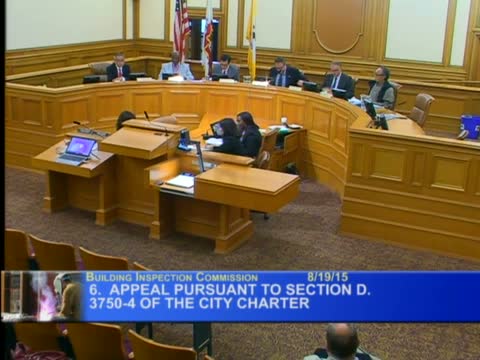
The Department of Building Inspection told the Building Inspection Commission on Aug. 19 that it will expand outreach and consider code changes to reduce the risk of deck and balcony failures after the Berkeley collapse earlier this year.
Assistant Director Ron Tom said DBI has posted an S-10 information sheet and a deck-safety web page, is using outreach to property-owner groups and plans brown-bag trainings, a permanent informational board at DBI’s fifth-floor counter, and a short instructional video. He described the Housing Code’s §604 requirement that owners of apartments and hotels have weather-exposed elements, including decks, balconies, stairs and fire escapes, inspected every five years by licensed professionals and submit affidavits to DBI.
Commissioners pressed staff on enforcement where owners resist corrections and on coverage for small buildings. Commissioner Marr raised a longstanding case where an allegedly illegal deck remained in place despite notices and litigation; he asked whether DBI can physically restrict use of unsafe appendages. Tom and Director Tom Huey said red-tagging and other legal remedies require coordination with the City Attorney and sometimes exceed DBI’s immediate enforcement powers, but DBI will escalate high-priority cases and explore procedural changes.
Panel members and staff debated whether waterproofing assemblies should be covered by special inspections. Commissioner concerns focused on how a recent Berkeley collapse appeared to involve a relatively new assembly and whether manufacturers’ systems or installation errors caused failure. DBI said waterproofing is specialized, that inspectors can be trained to look for defects but may not be experts, and that the department will take the issue to the Code Advisory Committee to evaluate whether certain waterproofing assemblies should require a special inspection and engineer/architect sign-off.
DBI said it will expand use of compliance affidavits—adding them to condo-conversion packages, permit filings, and notices of violation—and will mail reminders to property owners, partner with industry groups and community organizations, and track outreach effectiveness. The department also said the forthcoming Accela permit-tracking system will allow staff to capture building features (decks, balconies, exterior stairs, fire escapes) currently missing from the legacy permit database, which DBI hopes will support targeted programs for smaller buildings over time.
Commissioners asked DBI to continue reporting on outreach results and to meet privately with staff about specific intransigent cases; the department agreed to follow up and return with implementation details.