Get Full Government Meeting Transcripts, Videos, & Alerts Forever!
Get email alerts on the Accessibility Checklist topic
No spam. Unsubscribe anytime.
CCDA unveils short ‘tickler’ accessibility checklist to catch problems earlier
Summary
The California Commission on Disability Access introduced a short, portable accessibility checklist designed for building inspectors to integrate accessibility checks into routine construction stages and avoid late-stage corrections, and panelists urged jurisdictions to tailor and adopt the tool.
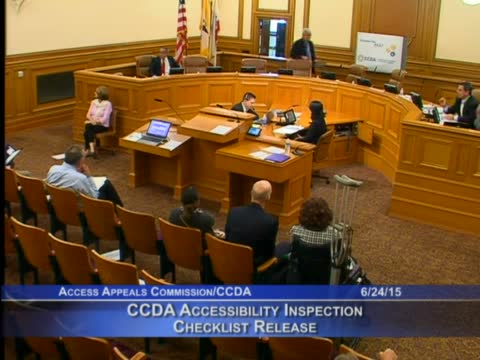
The California Commission on Disability Access on Thursday rolled out a condensed accessibility “tickler” checklist intended for building inspectors to carry to job sites and use at natural construction phases to spot accessibility problems early.
"The shorter, tickler style checklist was gonna be the most important," said Steve Dolan, commissioner with the CCDA and the subcommittee chair, describing the committee’s decision to produce a compact checklist rather than a thick code compendium. Dolan said the committee’s work was mandated by the legislature (referred to in the meeting as "Senate bill 1608" and Government Code 8299.06) and included architects, certified accessibility specialists, building officials and other stakeholders.
Panelists told attendees the checklist is meant to be a practical tool for inspectors who already carry code resources. Dolan and others pointed to survey findings showing accessibility is too often reviewed only at the end of a project: Dolan cited example data from other agencies indicating accessibility was often checked one time late in the process, increasing the risk of costly corrections.
"Maybe we should integrate this into a process where we inspect it over time," Dolan said, recommending checkpoints at rough grading, rough plumbing and rough framing so issues such as toilet locations or outlet heights can be corrected before finishes are applied.
Panelists from jurisdictions including Oroville, Los Angeles, Pacifica and West Sacramento described using or piloting the checklist. Gary Lehman, chief building official for the City of Oroville and a certified access specialist, described field practices that pair outreach with on-site support: "I will actually, provide them with the information and handouts that are specifically out of the code to be able to do that to assist them in the process," Lehman said, describing how his office offers free site walk-throughs and written punch lists to small businesses seeking barrier removal.
Inspectors and training officers said a concise checklist helps older inspectors and those handling many disciplines find the right code references quickly. A Los Angeles training officer said the condensed format and side-by-side code citations give inspectors a quick answer and the section they need to pull up on their device.
Panelists also gave concrete examples of catches the checklist could enable: Lehman described an electrician who placed outlets at a height that would have been noncompliant after finishes were added; catching that at the rough stage avoided a late, costly fix.
The CCDA said the checklist will remain a living document, available online and in editable Word format so local agencies can tailor it to local conditions. Commissioners encouraged jurisdictions and practitioners to test the checklist in the field and return feedback to the commission so it can evolve with code changes.
The commission also used the session to recognize contributors to the subcommittee and to mark outreach around the Americans with Disabilities Act 25th anniversary.