Get Full Government Meeting Transcripts, Videos, & Alerts Forever!
Get email alerts on the Hunters Point Cleanup topic
No spam. Unsubscribe anytime.
OCII and health officials outline Hunters Point Shipyard cleanup progress and transfer plans
Summary
San Francisco public-health and successor-agency staff told commissioners the Navy's remediation of Hunters Point Shipyard parcels has advanced to the point that several areas are ready for transfer, while regulators and deed restrictions will govern ongoing monitoring and post-transfer responsibilities.
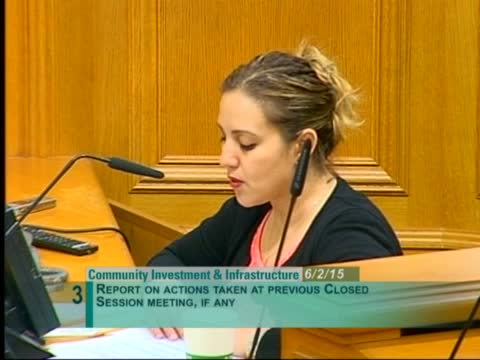
The Commission on Community Investment and Infrastructure on June 2 heard a detailed update on remediation work at Hunters Point Shipyard and the process for transferring parcels from the U.S. Navy.
San Francisco Department of Public Health senior project manager Amy Brownell told the commission that multiple parcels are now certified or nearing certification for transfer and that regulatory concurrence from federal and state agencies is a prerequisite for any conveyance. "Regulatory agencies provide oversight for the Navy's cleanup activities, and it's only after these regulatory agencies provide approval that any property may be transferred from the Navy to OCII," Brownell said.
Why it matters: Hunters Point is a roughly 500-acre former Navy complex whose cleanup and reuse are central to long-planned housing and park development. Commissioners, public-health staff and community members said they want clear assurances about long-term monitoring and limits on residential uses where contaminants remain.
Brownell reviewed decades of site characterization: thousands of soil borings and samples, groundwater monitoring wells and excavation and removal of hundreds of thousands of cubic yards of contaminated material. She described standard remediation tools the Navy has used, including soil vapor extraction, in situ groundwater treatment (e.g., injections intended to reduce chlorinated solvent plumes) and engineered landfill caps.
Parcel status and schedule: Brownell said Parcel A (the Hilltop) was transferred in 2004 and is in development. She said Parcels D2, UC1 and UC2 are ready for transfer and that staff will return to the commission soon to request authorization to accept those parcels. Other parcels (B1, GS and IR 718) are nearing completion pending paperwork, with B2 and D1 targeted for late 2016 and Parcel C and UC3 currently scheduled for 2017. Brownell also said groundwater treatment will continue on several parcels and that hotspot cleanup and engineered-cap installation are planned for Parcels E and E2 over the next three years.
Post-transfer protections: Brownell emphasized that conveyance is conditioned on regulatory concurrence and implementation of deed restrictions and institutional controls. She said those restrictions can prohibit uses such as drinking groundwater or digging gardens into cover soils; owners must follow specific construction risk-management and dust-control plans during redevelopment and submit annual inspection and maintenance reports to regulators.
Costs and oversight: Brownell said the cleanup has been a long, iterative process and that federal, state and regional agencies (U.S. EPA, Department of Toxic Substances Control, Regional Water Quality Control Board, California Department of Public Health and Bay Area Air Quality Management District) all play roles in review and concurrence. She noted the long investment by public funds into cleanup efforts, citing the project's multi-decade duration and large expenditures.
Public comment and community concerns: Ace Washington, a Hunters Point activist, told the commission he will continue to document the cleanup and urged strong community engagement and oversight over future development. Commissioners expressed support for continued transparency and for using advancing monitoring technologies to detect and address any previously unknown contamination.
What's next: Staff said it will return in coming weeks to request commission authorization to accept the next set of parcels certified by the regulators. Annual reporting, deed restrictions and continued agency oversight will remain part of the long-term requirements for developers and property owners.