Get Full Government Meeting Transcripts, Videos, & Alerts Forever!
Get email alerts on the Transbay Folsom Offramp topic
No spam. Unsubscribe anytime.
OCII approves $1.2M amendment to handle contaminated soils on Folsom off‑ramp reconfiguration
Summary
The commission authorized an amendment to the SFCTA MOA to fund disposal of contaminated soils uncovered during reconfiguration of the Folsom Street off‑ramp (Transbay Block 8). Staff reported ~5,500 tons of contaminated material, an estimated disposal cost of about $135/ton and a total amendment request of $1,200,000; Caltrans declined responsibility under the existing cooperative agreement.
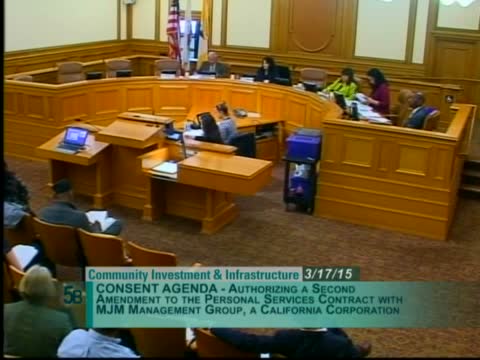
The Commission on Community Investment and Infrastructure on March 17 authorized Amendment No. 2 to the memorandum of agreement with the San Francisco County Transportation Authority to expand project management and construction services for the Folsom Street off‑ramp reconfiguration and to increase the budget by up to $1,200,000 (bringing the contract aggregate cited in the packet to $4,679,541).
Kevin Masuda, OCII senior civil engineer, said laboratory analysis identified two areas of soil contamination in the ramp work area. Area 1 is a stockpile excavated from under the Folsom off‑ramp estimated at roughly 1,000 cubic yards (about 1,883 tons). Area 3 is in‑place soils between the Folsom and Fremont off‑ramps estimated at roughly 2,000 cubic yards (about 3,667 tons). Staff estimated approximately 5,500 tons of contaminated material requiring disposal. Analytical testing and regulatory requirements make on‑site treatment or ordinary landfill disposal unsuitable for this soil type.
OCII staff and project partners reviewed available disposal options and proposed Clean Harbors Environmental Services (Buttonwillow, California) as the most appropriate regulated disposal facility; Buttonwillow is roughly 260 miles from the project site. At an estimated disposal rate of about $135 per ton, plus laboratory, administrative and handling costs, staff placed initial disposal costs at approximately $742,000 and added a 25% contingency for inaccessible quantities, resulting in a rounded amendment cost estimate of about $1,000,000; OCII also identified carrying costs (idle equipment, staffing) estimated at roughly $200,000. The project schedule was extended to July 2015 from the prior April 22 completion date because remediation work affects the construction sequence.
Commissioners asked whether the site condition was knowable at contract award and whether Caltrans might share responsibility. Staff said the original MOA and the previous amendment did not include contaminated‑soil funding; Caltrans indicated it did not know of the contamination and maintained, under the cooperative agreement governing the land transfer and project, that the land is transferred “as‑is” and that Caltrans is not responsible for the remediation in this instance. OCII staff said they attempted further negotiations with Caltrans and other partners but concluded disposal at a regulated facility was the only viable option for this soil type.
Commissioner questions about alternate disposal sites and procurement were answered: staff searched for alternatives but the soil type limited eligible facilities. The commission moved, seconded and approved the amendment by roll call (3 ayes, 1 absent). Staff noted unused funds will remain with OCII and that the executive director is authorized to execute ancillary documents necessary to implement the work.