Get Full Government Meeting Transcripts, Videos, & Alerts Forever!
Get email alerts on the Permitting Systems topic
No spam. Unsubscribe anytime.
DBI and Planning outline efforts to speed small permits and finish permit‑tracking rollout amid data and fee issues
Summary
Planning’s Small Project Team (SPROTT) is reducing triage time to 1–2 weeks for small permits; DBI’s Permit Tracking System (Accela) User Acceptance Testing is near completion but faces remaining issues including legacy fee 'grandfathering' for ~13,000 permits and lack of a lock for inspection records; Controller's fee study expected next week.
At its Feb. 18 meeting the Building Inspection Commission received several operational updates from DBI and City departments aimed at speeding permitting and modernizing the department’s IT systems.
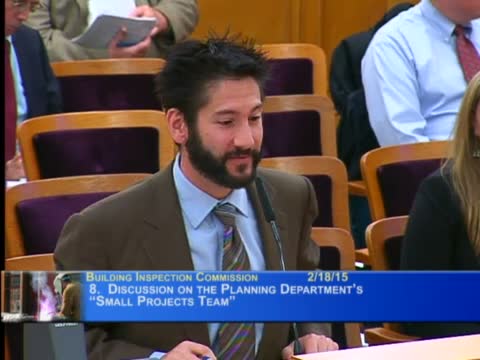
Planning Department presentation: Dan Snyder and Assistant Director Liz Waddy described the Small Project Team (SPROTT), a five-person team triaging small projects — defined as those that do not require a mandatory hearing — and moving them into review quickly. Snyder said assignment times for those small permits have fallen from months to one-to-two weeks and that the team’s work frees entitlement planners to prioritize larger projects. SPROTT has already processed dozens of small permits and permanent inter-agency referrals since launch.
Permit‑tracking system (PTS) update: Henry Bartley (Department of Technology / PTS project manager) reported the Accela-based Permit Tracking System is in the final phases of User Acceptance Testing. Functional UAT items have dropped to 23 outstanding; data‑migration items to 52 following a February migration run. Two technical problems threaten launch timing: (1) “grandfathering” historic fee schedules must be supported for roughly 13,000 permits filed under older fee regimes so clerks can compute fees correctly, and (2) Accela currently lacks a vendor-supported method to lock inspection records once a result is entered — a feature DBI deems critical for record integrity. Bartley and DBI said they are pursuing vendor estimates (LOEs) to scope fixes.
Controller's Office fee study and DBI finances: Randy McClure (Controller's Office) said the consultant’s fee-study final draft should be complete within a week; if presented to the commission on March 18 and advanced thereafter the earliest timeline for changes to reach the Board of Supervisors and mayor would be mid‑ to late summer, allowing for ordinance drafting, City Attorney review and hearings. DBI Deputy Director Tyrus Madison presented financials showing revenue projections modestly above budget ($1.6M more) though revenue remains lower than the prior year due to lower valuations; DBI reported continued hiring to fill vacancies.
Commissioners pressed for specifics and asked for a small commission working session with project leads to examine unresolved items and risk to launch schedules. City Attorney advised any commissioner sub‑group must avoid forming a quorum of standing subcommittees. DBI and Technology staff agreed to provide more targeted briefings and to track the outstanding LOEs from the vendor.
(Article based on staff presentations and discussion in the Feb. 18 meeting transcript.)