Get Full Government Meeting Transcripts, Videos, & Alerts Forever!
Get email alerts on the City Budget topic
No spam. Unsubscribe anytime.
Building Inspection Commission keeps Department of Building Inspection budget at prior two‑year base amid fee‑study uncertainty
Summary
The Building Inspection Commission unanimously approved DBI’s proposed $72 million budget for FY2015–16 and FY2016–17, while commissioners pressed staff on a pending fee study, projected $9.7 million revenue reduction and use of roughly $39 million in fund balance.
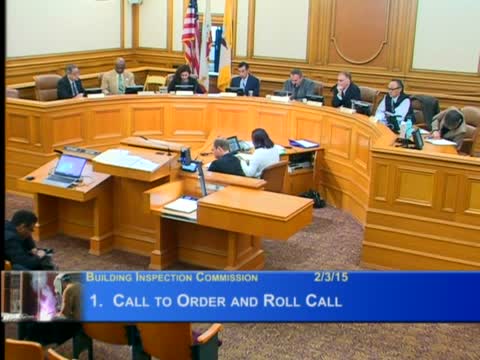
The Building Inspection Commission on Feb. 3 approved the Department of Building Inspection’s two‑year budget as presented, voting unanimously to keep spending at the previously approved FY2015–16 base while staff await a fee study that could reduce projected revenues.
Deputy Director Madison told commissioners the department is projecting a preliminary revenue decline of about $9.7 million—roughly 15 percent—bringing expected revenues to about $58 million, and said the estimate is tentative pending the controller’s fee study. "This is very preliminary; we don't really know what the revenues will be," Madison said, adding the department can use its fund balance to cover shortfalls while the fee schedule is revised.
The commission’s approval keeps total department expenditures at about $72 million for 2015–16 and the same for 2016–17, Madison said. She told the commission that DBI is not proposing cuts to authorized positions and that last year’s budget included one new IT position for 2015–16. "We are not proposing to make any reductions," Madison said.
Madison described major reductions on the expenditure side in professional services because prior years moved substantial sums into multiyear projects. She said roughly $7 million is budgeted in a technology project to support disaster recovery, software and hardware upgrades and the city’s permitting software rollout. The presenter said the timing of those investments will coincide with the department going live with Accela, the permitting system.
Commissioner Walker raised public safety concerns after recent fires in older apartment buildings and asked whether the department should increase inspection frequency for aging housing stock. "With the recent slate of fires ... maybe we need to look at do we need to inspect them more frequently," Walker said, urging coordination between building and housing teams.
Madison also updated the commission on coordination with the Mayor’s Office of Housing and Community Development and the fire department on RAD program projects and said most plan submittals appear to be routine; inspectors hope permits and inspections for some projects will be underway by October, she said.
On fund balance, Madison explained DBI’s unappropriated operating fund balance is about $30.6 million and the department’s total fund balance is roughly $39 million. She said the department has separate funds—about $4 million in a repair and demolition fund and smaller state‑fee funds for strong motion and building standards—along with a reserve of about $14 million, of which roughly $8 million is earmarked as a loan for a new building.
A motion to approve the budget "as presented" was made by Commissioner Walker and seconded (second not explicitly named in the transcript). The chair conducted a roll call; President McCarthy, Vice President Marr, Commissioners Clinch, Lee, McCray, Melgar and Walker each voted "Yes," and the motion passed unanimously. The commission then adjourned at 9:38 a.m.
The department said it will revise revenue estimates and the fee schedule after the controller’s office completes its follow‑up work on omitted fees and additional time studies, with the controller’s team scheduled to return to the commission on Feb. 18 for an update.