Get Full Government Meeting Transcripts, Videos, & Alerts Forever!
Get email alerts on the Permits topic
No spam. Unsubscribe anytime.
Neighbors allege 'serial permitting' on long-running First Street project; Commission asks DBI for report
Summary
Neighbors and a commissioner raised allegations that a major First Street construction job expanded through multiple subsequent permits after an initial over‑the‑counter approval; DBI staff said planners inspected and abated complaints and agreed to provide a detailed report at the next meeting about the original permit and its fast turnaround.
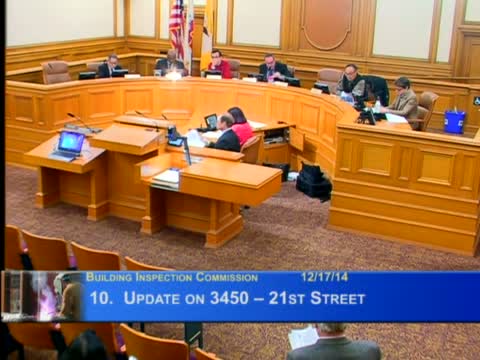
At the Dec. 17 meeting, Commissioner Walker asked DBI for an update on a protracted construction project at 3450/20 First Street after neighborhood complaints about street closures and prolonged work. Deputy Director Dan Lowry said the project has multiple permits and plan checks, roughly $2 million in permit valuation and numerous inspections; planners inspected the site, found no deviation from required 3‑11 notifications and abated planning complaints after site visits.
During public comment, Steve Williams told the Commission he was asked by neighbors to review the project and alleged "a lack of disclosure" and "serial permitting" that expanded the scope of work after an initial over‑the‑counter permit. Williams said the first over‑the‑counter permit (received 03/06/2013) covered extensive work including new habitable space, a media floor expansion, seismic upgrades and other items and that "that permit was issued in 3 working days" for an approximate $720,000 valuation. "Since January 2013 there have been permit applications, not counting electrical and plumbing, 16 permit applications for the project," Williams said, adding that neighbors reported street closures, parking loss and 40–50 workers on site over nearly two years.
Commissioners asked for a formal report at the next meeting to document how the initial permit was handled, who the applicant was, and whether the permit package as filed matched the work now under construction; Director Tom Huey and staff agreed to prepare that report. Deputy Sweeney, speaking to over‑the‑counter processing, characterized the policy as permitting architectural or structural checks to be completed within an hour for straightforward, single‑family or limited scope work, which can qualify for over‑the‑counter issuance.
What happens next: The Commission requested a more detailed report on the original over‑the‑counter permit and the permit history; DBI committed to provide that report at the next Commission meeting, with additional investigation in closed session if necessary.